To refresh your memory, here again is the photo for Bird Quiz #8. Read no further if you still want to have a shot at identifying these birds.
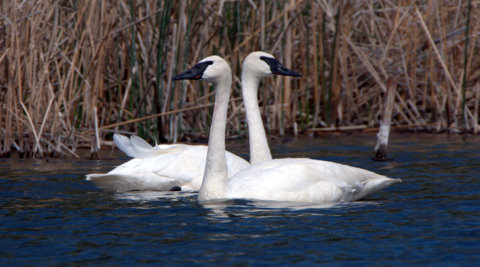

To refresh your memory, here again is the photo for Bird Quiz #8. Read no further if you still want to have a shot at identifying these birds.
(Make sure you also see the previous months’ Bird Quizzes!)
Can you identify these birds? The photo was taken in Idaho in August. My answer will appear next Monday.

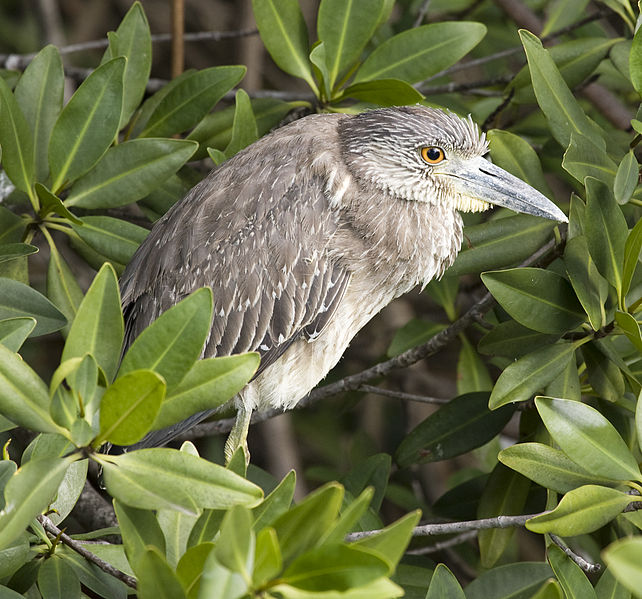 Some years ago, my friend and I were out birding here in Colorado. It was a month or so after Hurricane Katrina had inundated the Gulf Coast, but that fact was far from our minds on that early morning in August. We had stopped at a little pond alongside the road to check out the ducks and waders, when we spotted a large brown-striped bird standing at the edge of the water. It looked a lot like the bird in this photo (which is courtesy of Laura Gooch via WikiCommons—thank you).
At the time, we were both fairly new birders. We didn’t own one scope between us. As the bird was on the far shore, we took turns squinting through our binos and consulting our field guide. Our view wasn’t nearly as good as the photo here.
 Some friends just alerted me to a creative and though-provoking post about “birding personality types” at Birding is Fun! and I thought it well worth sharing. Take a moment to read their descriptions, and then consider… which bird are you?
At first I assumed I was an Owl, but after reading through the more detailed descriptions, I find I relate much more closely to the Shorebirds. I’ve never thought of myself as a “people person” before. I wonder what my friends would say. Anyone?
 Sunflowers may resemble a huge yellow sun towering overhead, but their name comes from their ability to keep their “face” turned toward the sun. Everyone recognizes a conventional sunflower with its huge dark disk surrounded by yellow petals, set atop a sturdy stalk that may reach over eight feet in height. A quick tour of a seed catalog shows that this is just the beginning. Breeders have developed shorter plants (as low as two feet) and an expanded palette of hues ranging from mahogany through orange to lemon yellow, white, and even soft rose to wine-red. Many types sport more than one color.
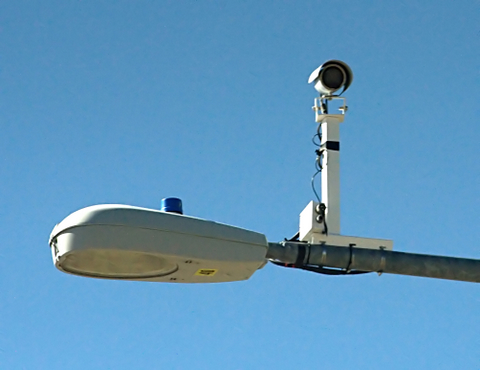 “Look! A Prairie Falcon!”
Eva was jumping up and down, pointing at a medium-sized light blob on a near-by lightpost.
“Wow, what a great bird to start our day!” she enthused. We had just met up to go birding, and hadn’t even left the parking lot yet. I grabbed my binos and squinted harder at the blob.

I was ready to declare war. Our kitchen counters were crawling with ants. Not the cute little “sugar ants” we used to get in California. These were huge, black ants that delivered a painful bite when they got their mandibles into you.
I admit it was my fault they invaded our house. They arrived from the surrounding forest, attracted by the sugar water in the hummingbird feeders hanging from the eaves over our balcony. I moved the feeders and changed the way I hung them, and the ants went looking around for another source of dessert. I have no idea how they got through our walls.
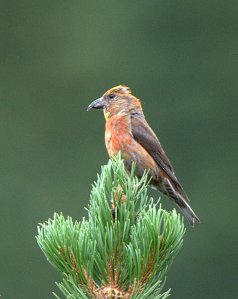 Here in Colorado, it’s the hottest summer in anyone’s memory. I’ve had a major case of birding ennui, canceling trip after trip when the mercury topped 100⁰F. The birds are smart enough to nap during the heat of the day, and I’m learning from their example.
However, when our Audubon chapter scheduled a trip up 14,265 Mt. Evans, I jumped at the chance. It’s not every day you can beat the heat and have a chance at a lifer, all on the same trip.
To refresh your memory, here again is the photo for Bird Quiz #7. As I mentioned in the quiz, the photo was taken in Colorado in October. Read no further if you still want to have a shot at identifying this bird.

(Make sure you also see the previous months’ Bird Quizzes!)
Can you identify this bird? (Don’t you just love LBJs?) The photo was taken in October in Colorado. My answer will appear next Monday.


