If you were stymied on Monday, now can you name this bird? The photo was taken in Colorado in January. The answer will appear in Monday’s post.
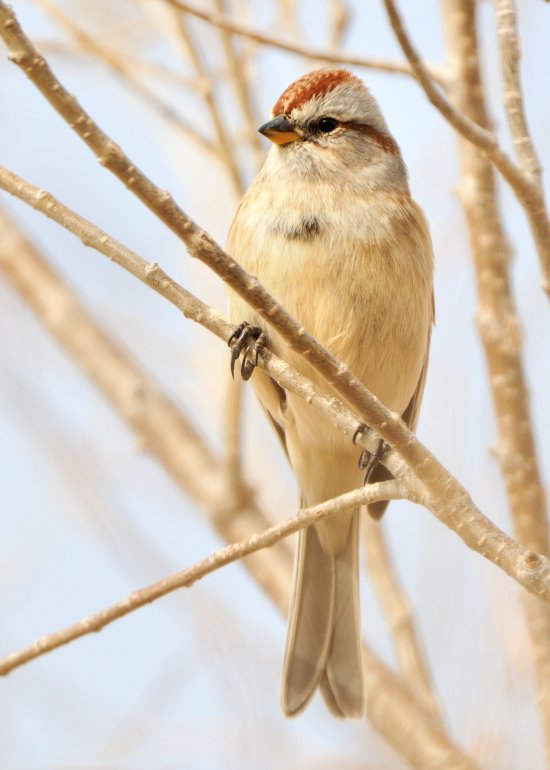

If you were stymied on Monday, now can you name this bird? The photo was taken in Colorado in January. The answer will appear in Monday’s post.
This bird was photographed in Colorado in January. Can you name it? I will post the uncropped photo on Saturday, giving you one more chance to identify the bird. The answer will appear at the end of next Monday’s post.


Last week I wrote about how birds get their colors—and that had me thinking about what birds do with all those colors.


What’s the first thing you see when you look at these birds? For me, it’s their incredible diversity of color! And it’s not only tropical birds—even cold climates produce blue Steller’s Jays, red House Finches, yellow goldfinches, and pink rosy-finches. Or consider the ruby gorget on a Broad-tailed Hummingbird, flashing its iridescent hue when the sunlight hits it just right. How can feathers be all these colors? It varies.
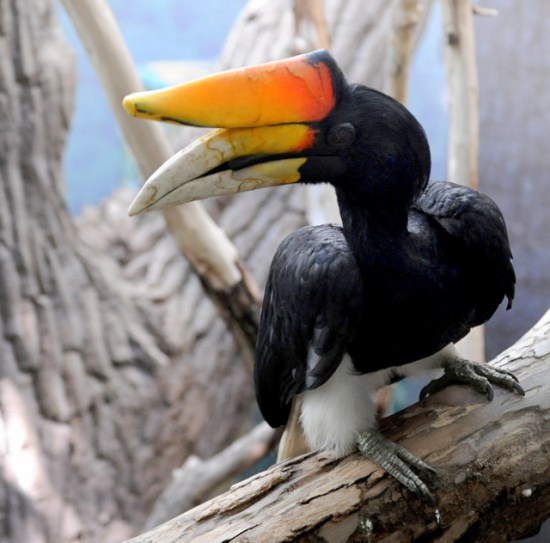
We have hands. Birds have beaks. Have you ever noticed how useful a beak is? While lacking our manual dexterity, birds have no problem securing their dinners and stuffing said meal down the gullets of their young. Beaks are used to manipulate objects and preen ragged feathers. Some birds use their beaks to impress potential mates, or to scare away intruders. Beaks can even be used as weapons. Have you ever tried to steal an egg from under an irritated hen?
Beaks are also useful to birders, as their size, shape, and color are all helpful when it comes to identifying bird species. In fact, the more attention I pay to birds’ beaks, the better birder I become.
If you were stymied on Monday, now can you name this bird? The photo was taken in Florida last February. The answer will appear at the end of Monday’s post.
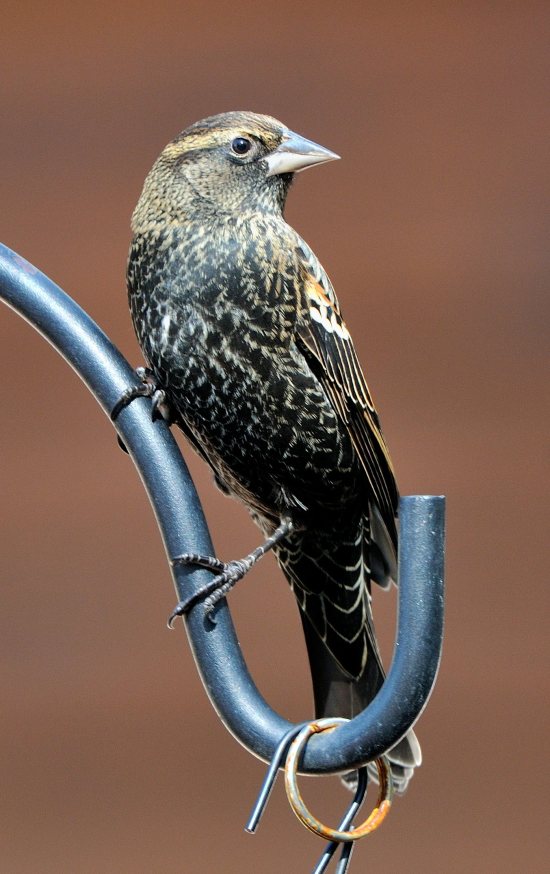
This bird was photographed in Colorado in October. Can you name it? I will post the uncropped photo on Saturday, giving you one more chance to identify the bird. The answer will appear at the end of next Monday’s post.


I tend to visit botanic gardens by myself. It isn’t that I’m being unsociable—I’d love the company! It’s that I move at a pace that most find excruciatingly slow. I have been known to stop and examine every flower, every shrub, and, in this case, every leaf on every tree. And then, on top of that, I take photos. Hundreds of photos. Photos of the flowers, shrubs, trees, and yes, sometimes even the leaves. I can turn a two-hour garden visit into a 6-hour marathon. It drives most people crazy, hence my lack of companions.
But sometimes, that kind of close inspection pays off.

It was a fruitful trip out to Chico Basin Ranch, east of Colorado Springs and Pueblo, and one of the best birding spots in the country. With fall migration in full swing, we ticked off well over 50 birds, including a Common Nighthawk, which I tend to miss as they match the branch they’re sitting on, and both Red-eyed and Blue-headed Vireos—good birds for Colorado. There’s nothing like birding with a very experienced guide, and John Drummond definitely qualifies. I learn so much when he leads a trip.

Some days just seem perfect. The sky was intense blue, without a single cloud in sight. Temperatures? The mid-70s. Crowds? For the first hour or two, we had the entire place to ourselves. A light breeze stirred a few leaves, birds chirped in the willows, and squirrels chattered from the pine branches overhead. I was so glad we’d chosen to spend the morning at Manitou Lake.
 Mountain Plover