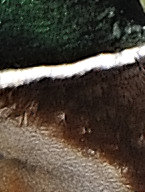
How’d you like to be able to see with your eyes closed? Wouldn’t it be handy? You wouldn’t get grit in your eyes during a dust storm. Your eyes would never turn red from swimming in a pool with too much chlorine. And you’d never get poked in the eye. If only we could see through our eyelids!
It turns out that birds, and many other animals, can do just that. They share a body part that we humans lack—a fully functional third eyelid. Also called a nictitating membrane or haw, this thin sheet of tissue may be transparent, translucent, or (rarely) opaque. It slides between the cornea and the outer eyelids, offering protection from anything that might damage the eye, such as grit or drying winds.
In mammals, (but not birds) the membrane also includes a gland that produces a thin mucus, offering lubrication similar to tears.
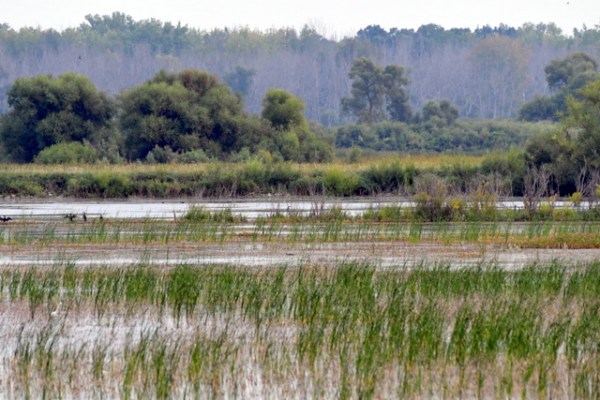
 How would you like to be stalked, captured, then shaken so hard that your neck breaks—and then impaled onto a spike and left to age like a side of beef before finally being torn apart and eaten? That sounds like material suitable for a Halloween thriller. Yet, that’s your likely fate if you’re a mouse or lizard unlucky enough to catch the eye of a shrike. Shrikes are ferocious predators. It’s a good thing for us that they’re only about as big as an American Robin.
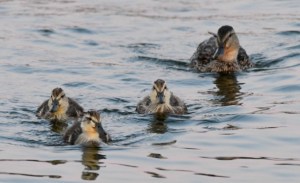 I was excited to finally be going to Michigan, my 48th state. While the trip wasn’t exclusively a birding trip—we also had people to see—it was new territory for me. I was sure to get at least one lifer, and hopefully many more. On the other hand, my expectations had been tempered by the less-than-spectacular
 The neighborhood where I live seems to be a magnet for door-to-door salespeople selling services. One company in particular has been particularly persistent in their marketing attempts—an exterminator.