If you were stymied on Monday, now can you name this bird? The photo was taken in Colorado in October. The answer will appear at the end of next Monday’s post.


If you were stymied on Monday, now can you name this bird? The photo was taken in Colorado in October. The answer will appear at the end of next Monday’s post.
Can you identify this bird? The photo was taken in Colorado in October. I will post the uncropped photo on Saturday, giving you one more chance to identify this bird. The answer will appear at the end of next Monday’s post.


Birding in northeastern Queensland was a bit like a Dickens novel—“It was the best of times, it was the worst of times… .” The best parts are easy to list—friendly people, tropical beaches, verdant forests, balmy breezes, exotic species. We were there for a week—I could have spent years.
 The bulldozers are at it again. Another swath of short-grass prairie is being turned into houses. I can’t complain—I live in such a house. A mere three years ago, birds and bunnies made their home in what is now my yard. The voles and cottontails are still here and thriving, largely at the expense of my landscaping. The birds—assorted sparrows, hawks, Say’s Phoebes, Horned Larks, Scaled Quail, and Killdeer—decided to go elsewhere.
Now I’m trying to lure them back by replacing what nature has lost. Instead of the typical neighborhood rocks-and-grass “zero-scape,” we’ve included shrubs and trees that offer wildlife food and shelter. Native shrubs such as three-leaf sumac, manzanita, Boulder raspberry, buffaloberry, and chokecherry all offer berry-like fruit. Our roadside oak will one day provide acorns, the limber pines have seed-filled cones. Seeds come from native grasses and flowers, too, while dwarf conifers and dense shrubs offer a place to hide from predators and the weather. My nectar garden feeds hummingbirds and other pollinators. Feeders offer additional seeds and suet, and my heated birdbath is a year-round source of water.
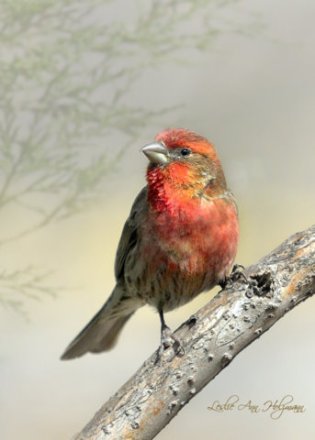
They’re just House Finches. How often have I thought that? House Finches are everywhere. They were the first birds to my feeders, the day we moved into our house, and they’re still the most frequent visitors. How interesting could they be?
It’s been over a week now since I bent over—just slightly, carefully—and did… something… to my lower back. I’ve done this before. I know the routine. Cold packs, ibuprofen, not too much bed rest, patience. I’m healing, but it seems to be slower this time. And while I’ve been able to hobble around the house, bent over in pain, I’ve had to spend most of the last week in bed.
If you were stymied on Monday, now can you name this bird? The photo was taken in Colorado in September. The answer will appear at the end of next Monday’s post.
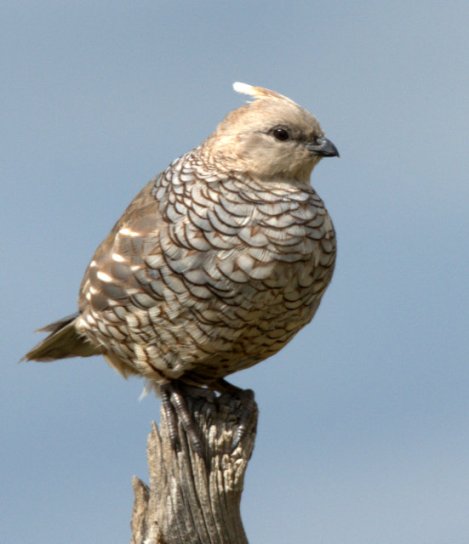
Can you name this bird? The photo was taken in Colorado in June. I will post the uncropped photo on Saturday, giving you one more chance to identify this bird. The answer will appear at the end of next Monday’s post.
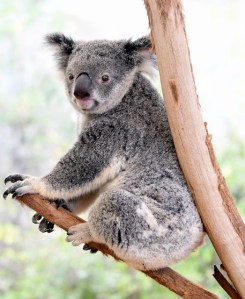 We had one day in Brisbane, and we chose to spend it at the Lone Pine Koala Sanctuary. We had spent twelve days exploring the east coast of Australia, and had yet to see a single koala. I wasn’t going to go home without a good look, even if it had to be at a zoo.
You might get the impression that the Lone Pine Koala Sanctuary only contains koalas, but in fact they have a wide range of indigenous Australian mammals, birds, and reptiles, plus an abundance of local birds who just come to visit for the free handouts. And while we certainly enjoyed seeing the koalas up close, I was just as thrilled by good views of a Tasmanian Devil, dingo, duck-billed platypus, and some extremely venomous snakes (safely behind glass). Plus, I got to pet an emu!
 Nesting season is upon us, and baby birds are everywhere. Some are cute, some are downright ugly, but all are endearing. Isn’t nature wonderful?
But sometimes, it seems as if Mother Nature has a problem. Not all baby birds survive to adulthood. Being caring individuals, when we see a youngster in trouble, our first inclination is to help. We’re hardwired to care for young animals, and our compassion kicks in. But once we’ve gathered up that forlorn ball of fluff, what do we do next?
 Last year, our son-in-law, Ian, fell when the ladder he was using collapsed out from under him. Given that his head had been more or less at the same level as the eaves of their single story house, it had accelerated to approximately 13 feet per second when it hit the cement patio. Unsurprisingly, the impact knocked him out. Thankfully, all he suffered was a severe concussion. It could have been much worse.
From our backyard, I have been watching a Northern Flicker make a hole in the mostly-dead oak tree next door. According to one website, the woodpecker’s beak is hitting that trunk at a significantly higher speed than Ian’s head was going when it hit the pavement—closer to 19 feet per second.

