(Make sure you also see the previous months’ Bird Quizzes!)
Can you identify this bird? The photo was taken in Oregon in September. My answer will appear next Monday.


(Make sure you also see the previous months’ Bird Quizzes!)
Can you identify this bird? The photo was taken in Oregon in September. My answer will appear next Monday.
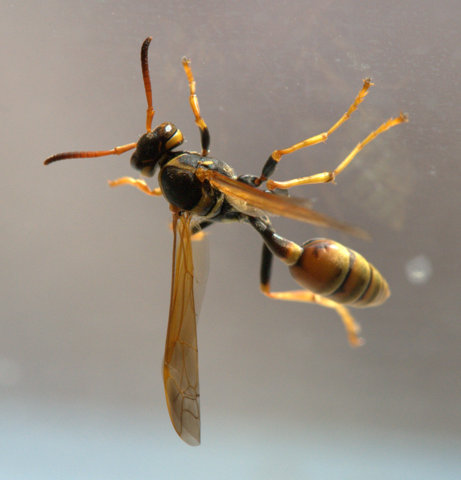 I’m sitting quietly at my desk as an unidentified insect makes an orbit around my head, buzzing aggressively. What in the…? It changes direction, aiming directly for my eyes. I want to flail at the bug, but realize that may not be a good idea, so I jump out of my chair and out of the way. Buzzzzzzz…. It finally lands on the wall and I get a good look. Yikes! It’s a yellowjacket!
Moments later, there are two wasps circling my screen, then three, and four. It seems that every yellowjacket in the neighborhood has somehow found a passage into my house, and they’re ganging up on me.
 I make it a point to generate my own material for this blog. I research and write the articles, I take most of the photos. However, once in a while I come across another blogger’s post that is so well done, and so helpful, that it makes no sense for me to try and do better.
In this case, Greg Gillson has written a post called “How NOT to report a rare bird.” This caught my attention because I have, in fact, had occasion to report a rare bird (although not as often as I could wish!) and I really had no idea what I was doing.
Please click on over to Birding is Fun and read Greg’s article. He is concise, informative, and entertaining.
 Last August I posted my suggestion that we add inanimate objects to our life lists. For some reason, my idea didn’t meet with the enthusiasm I had hoped for. Still, I think it has merit. Birders love to catalog things, and think of all the different kinds of beer cans, water bottles, plastic bags, and similar items we can enjoy identifying and collecting.
In any case, I’m not giving up. Perhaps we balk at trash and rocks, but how about other living objects we might mistakenly perceive as birds? Surely we can consider such additions as…
To refresh your memory, here again is the photo for Bird Quiz #9. Read no further if you still want to have a shot at identifying this bird.

(Make sure you also see the previous months’ Bird Quizzes!)
Can you identify this bird? The photo was taken in Colorado in September. My answer will appear next Monday.


What do you think of when someone mentions birding Arizona? Hummingbirds? Elegant Trogons? Arizona Woodpeckers, Gray Hawks, and Crissal Thrashers?
While the far southern part of the state offers all these, plus a chance at birds normally only found in Mexico, the northern part of the state can produce some lifers as well.

Are you a Colorado birder? Do you know a Colorado birder? Do you just like birds? The Aiken Audubon Society of the Colorado Springs area has created a gorgeous 12-month 2013 calendar to raise funds for education, field trips, and conservation. Printed in full-color, the photographs are of birds found in state, and I’m pretty pleased to say that more than half the shots are mine!
To refresh your memory, here again is the photo for Bird Quiz #8. Read no further if you still want to have a shot at identifying these birds.
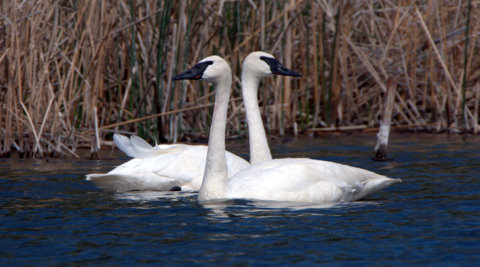
(Make sure you also see the previous months’ Bird Quizzes!)
Can you identify these birds? The photo was taken in Idaho in August. My answer will appear next Monday.


