A Second Opinon on Invasive Species

I recently read a confounding article on Garden Rant (a gardening blog like no other). The author was reporting on some new research suggesting that not all invasive species should be eradicated.

lonicera-honeysuckle-dbg-19sept05-lah-250-1Specifically, a Penn State biologist named Tomas Carlo studied Japanese Honeysuckle (considered a noxious weed in much of the eastern US) and found that its presence increased the biodiversity of bird species as well as the number of individual birds. In fact, the fall berries are a major source of food for fruit-eating birds.
(more…)

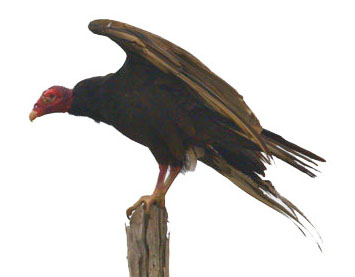
Turkey Vultures

turkey-vulture_parguera-pr_lah_7209c

Q: Why didn’t the Turkey Vulture pay the airline’s luggage surcharge?
A: All he had was carrion.

Frequently portrayed as sinister black birds hunched over a dying cow or feasting on road kill, Turkey Vultures could be the perfect Halloween birds. But are they really as evil (or disgusting) as the image suggests? Get to know them a bit better, and you might be surprised at how interesting these huge birds can be. You might even find them endearing.

(more…)

Don’t Feed the Animals!

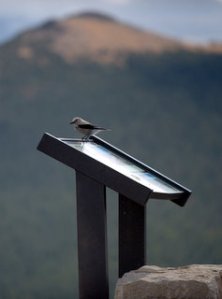
rmnp-co_rmnp-co_lah_2124

The large sign was front and center, but no one seemed able to read it. The scenic turnout was crowded with retirees, young couples, and other tourists. Chipmunks scampered over the rocks, gorging on Fritos, sunflower seeds, and bits of doughnut. Clark’s Nutcrackers swooped down to nab the handouts before the rodents could grab them. There was even a bird perched hopefully on the sign. What do you mean, “Please, don’t feed the animals”?

(more…)

Ghost Bird

ghost_bird_01-1This Friday, the Aiken Audubon Society and Bear Creek Nature Center will be airing “Ghost Bird.” If you live anywhere near Colorado Springs, Colorado, I highly urge you to come learn more about the elusive Ivory-billed Woodpecker, believed to be extinct since the 1940s. Does it still exist? Here’s what the movie’s creators have to say:

Ghost Bird wades into a murky swamp of belief and obsession in this cautionary tale about birders, ornithologists and the citizens of Brinkley, Arkansas who are certain they keep seeing a giant woodpecker that’s been extinct for over half a century.

(more…)

Starlings Not Welcome Here

european-starling_lincolncityor_20090922_lah_1634Birders in the U.S. are supposed to hate European Starlings (Sturnus vulgaris), and there are plenty of reasons to do so.
The species originated in Europe, North Africa, and western-to-central Asia. While mostly abundant there as well, the species has been red-listed in England after populations plummeted by more than 80% over the last 40 years [1]. Other northern European countries have witnessed a similar decline [2]. We can only wish that would happen here.

North American populations have exploded since their introduction in the early 1890s. According to the USDA, starlings cost our country $1.5 million in damage to agricultural crops, the consumption of feed intended for livestock, and in property damage. In one winter, a million starlings can down 27,500 tons of livestock feed, not to mention what is ruined by their accumulated droppings—and latest estimates put the US population at over 200 million birds.

(more…)

Tumbling Seed Spreaders

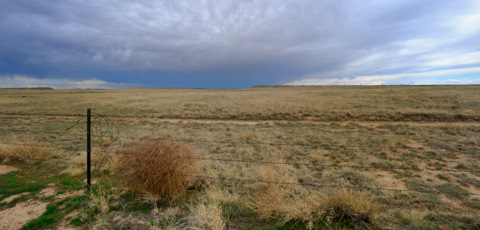
tumbleweed_commanchegrasslandsco_20100414_lah_2566

An iconic symbol of the West, tumbleweeds conjure images of cowboys, cattle drives, and barbed wire. They even have their own song—“Tumbling Tumbleweeds” was written by Bob Nolan in the 1930s, and seems to reappear as often as the weeds for which it’s named.

Yes, we’re all familiar with tumbleweeds. But, as a result of my Colorado Master Gardener training, I have insider information that will stun, shock, and astonish you. Tumbleweeds are aliens!

Yes, it’s true. Before the Europeans stumbled across the western hemisphere, there were no tumbleweeds on the plains. Of course, there were no cowboys, either—no horses, no cattle, and no chuckwagon bean dinners. Tumbleweeds arrived, not in flying saucers, but in seed shipments from Europe and Asia.

(more…)

Donating to Save Oiled Birds?

donateoilspillrecovery_160x130bWith the Gulf oil spill continuing to dominate the news, many conservation organizations are soliciting funds, ostensibly to help wild birds caught up in the environmental disaster. That is certainly implied by the (extremely misleading) picture to the left, gleaned from a well-known non-profit’s website. However, if you read the fine print on the donation page, it becomes clear that rather than being specifically targeted to the rescue of oiled birds, all these donations are simply being added to an organization’s general fund. As another website truthfully states:

BP has committed to paying for the clean-up and wildlife rescue efforts in the Gulf of Mexico following the Deepwater Horizon oil spill. While your donations cannot be used to fund bird rescue operations in the Gulf of Mexico spill, [the organization] welcomes support for our ongoing programs and to cover the cost of future rescue efforts.

I don’t want to discourage anyone from supporting these organizations in general. Donating to various environmental groups is a worthwhile gesture. One would hope that  all donations go to help conserve our natural resources, including birds and other wildlife. Just make sure to do enough research that you know how your donation will be used.

Exploring Corral Bluffs

corralbluffsco_lah_0442-1Vast open spaces, blooming yucca, and constant wind were our companions on a recent hike to Corral Bluffs, an area under consideration as a new El Paso county park.
Most recently a stop for cowboys and their herds on the drive from Texas to Denver, the proposed park has a long history, dating back 65 million years. It’s hard to believe that the high plains grassland was once a sea-level swamp! Numerous fossils are being uncovered by paleontologists surveying the eroded bluffs—including a crocodilian head, as well as numerous small mammals and petrified wood.

(more…)

Three-toed Beetle-eaters

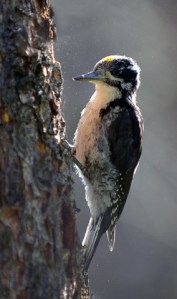
american-3-toed-woodpecker-grandlake_6285

A couple of weeks ago I described the devastation being caused by the Mountain Pine Beetle. Happily, there is one bright spot in the middle of the dead trees. Stands of beetle-killed pines create an ideal habitat for the American Three-toed Woodpecker.

This species isn’t rare, but it lives in the boreal forest, out of reach of most birders. This far south it is only found at higher altitudes, and prefers to nest in areas of old-growth spruce, larch, fir and pine.

(more…)

Noxious Weeds

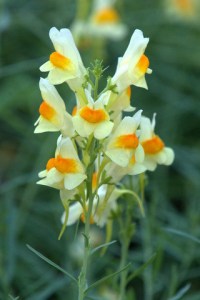
Toadflax is on Colorado’s Noxious Weed List “B”

There are aliens among us. They didn’t come from outer space. Instead, they invaded our country from their native lands around the world. Some hitchhiked in bales of hay or on unsuspecting travelers. Others were brought here deliberately, perhaps for their beauty or stalwart endurance in the face of adversity.

Once here, they took advantage of our hospitality and spread far beyond their original destination. These invaders are plants: grasses, flowers, even trees that are taking over our country. It’s time we fight back.

When aggressive plants arrive in a new environment, they upset the delicate ecological balance that sustains birds and other wildlife. We call them “noxious weeds” because they tend to take over the landscape, are difficult to control, and out-compete more useful natives. They are frequently useless as wildlife forage or shelter, while replacing plants on which wild creatures depend.

(more…)