
As I’ve been recovering from back surgery—a recovery that is taking a bit longer than I was led to expect—I’ve had plenty of time to check my phone, and more specifically, my news feed. I had to laugh when this item popped up. Seems that USA Today needs to check with an actual birder before choosing photos to accompany their articles!

Note that this is not a yellow bird, rare or otherwise. Even more significantly, this lovely photo is of a House Finch, not a Northern Cardinal.
That would be bad enough, but there’s more:

Here we finally get to see the yellow cardinal (which happens to be male). However, this is a male House Sparrow, definitely not a younger cardinal—or its mate!
These are rather significant mistakes in an article on I topic I know a bit about. It makes me wonder how many mistakes (intentional or otherwise) appear in their articles on other topics!


 Are you a gardener, or interested in gardening? How about going deeper and delving into a bit of botany? Do you like to cook? I find great satisfaction in planting a seed, nurturing the crop to harvest, then discovering the tastiest way to prepare the results. Plus, I want to understand the plant I’m eating. That’s why I was so excited to discover a new-to-me blog,
 We ooh and aah over their colorful plumage. We adore their antics. We marvel at their ability to soar, turn, and plummet. But how often do we admire birds for their intelligence? Read The Genius of Birds, and you’ll realize that being called a “bird brain” can be quite a compliment.
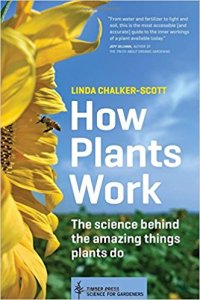 New gardening books seem to pop up as regularly as springtime dandelions. Most simply rehash what has been said before—perhaps with a new twist or better photos. But How Plants Work: The Science Behind the Amazing Things Plants Do (Science for Gardeners) isn’t your typical treatise on how to grow what. Instead, the author, Linda Chalker-Scott, explains the “why” behind the “how.”
 Mountain Plover