
 I sat munching my seedless grapes, enjoying the sweet juices. I bit one in half, and focused on the tiny, immature lumps that would have been seeds in another variety. I’ve always taken seedless grapes for granted, but now I wondered—why didn’t the seeds develop in this cultivar? It clearly goes against a plant’s nature to grow fruit without seeds.
And what about watermelon? Is the same process involved? And those name brand tangerines we just polished off didn’t have seeds either. These days, even bananas are seedless. I miss the little black dots that used to decorate my banana bread. Then there are seedless tomatoes and cucumbers, two more fruits, at least from a botanist’s perspective. I had never stopped to consider how many seedless fruit crops are now available.
 Did you know that plants come in families?
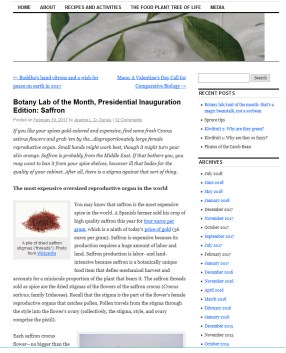 Are you a gardener, or interested in gardening? How about going deeper and delving into a bit of botany? Do you like to cook? I find great satisfaction in planting a seed, nurturing the crop to harvest, then discovering the tastiest way to prepare the results. Plus, I want to understand the plant I’m eating. That’s why I was so excited to discover a new-to-me blog,
 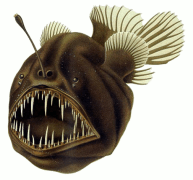 When I think of parasites, I typically think of creatures such as tapeworms, fleas, ticks, and leeches—nasty invertebrates that drain the life out of us humans. Then, I might recall that some higher animals can also be parasites, such as the deep sea anglerfish. You’ve likely seen pictures of anglerfish, with their huge, pointy teeth in a large head, followed by a tapering body. When these fish mate, the male permanently attaches itself to the female and lives off her bloodstream for the rest of his life, his sperm his only contribution. (See National Geographic’s
 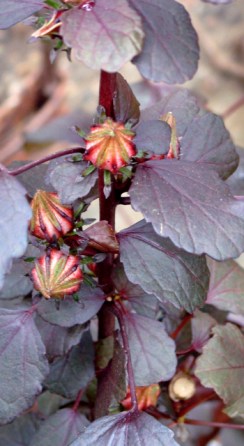 I’m really not a fussy eater. While I draw the line at some animal parts (Rocky Mountain oysters, anyone?) and various invertebrates (no deep-fried scorpions in my diet!), I’m not nearly as fussy about dining on plants. Of course, I think some plants taste better than others—I’m a big fan of broccoli, artichokes, and papayas, for example, while I tend to avoid cucumbers and those bitter Italian greens—but for the most part, if it’s prepared well, I’ll eat it.
 My pole beans, which got a rather late start, are finally climbing their way up the strings on my bean tower. I’m always impressed that the plants know just what to do. Those reaching tendrils that come into contact with the string immediate start to coil around it, securing themselves to the support. A few plants were still free, waving in the light breeze. I tucked them between the two strands of twine, so they too could wind their way upward.
 It was a lovely hike, even if the plants were all still dormant. Coming back to the car, I bent over to unlace my hiking boots, only to discover that my laces were a solid mass of stickers—graceful foxtails, round burrs, and what looked like exceptionally tenacious Velcro. As I worked the knots loose while trying to protect my fingers, I was once again impressed by how capable plants are at getting around. Their lack of legs doesn’t slow them down at all!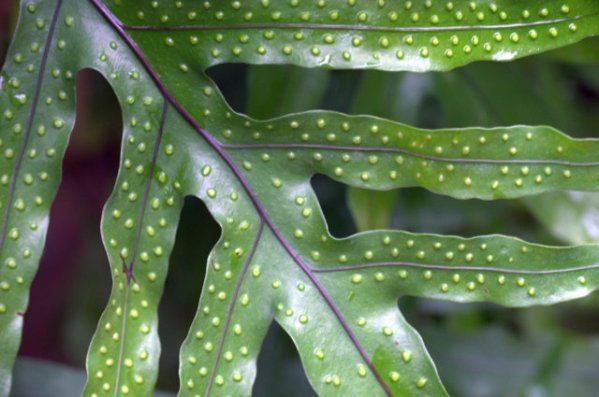
 Mountain Plover