
If you’ve seen the hype (or have a daughter who’s a graphic designer), you know by now that the Pantone Color of the Year is Classic Blue. The Pantone Color Institute offers an explanation for their choice:

If you’ve seen the hype (or have a daughter who’s a graphic designer), you know by now that the Pantone Color of the Year is Classic Blue. The Pantone Color Institute offers an explanation for their choice:

It’s January, but my brain is in July. I need to imagine warm breezes, green leaves, and most of all, bright flowers. And what is more reminiscent of a hot, summer day than a bright yellow sunflower? When we think of sunflowers, the image that comes to mind is a large brown disk surrounded by brilliant, sunny petals, kind of like this: (more…)


Last week’s garden post was devoted to All America Selections, a nation-wide program that highlights new cultivars most likely to succeed in your garden, no matter which part of the country you live in. Surprisingly, it seems to work for Colorado. But there’s an even better “seal of approval” for Colorado gardeners to look for, at least when it comes to shrubs and perennials: PlantSelect®.
 As the seed catalogs pile up on my nightstand, the choices become overwhelming. It’s hard enough to choose which flowers and veggies to grow this coming year. But then there are page after page of cultivars to choose from.
This isn’t a new problem. As is true today, the 1930s was a time when plant breeders were creating a lot of “improved” flower and vegetable cultivars. Were they really better than the old standards? With all the new choices, how could home gardeners know which were the best? (more…)

Normally, when we visualize a flower garden, we think color—yellow coreopsis, purple catmint, bright red tulips. Or, you could be more subtle, with a refreshing look in myriad shades of white. But how often do you see a garden full of flowers in monochromatic black and white? Yet, that’s one of the combinations offered last summer at Denver Botanic Gardens. And surprisingly, the results were beautiful. (more…)

I did it again. Last spring, in a fit of gardening fervor brought on by the first flowers of the season, I put in an order for more spring bulbs, to be delivered in the fall. With my yard full of crocuses, glory of the snow, and miniature irises—and not much else—it was easy to see where those new bulbs should be planted.
Now it’s October, and I just received delivery. Yes, my box of bulbs arrived just ahead of our first snowstorm of the season. Now I have to plant them. Today.
What was I thinking?


What kind of fruit comes in red, white, and blue? Berries, of course!
Blueberries are a huge treat. Our daughter in western Washington grows them by the bucketful, although our granddaughters have a habit of grazing on them in the backyard, so they don’t always make it into the kitchen.
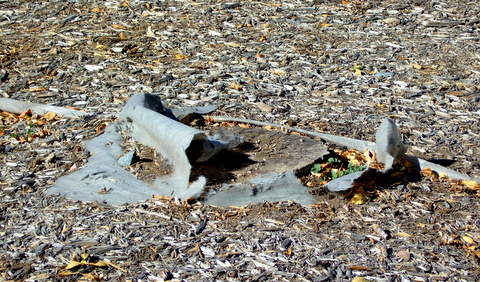 Today I’m revisiting a topic I first talked about back in 2013. I normally don’t do this, as I assume you can go back and reread whatever you’d like, using the options at in the sidebar at right. However, this is an issue that I think needs a lot more attention. I’m so frustrated, I could scream.
What is this horrific landscaping practice that makes me cringe? Landscape fabric.


The calendar says it’s spring, and who is a gardener to disagree? Walk down the aisle of any Lowe’s, Home Depot, or Walmart, and you’ll find a colorful display of boxed bare root perennials, ready to pop into your warm spring soil. Cannas, lilies, bleeding heart, and clematis. Peonies, six dormant plants. Gladiolus and hostas. Caladium, phlox, and kniphofia. The photos on the packaging are so enticing to our flower-starved souls (especially after experiencing our recent “bomb cyclone,” a blizzard of apocalyptic proportions, which dumped 4-foot drifts in our yard)!
Why do we always seem to gravitate toward things that are rare? Precious stones, one-of-a-kind art objects, limited edition car models—we always seem to want most what’s hardest to find.
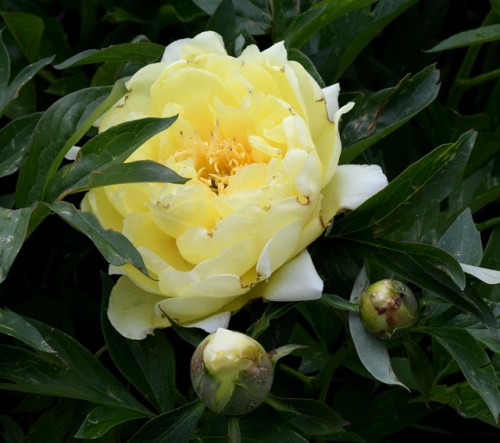
Gardeners aren’t exempt. We’re continually on the lookout for unique cultivars, with odd shapes or unusual colors. While lots of flowers are yellow, peonies usually come in shades of white, pink, and red. Yet, I have a good friend who paid a lot of money to get a yellow peony. Why? She thought it was “interesting.”
 Mountain Plover