
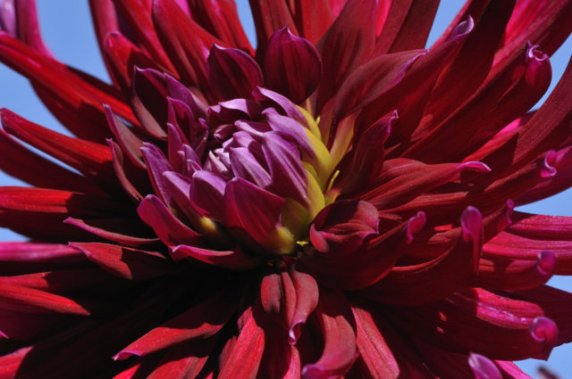
At this time of year, most plants are bent on making seeds, not blossoms. Not so the dahlias. Among the blowsy seedheads and fading foliage, their vibrant colors declare that the season isn’t over yet.
My parents retired to Mendocino, on the coast north of San Francisco. There, the cool but mild climate is similar to that of England, and dahlias (indeed, most perennials) thrive. Those my dad grew were as big as dinner plates! I admit to jealousy. Here in Colorado, it’s not so simple; you have to want to grow dahlias. Spectacular flowers in flamboyant hues are your reward.
 The tree had clearly expired. What leaves remained had turned a sickly yellow-brown, and hung limply on the branches—in mid-August! Yet, when our neighbors planted it last year it had been perfectly healthy. Something was obviously wrong, and I had a hunch I knew what. (I’ve often said that master gardeners kill just as many plants, we just know why they died.)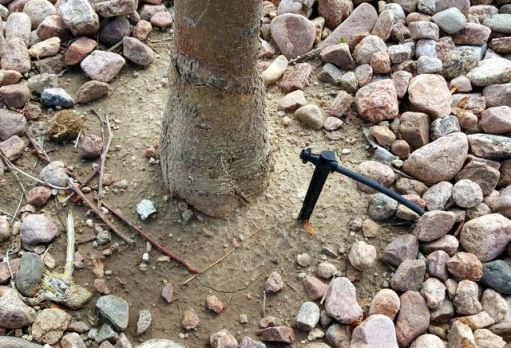
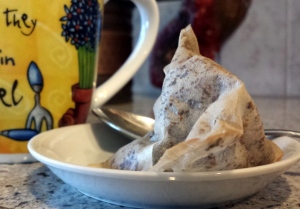 It seems such a waste—we use a tea bag to make a lovely cup of tea, and then toss it into the trash. It just screams to be repurposed—surely there’s some way to get some extra use from that depleted bag! So it’s no big surprise that the internet is suddenly full of lists with titles such as “7 Random Uses for Used Tea Bags.”

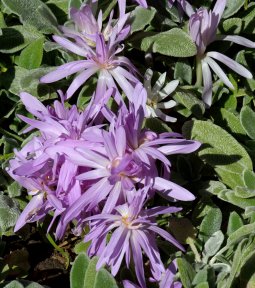 When we think of crocuses, we imagine the first flowers of spring, daring the cold and snow to herald the coming change of seasons. And just as crocuses start the growing season, they can also be among the final flowers of fall. You may know them as Meadow Saffron or Naked Ladies (although that name also belongs to Amaryllis belladonna)—these goblet-shaped pink–to-purple flowers that spring leafless from the ground in early autumn. They don’t last long, only two or three weeks, but their presence when all else is fading makes them worth the effort.
 One of my perverse pleasures is perusing Pintrest to find bad garden advice. There’s certainly no lack of misinformation on the web, and Pintrest seems to collect it all. Most advice is simply a waste of time and money—sprinkling
 In a field crowded with contenders, I have a new favorite wildflower. This plant is incredible—large, flashy, tough, gorgeous. What more could you want? Best of all, it’s thriving in my yard. I’m in love.
 Mountain Plover