
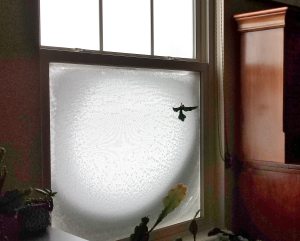
 Today (as I write this) is officially the third day of spring, but you’d never know it here in Colorado. I can barely make out the house across the street through the snow hurtling by at up to 70 mph. Cottony clumps of white stuck to the window screen have totally blocked the view from my office (right). Those who can are staying home, businesses are closed, and schools would be too if the kids weren’t already off for spring break. The blizzard warning keeps changing. We can expect a mere 1 to 3 inches of snow. No, we’ll get 6 to 12 inches. And now they’re saying 8 to 16 inches with significantly higher drifts.
My first daffodil bloomed yesterday.
 Who doesn’t like blue? With clouds of sky-blue, 5-petaled flowers that seem to float among the surrounding foliage, Blue Flax is a welcome addition to any garden. A perennial hardy to 9,500 feet, the fountain-shaped plants are comprised of graceful, wiry stems reaching two feet in height, and embellished with blue-green needle-like leaves.
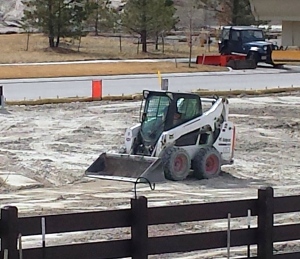 Last week I shared how to determine the make-up of your soil. This knowledge is helpful, but it doesn’t solve the problem of soil so hard, you can’t get a shovel into it. That’s what we’ll cover today.
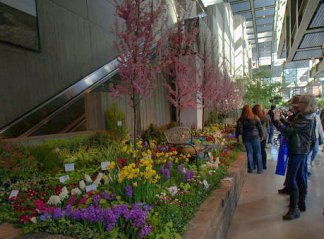 Sometimes I just need to see living plants. Colorado is wonderful; I love the mountains and grasslands, pines and wildflowers. I love the huge blue sky and even the menacing thunderstorms. But I do not care so much for the unending winters. While it doesn’t happen every year, we’ve had snow as early as September and as late as the end of May. That’s a really long cold season!
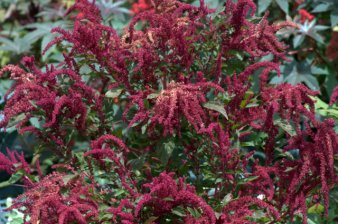 Valentine’s Day is just around the corner, and what could be more appropriate than a post on a romance-themed flower: Love Lies Bleeding (Amaranthus caudatus). You have to wonder about this name, though. I get this mental picture of a jilted lover and a heartless ex. Which one of them did the stabbing?
 We all know what roots are—they’re the part of the plant that’s usually underground. If we have a mental image, it’s probably a mass of wiggly, white strings poking their way through the soil. We should pay more attention to roots. After all, they’re an essential part of a plant (as well as the only part remaining after some hail storms!). Knowing a little about how roots work will make us more successful gardeners.
 I was at the market picking out some grapes when a large woman ran up to me and grabbed my arm. “Don’t buy those!” She looked alarmed. “They’re not organic!”
 Mountain Plover