Amy’s Garden

tyndale-garden-colospgs-co_lah_2870

After months of planting, watering, mulching, and pulling weeds, I tend to run out of steam by the end of August. The heat and the bugs are taking their toll, we’re actually getting a little tired of zucchini (imagine that!), and I am in desperate need of encouragement.

When my friend Amy asked me to come see her new garden, I jumped at the chance. She wanted some advice, but I wanted motivation Looking at someone else’s plot always inspires me to get back outside in my own veggie beds.
(more…)

My Favorite Cucumbers

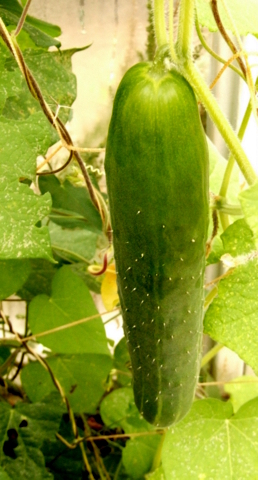
cucumber-greenhouse-2008sept08-lah-314Sliced onto a green salad, garnishing Thai food, chopped and added to chicken sandwich spread, pickled on a burger, or just sprinkled with salt and munched as a snack, cucumbers are as cool as, well, a cucumber, and the perfect food for the hot days of summer.

Cucumbers hail from hot and humid southeast Asia, a climate that couldn’t be more different from high, dry Colorado. I’ve often imagined a baby cucumber seedling popping its cotyledons out of the ground, only to be hit with the cold, dry winds of spring. Realizing cruel fate has somehow caused it to end up in Colorado, it immediately despairs, shrivels, and dies!

(more…)

Annual Sunflowers

helianthus-annuus-sunflower-csu-23jul04-lah-029Sunflowers may resemble a huge yellow sun towering overhead, but their name comes from their ability to keep their “face” turned toward the sun. Everyone recognizes a conventional sunflower with its huge dark disk surrounded by yellow petals, set atop a sturdy stalk that may reach over eight feet in height. A quick tour of a seed catalog shows that this is just the beginning. Breeders have developed shorter plants (as low as two feet) and an expanded palette of hues ranging from mahogany through orange to lemon yellow, white, and even soft rose to wine-red. Many types sport more than one color.

(more…)

Firewise Landscaping Help

waldo-cyn-fire_lah_1968

Just a quick heads-up. Do you live in an area in danger of wildfire? After the Waldo Canyon fire here, and many others around the West, we’re all more aware of the potential for disaster.

Firewise landscaping can make the difference between saving your home, or watching it burn. Carey, over at Pikes Peak Area Garden Help, posted an excellent list of links about gardening in a fire zone. Rather than repeat her efforts here, I strongly urge you to check out her post:

Landscaping in High Fire-Danger Areas

My Favorite Summer Squash

zucchini-home-2008sept23-lah-250The fun thing about growing any kind of summer squash is that no matter which variety you choose, you’re likely to be blessed with a bumper crop. Not only that, but zucchini tastes a lot like patty pan which tastes a lot like crookneck which tastes a lot like the new globular introductions. It’s hard to go wrong.

However, there are subtle differences. I’ve trialed a number of varieties. Surprisingly, some varieties succumbed to a heat wave, hail storm, or torrential downpour, while others persevered.  Others took too long to produce a crop. I find the days to harvest given in the catalogs have little in common with what actually happens in my garden, probably because our nights are so cool.

(more…)

Ewww, What’s That?

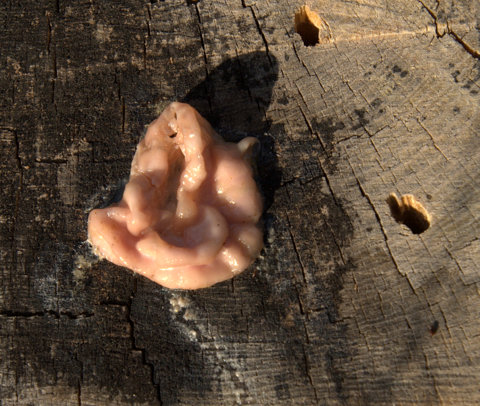
slime-mold_manitouexperimentalforest-co_lah_1830They’re not exactly beautiful. At first glance, you might guess that your neighbor’s dog has vomited on your lawn, but don’t go knocking on their door quite yet. These flattened slimy or spongy masses are actually living organisms known as slime molds.

Growing up to two feet in diameter, slime molds may be white to yellow, pink or tan. Although they look slimy, they are actually fairly resilient when prodded. Unlike plants, slime molds can travel several feet a day. And despite their name, they are not at all related to molds or other fungi. Rather, they’re considered members of the Protista. If you want more detail than that, let’s just say it’s complicated.

(more…)

IPM: Physical Barriers

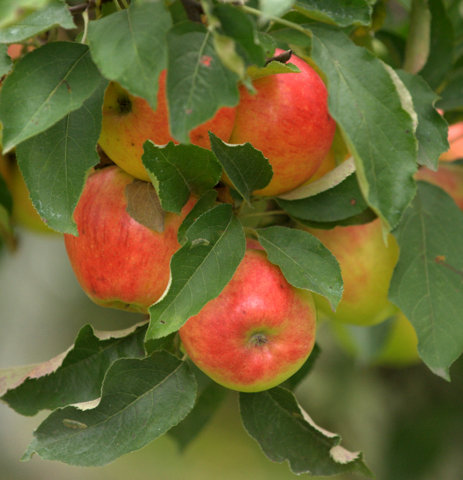
apples_browns-tacoma_20091016_lah_4005Let’s say you want to grow apples in your Colorado garden—a perfectly reasonable option for this area. You’ve selected a variety that’s resistant to fireblight (I discussed disease-resistant varieties in May), and your tree is thriving. In fact, after several years, it’s finally beginning to bear fruit. You pick your first juice, red apple, take a big bite, and… oh no! Yup, you find half a worm. Ewwww.

(more…)

‘Red Rocks’ Penstemon

penstemon-red-rocks-xg-2008jul18-lah-4656r

An inconspicuous, low-growing mound of evergreen leaves for most of the year, ‘Red Rocks’ takes center stage in mid-summer, with 18-inch spikes of bright pink, bell-shaped flowers. The first penstemon chosen for inclusion in the PlantSelect® program, ‘Red Rocks’ was added in 1999. It’s a cross between a showy Mexican species and a hardy Colorado native, combining the best features of both its parents. ‘Red Rocks’ is named after the park west of Denver.

(more…)

My Favorite Beans

pole-beans_colospgs-co_lah_4953If you planted green beans in May, and your garden survived our huge hail storm in June, you should be looking forward to your first harvest this month. While we sweat and complain about the record highs, beans like it hot and they’ve been growing like crazy.
There are hundreds of bean varieties, and even catalogs that specialize in beans of all sorts. I’ll share my favorites. Which ones are yours?

(more…)

Calibrachoa (gesundheit!)

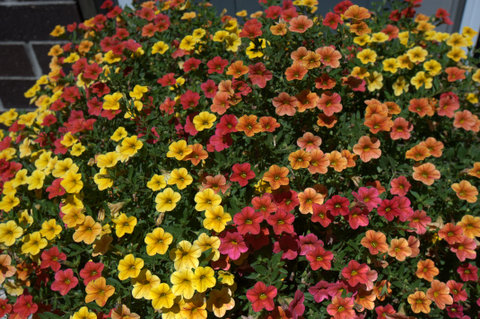
calibrachoa-_colospgs-co_lah_5043Imagine a petite petunia with intensely-colored, trumpet-shaped blossoms in shades such as magenta, violet, or copper. Flowers smother the slightly fuzzy, gray-green leaves from late spring until the first hard frost. Prolific flowering means that new flowers quickly replace those damaged by hail, a major asset in our area. Mature plants reach about eighteen inches in width and are less than a foot high. A relative newcomer on the garden scene, Calibrachoa has already gained a place of honor among annual flowers.

(more…)