Valentine Cyclamen

Cyclamen persicum_DBG_LAH_6366.nefIt’s Valentine’s Day, one of the busiest days of the year for your friendly neighborhood florist. My husband knows I like receiving flowers on this most romantic of holidays. He also knows that I appreciate getting a plant that is still alive and growing, as opposed to cut flowers that will soon wilt and be composted.

One popular Valentine plant is the Florist’s Cyclamen. These cyclamen are decidedly beautiful—delicate and romantic—but are difficult plants to keep indoors.

(more…)

Beautiful Begonias

Begonia 'Kismet'Alive and green. At this time of year, all I want is a plant that’s alive and green. I’m desperate for an actual leaf (not a conifer’s needle). Flowers would be nice too.

January is a hard time for gardeners. Planning and ordering seeds and plants, spiffing up the garden tools and flower pots—it’s all necessary, but almost none of it involves actual plants. Sometimes you just want to touch a leaf, admire a flower.  It’s for January that I grow so many houseplants.

(more…)

Colorado’s “Holly”

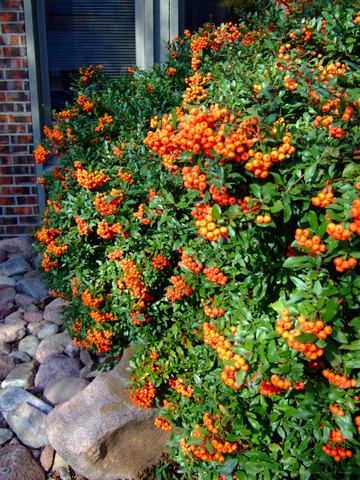
Pyracantha berries@ColoSpgs LAH 131We’ve succumbed—an artificial tree, fake garlands, silk poinsettias. As I pull our Christmas bins out of storage, I wonder—how did a gardener stoop this low? Isn’t there something Christmas-y I can grow here in Colorado? It would be so nice to simply go outside and snip a few branches to grace our mantle.

While holly isn’t really adapted to our high and dry conditions, and the mistletoe growing in the Ponderosa pines differs from the pretty parasites of England, there is one plant that not only produces red berries in December, it’s one of the very few broad-leafed evergreens to survive in Zone 5!

(more…)

A November Garden Beauty

Eriogonum umbellatum var aureum - Sulfur Flower Buckwheat_DBG_10200118_LAH_7145My daughter was staring at the planters surrounding her patio, full of bedraggled and wilted plants. “I know it’s November, but is there something I can plant that will look nice now?”

Of course we’re not going to get the delicate flowers or green abundance of late spring or summer, but dead doesn’t have to mean ugly. Some plants manage to look good even after freezing nights and the season’s first snowstorm.

(more…)

Blood Geranium

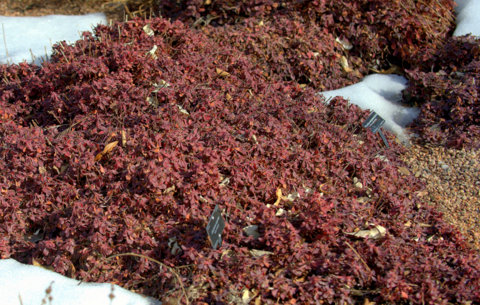
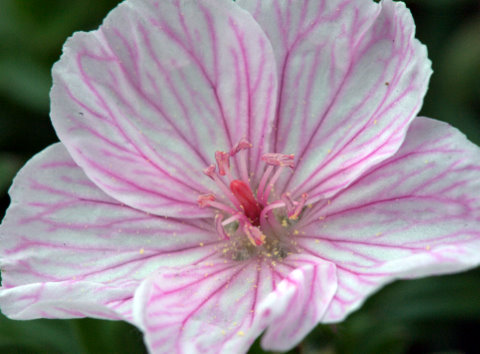
Geranium sanguineum 'Lancastriense'_Bloody Cranesbill_HudsonGardens-CO_LAH_2751Its name may be suitable for Halloween, but the Blood Geranium, aka the Blood Red Cranesbill, Bloody Cranesbill, or Geranium sanguineum, is anything but gruesome. In fact, the name comes from the bright crimson color of the fall foliage, rather than from the flowers or any tendency of the plant to bleed! In fact, Blood Geraniums are excellent plants for Colorado gardens.

Cranesbills are a type of perennial geranium with deeply divided leaves rising from a central point, and colorful flowers ranging from white through baby’s blush to shocking pink. Some flowers have brightly veined petals, as shown in the photo. The plants grow approximately 12 to 18 inches high and spread as wide or wider.

(more…)

Teasel Isn’t Teasing

Teasel @BearCreek LAH 026Most of us are familiar with teasel. It grows in most states, including Colorado where it is designated a “List B” species in the Colorado Noxious Weed Act. That means that, if you live in Colorado (or several other states), you need to declare war on any plants on your property. Good luck.

Teasels are easily identified by the spiny flower head left behind after the petals have fallen, as you can see in these photos. There are two species listed as noxious weeds in Colorado—the Common Teasel (Dipsacus fullonum), shown, and its lookalike cousin Cutleaf Teasel (Dipsacus laciniatus).

(more…)

Autumn Joy

Sedum 'Autumn Joy' @Briargate 10sep05 LAH 089As the growing season winds down we begin to focus on turning autumn leaves, dried grasses, and striking seed heads, but for some flowering plants this is their time to shine. Sedum ‘Autumn Joy’ will star in your fall garden.

Plants grow from a single crown, becoming an upright clump 15 to 18 inches tall and 15 inches wide. The succulent, rounded leaves and stems have a gray-blue cast. Stems are topped with large flower heads that start out dusty-pink and become a rich bronze as they age—the ideal colors to complement fall’s russet and gold.

(more…)

Sneezeweed

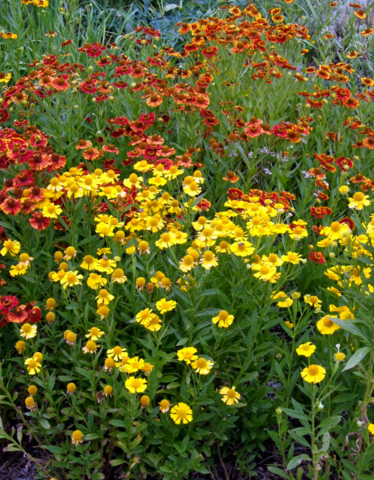
helenium-sneezeweed-csutilxeriscapegarden-9aug2006-lah165rWhy would you grow a flower called Sneezeweed? Picture a striking, three-foot high perennial covered with 2 to 3 inch daisy-like flowers of yellow, orange, red, rust, and copper. The leaves are six inches long, lance-shaped and dark green. Actually, the name comes from the use of the dried leaves and flowers as snuff; the pollen is unlikely to cause hay fever. However, handling the plant can cause an allergic reaction, so it’s wise to use gloves. Also, the plants are bitter and toxic, so keep them away from small children and pets.

(more…)

Bad Daisies

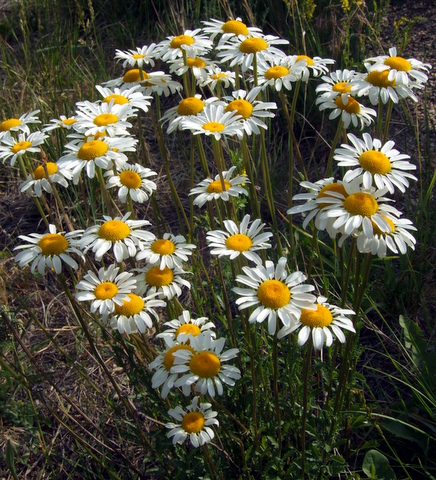
Oxeye_Daisy_TaylorCanyon_2008jul14_LAH_006-001Fresh as a daisy. Daisy chains. “The daisy’s for simplicity and unaffected air.”*

Symbols of simple charm, it’s hard to imagine that daisies could be anything but pure and innocent. Yet, the familiar Oxeye daisy has a dark side. Under that attractive and cheerful guise lurks… a noxious weed!

Take a trip to the mountains to see the wildflowers, and you’re bound to see Oxeye daisies as well. They’re all over the Rockies, preferring the higher elevations. Unfortunately, they don’t belong here. They’re native to Europe, and we heartily wish they had stayed there!

(more…)

Garden Fireworks

Helictotrichon sempervirens - Blue Oat GrassWith the Black Forest fire fresh in my mind, I’ve been wondering, how could we celebrate Independence Day without any sparks or explosions? I’m just not in the mood for fireworks! Well, being a gardener, I started thinking of all the plants that could be part of a 4th of July garden. What plants remind me of fireworks? What blooms now? Here are my suggestions—what can you add to my list?

(more…)