
 Just as each month is associated with a particular birthstone (January’s being a garnet), so is each month paired with a particular flower. According to folklore, each of these flowers symbolized specific characteristics, which were in turn assigned to those born during that month. While some claim this custom arose with the Roman empire, I suspect that the florist industry might also have had something to do with it.
Well, it turns out that January’s “birth flower” is the carnation. Carnations are on my Top Ten list of flowers. They’re pretty, typically inexpensive, last a long time as a cut flower, and have a scent that I swoon over. Apparently, I’m in good company. Their genus, Dianthus, comes from the Greek for “flower of the gods.” How appropriate! (more…)
 When you have a smaller yard, you want every plant to earn its keep. With fragrant yellow flowers, blue berries, and green leaves that turn purple in winter, Creeping Mahonia (aka Oregon Grape, Mahonia repens) definitely deserves a spot!
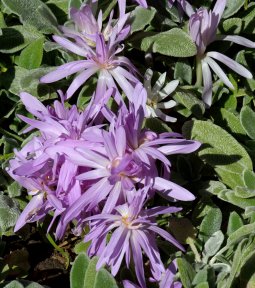 When we think of crocuses, we imagine the first flowers of spring, daring the cold and snow to herald the coming change of seasons. And just as crocuses start the growing season, they can also be among the final flowers of fall. You may know them as Meadow Saffron or Naked Ladies (although that name also belongs to Amaryllis belladonna)—these goblet-shaped pink–to-purple flowers that spring leafless from the ground in early autumn. They don’t last long, only two or three weeks, but their presence when all else is fading makes them worth the effort.
 In a field crowded with contenders, I have a new favorite wildflower. This plant is incredible—large, flashy, tough, gorgeous. What more could you want? Best of all, it’s thriving in my yard. I’m in love.
 Envision a woodland garden, and nodding columbine are one of the first plants that comes to mind. With their intricate shapes and rainbow of colors, columbines are deservedly popular perennials.
 The scarlet blossoms really do look like bushy paintbrushes dipped in red paint; they’re hard to miss, even in a meadow crowded with wildflowers. Most of us easily identify these iconic perennials, although we may be a bit confused by the species that bloom in pink, white, and yellow.
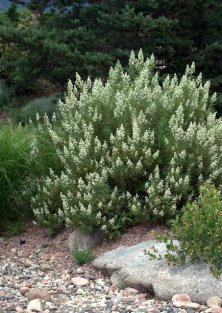 From a distance, a blooming fernbush (Chamaebatiaria millefolium) resembles a lovely white lilac bush, but no lilac would be in bloom at this time of year. Growing to seven feet high and wide, these shapely shrubs are covered in upright sprays of showy white flowers from June through August. Individual blossoms are reminiscent of single roses, and attract bees and butterflies. Come autumn, the flowers are replaced by russet seed heads.
 Mountain Plover