
Earthworms

Photo: Joseph Berger, bugwood.org

We hardly notice them most of the time… they’re out of sight, underground, aerating the soil, creating humus, increasing fertility. It’s only after a rain storm, when the ground is saturated, that they come up for air. Then we see their desiccated carcasses strewn across the pavement. Robins eat them, anglers use them for bait, and little kids bring them home in their pockets as pets. Most of us dissected one in biology, carefully counting the five aortic arches while debating the coolness of being squeamish. Yet, for all their inconspicuous habits, earthworms play a major role in both our gardens and in the wild.

(more…)

Cotoneaster Offers Berries, Fall Color

cotoneaster-apiculatus-cranberry-cotoneaster-dbg-28jul04-lah-411As summer’s flowers fade, plants that produce berries take center stage. Branches covered with bright red berries make cotoneasters especially attractive now, but they offer year-round interest. In spring, tiny but abundant white to pink flowers may be obscured by the shiny round green leaves. Foliage turns orange-red in fall. Finally, the berries persist into winter, or until the birds pick them clean.

cotoneaster-in-winter-dbg-lah-002The hardest part of growing cotoneaster is pronouncing it correctly (it’s “ko-TON-ee-AS-ter”). These shrubs thrive with little attention, handling poor soils, full sun to afternoon shade, and moderately low amounts of water. New shrubs should be coddled a bit until vigorous growth begins. Give plants room to spread, pruning only to remove oldest wood and enhance appearance. As with all members of the rose family, cotoneasters are occasionally susceptible to fire blight; some new varieties are tolerant of this disease. The many different species in cultivation vary in hardiness. Most will survive zone 4 or 5 winters, but check the label for the variety you are purchasing.

There is a size and shape for every use. Spreading plants under three feet high make good groundcovers. Try planting them where their arching branches can spill over a wall. Small, stiffly erect shrubs may be used as informal hedges. Tall, fountain-shaped growers form good screens.

What are your flowers up to?

sex-in-your-gardenSex in your Garden, by Angela Overy

“In gardens, beauty is a by-product. The main business is sex and death.” —Sam Llewelyn

With the accuracy of a botanist and the flair of a Madison Avenue advertising agency, Angela Overy (yes, that’s her real name) has produced an exceptional guide to plants and sex. Lest you think this is a dull subject, let me assure you that you will be fascinated by her lurid descriptions of the myriad ways plants manage to achieve pollination.

As living things that can’t get up and pursue a mate, you would think plants are at a disadvantage when it comes to reproduction. Reading this book will dispel any such notions. Colors and scents are just the beginning. Some plants go to great lengths to please a pollinator, others actually eat those who try to help them. Bats, beetles, birds and, amazingly, possums join the ranks of those who do the plants’ dirty work. Even people get into the act.

I particularly love the way Overy juxtaposes photographs of flowers with pictures of models, largely taken from advertising. It seems that life is largely about selling, and we’re all going about it in the same way. Tantalizing forms, bright colors, offers of rewards … isn’t that how we make things attractive?

Enjoy this book and I promise—you’ll never again consider flowers in quite the same light.

Putting Your Garden to Bed

Early fall weather brings an invigorating briskness that invites us back into our gardens. Don’t resist. There is plenty to do:

  • carrot-sleeping-in-bedSpending time now on chores such as weeding and garden cleanup will reward you many times over when spring arrives.
  • Amending your soil this fall will give you a head start on next year’s garden.
  • Fall is also a great time to build a new patio or raised bed.
  • Protecting your less-hardy plants will increase the odds of them surviving a Colorado winter.
  • Finally, winter’s cold weather is a great time to read articles, take classes, and prowl the Internet to become a more knowledgeable gardener. Your county Master Gardeners are there to help, with research-based information that is tailored to your specific growing concerns.

(more…)

What Rot!

compost-piles-pbg-390Making your own compost is a great way to recycle yard waste that would otherwise end up in a landfill. It’s the epitome of green gardening, and it’s really not that complicated.
The pile should contain about half fresh, green matter (fresh manures, grass clippings, weeds, kitchen waste) and half dry brown matter (fall leaves, straw, last year’s garden). If the manure you collect locally comes mixed with straw bedding, you already have the perfect combination for compost. Mix the green and brown parts together, or create thin layers.

Shredding your ingredients helps speed decomposition. In Colorado, an unshredded pile may take several years to break down, but it will eventually turn into compost.

(more…)

Digging Up Dirt

shoveling-manure-home-plh-sI keep talking about dirt. That is, I seem to have a soil fixation. Perhaps that’s because gardens begin with the soil. Properly prepared soil produces healthier plants, reducing the need for chemical sprays and fertilizer, and making more efficient use of water. Last May I discussed what soil is, and how to amend it. Today I want to expound a bit on the various types of amendments. I’ll also repeat myself a bit. That sort of thing happens as one gets older.

While living along the Front Range has many benefits, our soils are really pretty pitiful. Unless you are content growing a limited number of native plants adapted to this area, you’re going to have to improve on nature. What’s an environmentally responsible gardener to do?

In new plantings, it is worth spending a little time and money for a soil test. Knowing what your soil has, and what it lacks, helps you avoid many time-consuming and expensive mistakes. Follow the test result directions to maximize fertility and soil health. There are natural materials available to raise your levels of nitrogen, potassium, and phosphorous.

(more…)

Don’t Blame Goldenrod

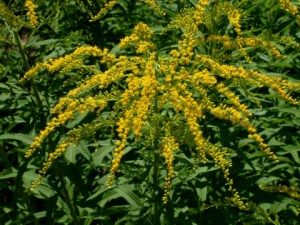
solidago-goldenrod-dbg-lah-010
Goldenrod—Solidago virgaurea

Mention Goldenrod, and most people think of allergies. Yet, this showy, late-summer perennial is receiving a bad rap. The insect-pollinated flowers do not release pollen into the air. It’s ragweed, blooming at the same time, that usually causes any sniffles. Goldenrod, with its fireworks displays of yellow flower clusters, deserves to be much more appreciated.

The hardy plants range from two to four feet tall, depending on cultivar, and look best planted in groups of five or more. They prefer full sun and amended, moist soil, although they can adapt to drier conditions.  The blooms attract butterflies. Try planting goldenrod with other semi-xeric flowers such as Shasta daisies, or purple asters or coneflowers to provide a welcome contrast.

Most garden cultivars are hybrids derived from either our native species or those imported from Europe. Self-sown plants may not come true to form, so flowers should be deadheaded before seeds mature.

Green Solutions to Garden Pests

grasshopper-bf-lah-007Oh no! My organic garden is being consumed by organic bugs! Now what do I do?
Green is definitely the color of the decade, and more and more gardeners are turning to organic gardening principles for their landscapes and kitchen gardens. But what do you do when the hordes attack? Just because your harvest is in danger of premature consumption, doesn’t mean you have to abandon all your “green” principles. You are not defenseless!

Before reaching for the sprayer, consider all aspects of the problem. Chemicals, even organic ones, are only one weapon in your arsenal.

(more…)

Green is for Gardens

aquilegia-caerulea-blue-columbine-cottonwood-pass-summit-15july05-lah-005“The Green Guide, National Geographic’s source for greening your life.” “Green Home—everything you need to create a healthy home environment.” Green-collar jobs, green building, and green news. Green is certainly the color of the decade. Yet, long before green became such a household buzzword, gardeners were growing green plants. Isn’t gardening the original green industry?

Gardening is a partnership with nature. Therefore, it is only fitting that we create our landscapes with an awareness of how our actions in our gardens impact the environment. Over the next few months, I plan to post a series of articles on how to garden green. Hopefully my list will inspire you to come up with ideas of your own. I’d love to hear your input.

dsc_7100Green gardening requires an understanding of ecology. What vegetation would naturally grow on this site? What stress factors do these plants need to cope with? Will the plants grow in sun or shade? Is it windy? How hot and cold will it get here?  How about yearly rainfall? Is the ground level or sloping? What is the soil like? Is it acidic or alkaline, clay or sand? What bugs or other animals eat plants in this area? Understanding how plants grow, and how they are adapted to their surroundings, lets us choose a landscape in harmony with nature.

(more…)

Hand-Pollinating Zucchini

It’s time to learn about sex. Oh, you think you already know all about that? OK, but how much do you know about making baby zucchinis?

Perhaps your zucchini (or other squash) plants are producing plenty of flowers, but no squash. Or, maybe they start to grow little squashes but then the babies turn yellow to brown, get all wrinkled, and fall off. What’s wrong? It’s highly likely the problem involves zucchini sex.

All squash plants (and related crops such as cucumbers) produce two kinds of flowers, male and female. Here’s how to tell them apart:

zucchini-blossom-male-femalecsu-23jul04-lah-033s

(more…)