
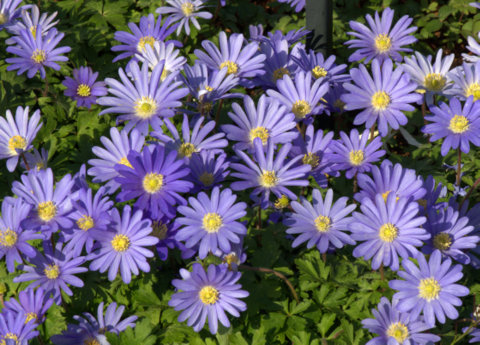
 Carpeting the ground with drifts of white, pastel pink, and soft blues, Grecian Windflowers are the epitome of spring. The large, star-shaped flowers are set off by ruffled green foliage that form a mat a foot across and only a few inches high. Anemone blanda is a delightful addition to any informal landscape.
Category: Plants
A Colorado Gardener
 As a gardener, I’ve often dreamed of living someplace where plants actually want to grow. Colorado is definitely not that place. The weather is wacky, we’re short on water, and the soil dirt runs to extremes—we can either make pottery or fill a golf course bunker.
You might wonder how anyone could grow anything in such an inhospitable location, but there are definite advantages. As we look forward to another growing season, and I am looking forward to it, I want to focus on the positives. Here’s how an optimist views gardening in Colorado.
Auto-corrected Flowers
 A (long) while back I posted Heidi’s list of auto-corrected bird names. I thought it was pretty funny, partly because most bird names are not normal words. What’s a spell-checker supposed to do when confronted with names such as Willet, Phalarope, or Gallinule?
Being both a birder and a gardener, I began to wonder how Microsoft Word would treat some of the more unusual flower names. Typing a quick list was quite revealing! Then, as I went to retype everything in WordPress, I discovered that they don’t use the same dictionary. In a few instances, it had its own list of suggestions, making things even more interesting!
Blizzard Gardening
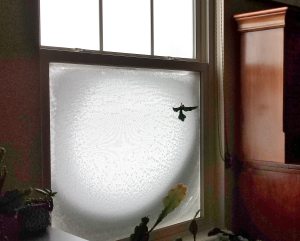 Today (as I write this) is officially the third day of spring, but you’d never know it here in Colorado. I can barely make out the house across the street through the snow hurtling by at up to 70 mph. Cottony clumps of white stuck to the window screen have totally blocked the view from my office (right). Those who can are staying home, businesses are closed, and schools would be too if the kids weren’t already off for spring break. The blizzard warning keeps changing. We can expect a mere 1 to 3 inches of snow. No, we’ll get 6 to 12 inches. And now they’re saying 8 to 16 inches with significantly higher drifts.
My first daffodil bloomed yesterday.
Heavenly Blue Wildflowers
 Who doesn’t like blue? With clouds of sky-blue, 5-petaled flowers that seem to float among the surrounding foliage, Blue Flax is a welcome addition to any garden. A perennial hardy to 9,500 feet, the fountain-shaped plants are comprised of graceful, wiry stems reaching two feet in height, and embellished with blue-green needle-like leaves.
Flax’s open, airy stems tend to go unnoticed, but the abundant true-blue flowers will fill those empty spaces between more vibrantly colored blooms in a perennial border. However, flax is most at home naturalized into a grassy meadow, where it can mingle with blue gramma grass and other short-grass prairie wildflowers.
Dealing with Compacted Soils
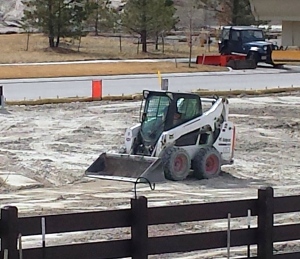 Last week I shared how to determine the make-up of your soil. This knowledge is helpful, but it doesn’t solve the problem of soil so hard, you can’t get a shovel into it. That’s what we’ll cover today.
Most often, soil that is rock-hard is mostly clay. Sand can get hard, too, but it’s much more forgiving. They don’t make pottery out of sand. So what do you do with your compacted clay? Here are some do’s and don’ts.
Dealing with Compacted Soil
 My soil is rock hard! That’s a common complaint along Colorado’s Front Range. Our soils tend to extremes—we find that we’re either dealing with sand and decomposed gravel (the remains of glacial moraines), or clay. Then, to make things worse, soil becomes compacted over time. Roots can’t force their way through compacted soils, plus there’s no place for air or water. How do we turn compacted dirt into soil that nurtures life?
The Northwest Flower and Garden Show
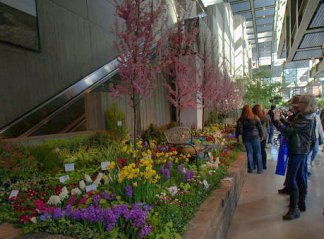 Sometimes I just need to see living plants. Colorado is wonderful; I love the mountains and grasslands, pines and wildflowers. I love the huge blue sky and even the menacing thunderstorms. But I do not care so much for the unending winters. While it doesn’t happen every year, we’ve had snow as early as September and as late as the end of May. That’s a really long cold season!
When all that dormancy gets overwhelming, it helps to spend a week or two where winter isn’t quite so persistent. Last week I wrote about coming over the Sierras into California, green and blooming and full of warm breezes and golden sunshine. But California wasn’t my only destination. From there I drove north to Seattle to attend the Northwest Flower and Garden Show (and spoil my grandkids).
California Sunshine
I’ve been on a road trip the past week, driving from our snow-covered yard in Colorado west to a land of broad-leafed evergreens and warm sunshine. Wyoming was cold and windy, as expected. The I-80 corridor is desolate at any season. The slopes around Alta were crowded with skiers, Salt Lake City was smogged in, and Lake Bonneville had an inch of water in it, much to my surprise. Next morning, as I crossed Nevada, I encountered fog in the intermountain lowlands that had left hoar frost on every surface of the ubiquitous sagebrush. It was a desert fairyland. I wanted to grab some photos but there are few places to stop on the interstate, and besides, the car thermometer hovered at 3 degrees!
Love Lies Bleeding
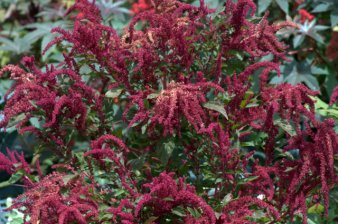 Valentine’s Day is just around the corner, and what could be more appropriate than a post on a romance-themed flower: Love Lies Bleeding (Amaranthus caudatus). You have to wonder about this name, though. I get this mental picture of a jilted lover and a heartless ex. Which one of them did the stabbing?
Thankfully, the flower we call Love Lies Bleeding isn’t quite so melodramatic. It’s a member of the amaranth family from the Andes of South America, where it is known as kiwicha, and is now grown around the world.
 Mountain Plover