Don’t Shock Your Plants

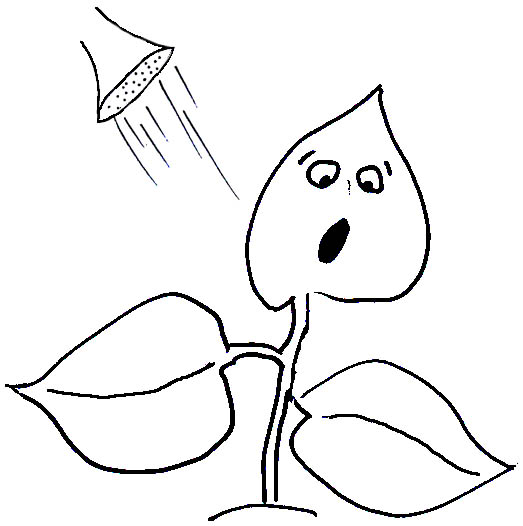
shocked bean plantAfter waiting your turn for the shower, you finally get your chance. You turn on the water, adjust the temperature, and step under the warm spray… which suddenly turns freezing cold as the hot water heater runs out of water. Yikes!

We don’t enjoy a sudden dousing of icy water. Neither do our plants. They may not look startled (how does a bean plant look startled?), but the cold water abruptly chills the soil and slows their growth. Since our growing season here in Colorado is often too short to begin wth, pouring cold water on our plants is to be avoided.

(more…)

Patience Pays

2009-04-12 Easter morning snow 006One thing I’ve learned (the hard way) is that it pays to be patient. Rushing the season usually results in cold-stunted plants, reduced yields, or, even worse, losing an entire crop to a late frost or snowstorm.

For example, most garden guides tell you to plant broccoli and other crucifers early—two weeks before your average last frost date—as the young plants can stand some frost. What they don’t tell you is that prolonged exposure to cold temperatures will ruin your chances for a harvest. Two to three days of temperatures that stay below 40 degrees will fool the seedlings into thinking they’ve experienced winter (can’t blame them a bit!). Instead of growing up and producing the nice, succulent head you’re anticipating, the broccoli will try to force the issue and “button.” That is, it will rush to bloom while still small, and all you get is a one-inch (or smaller) head with a bitter taste and tough texture. Bleah!

(more…)

Spring for an Easter Garden

Celebrate Easter. Celebrate spring. Sometimes it seems as if there’s a tension between the two. Some people think of cute little lambs and chicks, jelly beans and hollow chocolate rabbits. Others prefer to concentrate on the resurrection.

Spring and Easter do not need to compete for our attention. Budding plants, baby animals—they should all remind us of the new life possible because Jesus died and rose again. I don’t believe it’s a coincidence that the renewal of life and the resurrection of Jesus happened at the same time of year. (Of course, those living in the southern hemisphere miss out on this connection.)

(more…)

Digging Dirt

Winter beds @home LAH 7Ahh, March. Snow is still quite likely, but on some days our intense, high elevation sunshine beckons me into the garden. There, I’m greeted by one of my favorite smells—the aroma of humus-laden soil. The ground is no longer frozen. Let the growing season begin!

I’ve had my current garden for twenty years now. In that time, I have never stepped on the soil in my boxed beds. After an initial double-digging, the soil remains uncompacted, perfect for planting. Additionally, a soil test last year showed that I have plenty of humus—too much, actually—so I don’t even need to add compost for a while. Aside from adding a side-dressing of nitrogen, I won’t have to dig this year.

(more…)

Is Your Garden in Danger from Gnomes?

gnome2-klbI’m taking a break from blogging to bring you an important message from the Utah State University Extension. There seems to be an annual increase in gnome numbers immediately after Christmas, so this is timely information.

Growing conditions in Ogden, Utah, where this video was created, are very similar to those along Colorado’s Front Range, so I’m sure you’ll find this advice very helpful.

Please sit back, relax, and learn how you can deal with invasive garden gnomes!

Gnome Management in the Garden

Great Garden Advice

NGA websiteNeed some know-how on how to prune your lilacs? Want to cultivate the best-tasting carrots? Looking for a way to garden from your yard-less apartment? No matter what your gardening question might be, the National Gardening Association (NGA) has answers.

I first learned about this amazing nonprofit organization back in the early ’80s. My savvy husband subscribed me to their garden magazine, Gardens for All. It came on folded up, printed on thin, oversized paper… clearly a low-budget operation. But the information was first-rate.

(more…)

IPM: Pest-eating Vertebrates, Part 1

Eastern Collared Lizard_DesertMuseum-AZ_LAH_4796Here it is the middle of winter, and garden pests are out of sight and out of mind. Yet, we know that those critters are out there, waiting for warm weather to bring out the first sprouts of spring—just so they can gobble them up! It’s a very good thing, then, that there are other creatures biding their time, waiting to eat those garden pests! I’ve already talked about bug-eating invertebrates. This time I’ll focus on those animals with some backbone, so to speak. Being biologically minded, I’ve sorted these helpful vertebrates by which taxonomic class they belong to.

Amphibians
Toad_ColoNat'lMon-CO_LAH_3622One of the most helpful animals to welcome into your garden is a toad. Like frogs and salamanders, their close relatives, toads eat tons of bugs, and they don’t need a pond to live in. Experts say they eat up to 100 bugs every day, and while they don’t discriminate between “good” bugs and bad ones (they’ll nab anything that moves), it’s nice to see cutworms, grasshoppers, flies, and slugs disappearing into their wide jaws.
(more…)

Gardening Books for Children

Gardening with ChildrenMonday I posted some suggestions for books that might pique a child’s interest in birding. Today, I focus on books for budding gardeners. As I mentioned, I have a granddaughter. While she’s only seven months old, I plan to waste no time introducing her to the wonderful world of flowers, bugs, and dirt!

I confess… I’ve been buying books for this child before she was ever conceived. I’d see something, rationalize that it might be out of print by the time I have grandchildren, and stash it away for future use.

(more…)

My Favorite Seed Catalog

The mailbox is full of catalogs these days. Harry and David, Sierra Trading Post, Pottery Barn—I may glance at them before tossing them into the recycling bin. But there are a few catalogs I can’t wait to get. As the cold weather sets in and the landscape is dreary and dead, seed catalogs arrive with their reminder that spring will come, eventually. They are the perfect cure for the winter blahs.

(more…)