

After the storm earlier this week, snow blankets the fields, hiding most signs that anything ever grew there. But interspersed with the even white blanket and occasional dried grass leaves are spikes, sticking up like posts in the empty landscape. We’re finally noticing the dead and dried flower/seed stalks of Common Mullein (Verbascum thapsus).
 Did you know that plants come in families?
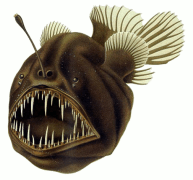 When I think of parasites, I typically think of creatures such as tapeworms, fleas, ticks, and leeches—nasty invertebrates that drain the life out of us humans. Then, I might recall that some higher animals can also be parasites, such as the deep sea anglerfish. You’ve likely seen pictures of anglerfish, with their huge, pointy teeth in a large head, followed by a tapering body. When these fish mate, the male permanently attaches itself to the female and lives off her bloodstream for the rest of his life, his sperm his only contribution. (See National Geographic’s
 My pole beans, which got a rather late start, are finally climbing their way up the strings on my bean tower. I’m always impressed that the plants know just what to do. Those reaching tendrils that come into contact with the string immediate start to coil around it, securing themselves to the support. A few plants were still free, waving in the light breeze. I tucked them between the two strands of twine, so they too could wind their way upward.


 Mountain Plover