Blooming Seedheads

seedhead_emeraldvalleyco_20090630_lah_5364xc4x6Some are ephemeral, shattered by the slightest breeze into a thousand tiny parachutes. Others hang on all winter, beautifying the garden like subdued flowers. At this time of year, with most flowers past their prime, seedheads come into their own.

When creating a landscape, designers usually consider shape and form, colors, texture, flowers and leaves. Rarely are seedheads part of the equation. But in a climate such as ours here in Colorado, many plants are dormant at least as long as they are in active growth. Their winter appearance matters.

Plants with persistent seedheads abound. Just as when we combine flowers of differing shapes and colors to produce a pleasing synergy, we need to consider the color, shape, and texture of seed heads.
(more…)

Birding the Colorado Tropics

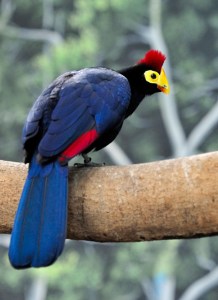
Lady Ross' Turaco_DenverZoo_20091007_LAH_3617x-1
Lady Ross’ Turaco

It’s the middle of winter. We could go birding, but it’s hard to juggle binoculars when one has on several layers of insulation, hat, scarf, and wool mittens. Cold weather has us huddled indoors, wishing we could migrate to someplace delightfully tropical. Well, we can. I recently visited a place that’s always nice and toasty, filled with moist air, green plants, and exotic species, and is only an hour or so from my home—the Denver Zoo.

Bird World consists of a series of three large, sky-lit rooms, each with its own assortment of brightly colored birds from around the world. The rooms are sized so that you don’t need binoculars to get a good look. Natural surroundings encourage natural behaviors, even courting, nesting and raising young. Because the birds aren’t in cages, there are no bars between you and your subjects, making this a great place to take pictures. Connecting these rooms are wide hallways where more birds live in glass-fronted enclosures.

(more…)

Angelina Stonecrop – Sedum rupestre ‘Angelina’

sedum-rupestre-angelina_dbg_10200118_lah_7253xAngelina Stonecrop is a garden asset all year long. In summer, the low-growing succulent forms spreading mats of cheerful yellow-green, adorned with clusters of yellow star-shaped flowers. These blooms attract butterflies. But it is in winter that Angelina really shines, when those same fleshy leaves turn an incredible, brilliant orange, with subtle shades of red and yellow. The colors are so intense, the ground appears to be on fire. Such a show would be welcome at any time, but is especially appreciated when everything else is dead or dormant.

(more…)

January Blooming

viola-in-snow_dbg_10200118_lah_6906xBlooming? In January?

I spent a day last week at the Denver Botanic Gardens. The weather was sunny and warm, with highs in the 50s, and I just couldn’t stay indoors. I figured I’d walk around and take pictures of the dormant plants—some look better than others at this time of year—and hardscape features. Well-designed gardens have appeal in January as well as July, and these certainly qualify as well-designed.

As I expected, the conifers and evergreens (such as Mahonia) dominated the landscape, along with the warm golds and coppers of the ornamental grasses. I was happily snapping photo after photo, enjoying the beautiful day, when I saw something peeking out from under some melting snow—several somethings—yellow and purple somethings.

(more…)

Tropical Flowers in January?

lah_6081

What plant thrives indoors, shrugs off low humidity, and blooms all winter in bold shades of white to pink to red? Surprise! It’s wax begonias!

Also called fibrous begonias, these familiar bedding plants have large, round succulent leaves in either lime green or a beautiful burgundy- or bronze-red. Flowers have fleshy petals surrounding a bright yellow cluster of stamens. Plants grow to a height of about six to twelve inches. They tend to flop, creating a solid mass of color, and even trailing over walls and container edges.

(more…)

Winter Birding in Colorado

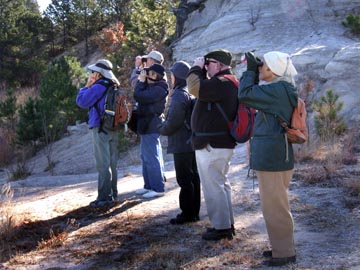
kettlecreeklakes_2008-11-22_lah_361rOur recent warm spell is lovely, but it’s still January. Temperatures swing back and forth between cool and freezing. Trails are icy, and sometimes blocked by snow. This is traditionally a time to hole up and hunker down. We are attracted to warm firesides, hot chocolate, and snugly quilts. But if you, like me, are passionate about nature, and birds in particular, can we be content to sit by the fire? Just because the temperature outside is in the single digits, are we to ignore our obsession and hibernate like bears?

Of course, some birds have opted for tropical vacations, and I’m sure we would love to do likewise. But if the schedule and budget don’t allow for a trip to Central America, be encouraged. There are plenty of birds to be enjoyed right here. A surprising number of species hang around for the season.

(more…)

Winter Color

Do weeks of staring at snowy white landscapes have your eyes screaming for color? Winter gardens don’t have to be drab, lifeless affairs. Flowers may not be in bloom, but many plants have leaves, stems, or berries in shades of bright red, golden orange, or silver-blue and plum. Put them together and your winter garden springs to life.

Mahonia repens (also known as Oregon Grape Holly)  is an attractive groundcover year-round, but it really shines in winter. While other plants shed their leaves, Mahonia’s foliage turns a stunning bright red.

Yellow flowers in spring and showy blue berries in early fall add to this native’s year-round interest. Mahonia repens is drought tolerant, and handles full sun to part shade.

Juniper horizontalis ‘Blue Chip’ is another groundcover that remains attractive all year. While many junipers grow much too large for our small yards, Blue Chip stays under a foot high. Its feathery foliage is a beautiful steel-blue all year, with the addition of silver-plum tips in winter. Plant it in full sun, where it will quickly spread up to ten feet in diameter. Junipers are very xeric once established.

(more…)

Surviving Winter: Basic Garden Design

After dreaming about blooming zinnias and vine-ripened tomatoes, I woke up and looked out the window this morning. Yup, still winter. What’s a frustrated gardener to do?

Dogwood's red branches add winter interest
Red-Twig Dogwood

Winter is actually the ideal time to think about spring. This is the best time of year to design a new garden, or improve upon the one you already have. With all the foliage out of the way, the bare bones of the garden show clearly. Is there still a sense of design to the landscape, even without growing plants? Is some of last summer’s growth still attractive in its dried and dead state? What about interesting bark or seed pods? Dried berries and other fruits? Bare branches form winter sculptures. Look at your dormant landscape—do you like what you see?

When I can’t take another day of leafless branches and frozen soil, I grab a mug of hot tea and head for my favorite chair—the one that has a view of my garden. Then I start to imagine. (more…)