

Girl eggplants? Boy eggplants? Does one taste better than the other? And what does all this have to do with plant sex?
In researching my recent post on eggplant, I discovered a bunch of discussion about “male” vs. “female” eggplants. We’re talking about the fruit—the eggplants that we eat—not the individual plants on which the eggplants grew.
From a botanical point of view, this whole debate is nonsense. Let me explain:
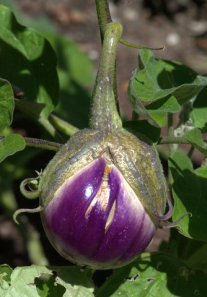 Eggplant Parmigiana, Moussaka, Moroccan Eggplant Salad, Baba Ganoush… there are plenty of delicious ways to eat eggplant. Growing it in Colorado is a whole different story. A native of warm and humid southeast Asia, it takes a bit of persuasion to convince this tomato family member to thrive in our cool, dry climate.
 “I’m interested in learning how to watch birds. How can I get started?”
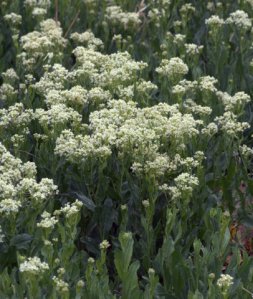 Spring flowers are finally filling the fields. Milk vetch, penstemons, wild onions and marsh marigolds all caught my eye as I hiked though the towering cottonwoods along Fountain Creek, at the base of the Rockies here in central Colorado. I was particularly impressed by huge swaths of a foamy white flower I didn’t immediately recognize.
 It was like a bird-shaped ghost—we couldn’t quite believe our eyes. My friend Debbie and I were birding near Grand Junction, in Colorado National Monument—a spectacular place of sheer cliffs, rock pinnacles, and copper-colored sandstone.
 Is your garden being bugged? While 95% of all insects are either beneficial or benign, that last 5% can eat us out of house and home—or at least out of cabbage and broccoli. If insect invaders are on the attack, sometimes you just have to fight back.
 Right on schedule, I hear the shrill whistle of a Broad-tailed Hummingbird’s wings. I’m writing this on May 1, and I just had my first tiny visitor of the season—on the exact same date as last year. I’d hung the feeder a few days ago, just in case, but not one bird stopped by until today. Amazing.
 Mountain Plover