This bird was photographed in Colorado in January. Can you name it? I will post the uncropped photo on Saturday, giving you one more chance to identify the bird. The answer will appear at the end of next Monday’s post.
Normally, when we visualize a flower garden, we think color—yellow coreopsis, purple catmint, bright red tulips. Or, you could be more subtle, with a refreshing look in myriad shades of white. But how often do you see a garden full of flowers in monochromatic black and white? Yet, that’s one of the combinations offered last summer at Denver Botanic Gardens. And surprisingly, the results were beautiful. (more…)
Eating just a few leaves or berries will leave you writhing on the ground. Your mouth dries, your pupils enlarge, and you run a fever. Within minutes, you gasp as painful cramps turn into vomiting and diarrhea. First your pulse races, then it slows, as does your breathing. Your head pounds, and then the hallucinations start. You’ve become paralyzed.
But soon, none of that matters any more—because you’ll be dead.
Happily, if you do manage to get to a hospital in time, there’s a good chance you’ll recover, although the symptoms can last up to three days. Eating an unidentified plant is never a good idea, but if it happens to be one of the more dangerous members of the nightshade family, it could be fatal. (more…)
What’s the first thing you see when you look at these birds? For me, it’s their incredible diversity of color! And it’s not only tropical birds—even cold climates produce blue Steller’s Jays, red House Finches, yellow goldfinches, and pink rosy-finches. Or consider the ruby gorget on a Broad-tailed Hummingbird, flashing its iridescent hue when the sunlight hits it just right. How can feathers be all these colors? It varies.
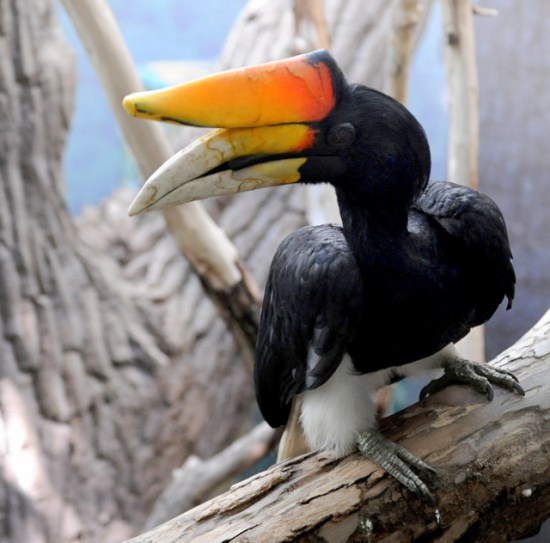
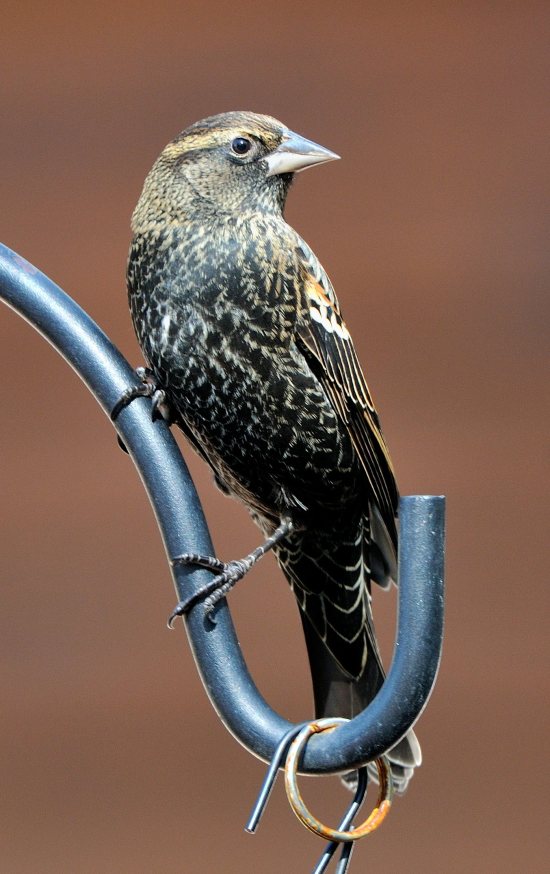
We have hands. Birds have beaks. Have you ever noticed how useful a beak is? While lacking our manual dexterity, birds have no problem securing their dinners and stuffing said meal down the gullets of their young. Beaks are used to manipulate objects and preen ragged feathers. Some birds use their beaks to impress potential mates, or to scare away intruders. Beaks can even be used as weapons. Have you ever tried to steal an egg from under an irritated hen?
Beaks are also useful to birders, as their size, shape, and color are all helpful when it comes to identifying bird species. In fact, the more attention I pay to birds’ beaks, the better birder I become.
If you were stymied on Monday, now can you name this bird? The photo was taken in Florida last February. The answer will appear at the end of Monday’s post.
I did it again. Last spring, in a fit of gardening fervor brought on by the first flowers of the season, I put in an order for more spring bulbs, to be delivered in the fall. With my yard full of crocuses, glory of the snow, and miniature irises—and not much else—it was easy to see where those new bulbs should be planted.
Now it’s October, and I just received delivery. Yes, my box of bulbs arrived just ahead of our first snowstorm of the season. Now I have to plant them. Today.

 Q: What has ears but cannot hear?




 Mountain Plover