
 I had never encountered so many dragonflies, both in sheer numbers and incredible variety. Birders speak of “hotspots”—places where birds tend to congregate. Bitter Lake National Wildlife Refuge, just outside of Roswell in southeastern New Mexico, is clearly a dragonfly hotspot.
Author: LAH

Blue Mist Spiraea
 Spring flowers have turned into berries and seed pods. Without their blossoms peonies are mere green bushes, and even the annuals are looking a bit peaked. Don’t despair, however. The show isn’t over yet. One of the best perennials (or small shrubs) for Colorado gardens is Caryopteris x clandoensis, more familiarly known as Bluebeard or Blue Mist Spiraea.
The latter common name can cause some confusion. Caryopteris isn’t a true spiraea. The “Blue Mist” part is spot on. The airy flowers in periwinkle blue really do seem to hover over the tips of the stems in a lovely cloud. The plants can reach two to three feet wide and tall. Foliage is a bluish gray-green, with long, soft, serrated leaves.
August Quiz: Answer
To refresh your memory, here is the photo from August’s Bird Quiz. It was taken in Colorado during the month of October. Don’t read any further if you want one last chance to identify this bird.  (more…)
Botany for Gardeners: Photosynthesis (part 2)

(If you missed last week’s post about how photosynthesis works, you might want to read it now. I’ll refer to it below.)
As gardeners, we all want to grow healthy plants. Knowing what they need is helpful, but knowing why they need it is even better. Today I’m going to go over what plants need in order to feed themselves—and us. That’s what photosynthesis is for.
August’s Bird Quiz
Can you identify this bird? The photo was taken in Colorado during the month of October. The answer will appear next week.
Botany for Gardeners: Photosynthesis
 If you ever took high school biology, you’ve heard about photosynthesis. You know that it’s the way a plant takes in sunlight and carbon dioxide and produces oxygen. You probably remember it has something to do with chlorophyll—the pigment that causes plants to be green. But how often have you considered photosynthesis since you passed your final exam that year?
Most people, even gardeners, take photosynthesis for granted. It’s just something plants do. But knowing a bit more about the process can help us have healthier gardens—more, tastier veggies, sweeter fruit, prettier flowers. How so? Let’s take a look.
Birding Together
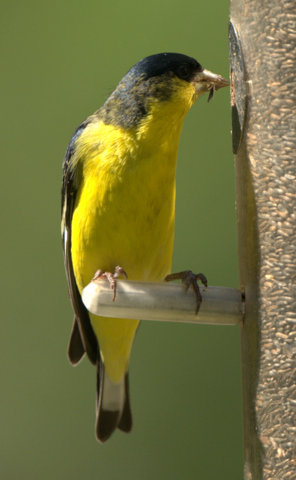 This past weekend, I discovered the joy of birding all over again. It all started with an email I received as Answerer-of-Emails for our Audubon chapter. It seemed that a group of retired missionaries was holding a reunion at a local conference center, and some of them wanted to go birding. Could we offer any advice?
I looked at the dates, then checked my calendar. Nothing vital was scheduled for that morning. So I wrote back and explained that sure, we could offer advice, but perhaps they would rather have a few local birders on hand to lead the trip?
Great Blog, Bug Eric!
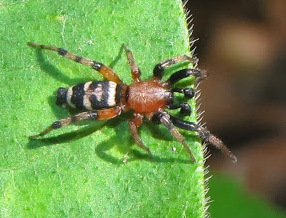
Do you like arthropods? Do butterflies cheer you? Are dragonflies delightful? Do you want to know what that cool, metallic-bronze colored beetle is? Perhaps some pest is munching on your marigolds, and you want to learn more about it. Or, maybe spiders send you screaming. (I totally understand!) Would you enjoy reading an entertaining, scientific, yet easy to understand blog about all these topics—and more?
I’d like to introduce you to Eric Eaton, perhaps better known as Bug Eric.
Eric is the author of the Kenn Kaufmann Field Guide to Insects of North America, so you can tell he knows what he’s talking about. He’s an engaging writer. I love reading his posts. And happily for me, he and his wife, Heidi (who is also a fount of bug-related information), live here in town, so I get to directly benefit from his expertise (and patience with non-entomologists). You may remember that Eric and Heidi led June’s “Bugwatching” field trip that I enjoyed so much.
Carlsbad: Beyond the Cave
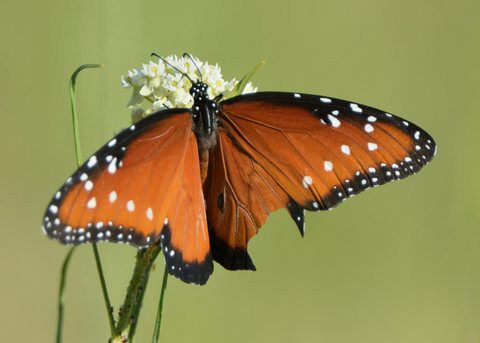 Rattlesnake Springs is an oasis in the middle of the desert. Located 27 miles south of Carlsbad, New Mexico, it’s owned by the Nature Conservancy. You can take in the entire place in one glance—a small pond surrounded by mowed grasses and some weeds. Further back some small trees and thick brush take advantage of the water. (There’s also a caretaker’s private residence, and some off-limits desert.)
Situated as it is at the juncture of the Sonoran and Chihuahuan deserts, the species list for spring migration is awe-inspiring. Unfortunately, we were there well past that season. Well, you go when you can.
What’s This Plant?
 What’s this plant? Gardeners aren’t the only ones who find themselves wanting to identify a particular flower or shrub. Hikers like to learn the names of wildflowers, new homeowners want their landscape labeled, and most of us just get curious at times. With my new job (answering plant-related questions, either identifying them or diagnosing a problem), I’ve been identifying a lot of plants lately (if you missed it, I’m now working for a gardening app), and I’ve learned some tips.
There are two approaches to plant ID. The easiest for a non-botanist involves noticing some eye-catching feature and then either flipping pages in a colorful field guide or searching the internet for that attribute. Most wildflower guides are arranged by color, simplifying this process.
 Mountain Plover