
 “Oh, it’s just another Mallard.”
How many times have I said that? As a birder, I’m always looking for the rare bird, the unusual find that will add to my life list. Last month’s Snowy Owl fit the bill—getting such a great view of that magnificent predator was truly a once-in-a-lifetime experience.
I just got home from a week in northern Oregon and southern Washington. While I did pick up a couple of new species for my list, I mostly saw ducks. Lots of ducks. Hundreds of ducks. (Did I mention I was in Oregon?)
So—I looked at ducks. Really looked. And you know, ducks are pretty cool!
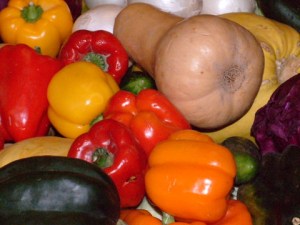 Your seed catalogs are well-thumbed by now. You have all your favorite varieties flagged, along with some new offerings you’re eager to try. After months of indoor weather, the gardening urge is looming large. It’s tempting to go overboard, and order every seed listed. Making a vegetable garden plan will help keep your cravings in proportion to your needs.
 You can’t miss them. Black-billed Magpies are big, noisy, and distinctive in their black, navy, and white plumage. Their elegant long tails add to the tuxedo effect. They’re basically crows in formal attire.
 Angelina Stonecrop is a garden asset all year long. In summer, the low-growing succulent forms spreading mats of cheerful yellow-green, adorned with clusters of yellow star-shaped flowers. These blooms attract butterflies. But it is in winter that Angelina really shines, when those same fleshy leaves turn an incredible, brilliant orange, with subtle shades of red and yellow. The colors are so intense, the ground appears to be on fire. Such a show would be welcome at any time, but is especially appreciated when everything else is dead or dormant.
 Here in Colorado, January is a time of muted shades—tan grasses, soft yellow willows, maroon sedges, gray seedheads—and erratic weather. Highs in the 50s are immediately followed by snow or a sub-zero wind-chill. I was craving green leaves, bright colors, tropical humidity against my chapped skin. In the midst of suspended existence, I needed a fix of fecundity. So last Saturday, my husband and I paid a visit to the tropics. We drove to Broomfield, just west of Denver, home of the
  Blooming? In January?

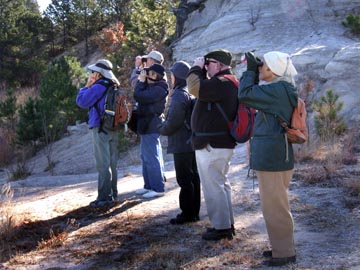 Our recent warm spell is lovely, but it’s still January. Temperatures swing back and forth between cool and freezing. Trails are icy, and sometimes blocked by snow. This is traditionally a time to hole up and hunker down. We are attracted to warm firesides, hot chocolate, and snugly quilts. But if you, like me, are passionate about nature, and birds in particular, can we be content to sit by the fire? Just because the temperature outside is in the single digits, are we to ignore our obsession and hibernate like bears?
 Mountain Plover