
 Some moms receive roses for Mother’s Day. Others are given chocolates, dinners out, or photos of their adoring children. While I did enjoy dinner in a restaurant on Mother’s Day, I wasn’t dining with my family. Rather, I spent the day—actually five days over a long weekend—attending the annual Colorado Field Ornithologists (CFO) convention, held this year in Lamar (almost to Kansas and Oklahoma), Colorado.
My family knows what makes me smile.
 Brown Pelicans are saltwater birds, sticking to the coasts.

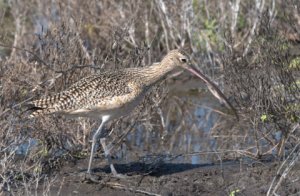 Cryptic coloration—the ability of an animal to blend in with its surroundings—has always fascinated me. Cryptic coloration is the reason there are so many brown, striped sparrows. It’s why female ducks and other species lack the bright plumage of their mates. It’s why birds show regional differences. And it’s why I almost missed seeing the Long-billed Curlew shown here.

 There are many places to look for birds in the Pikes Peak region. Take a hike around a mountain lake. Stroll around a mountain lake looking and listening for returning summer residents. Enjoy a hike in the aromatic junipers and scrub oaks of a foothill riparian area. Go higher in elevation and see what birds call the montane forests their home.
 Usually, Colorado’s seasons have little to do with the calendar. This may be the vernal equinox, but we still expect snow and it’s way too early to plant those tender flowers and veggies. After gardening in California for years, I’ve mostly adapted to the challenge here, but from March through mid-May I would drag around the house feeling frustrated that I couldn’t plant anything the least bit frost-tender.
