
 It was a brisk fall day. A friend and I were hidden among the cattails, binoculars in hand, field guide open between us. We were both new at birding. The wide assortment of ducks bobbing out on the reservoir, nondescript in their eclipse plumage, was giving us fits. That’s why we had come–to learn how to identify fall ducks.
Scanning the opposite shoreline, I was ticking off mallards, shovelers, gadwalls… and gasp! What was that man doing with a gun!!? He had it pointed straight at us!
We hastily decided that this was neither the time nor place to be learning our waterfowl. Backing out of the vegetation, we turned and hurried for the car. It wasn’t until later, when we were in the car heading home, that we realized what we should have known all along. It was hunting season. Reflecting back, it’s unlikely the hunters even realized we were there, outfitted as we were in khaki and olive drab, skulking in the thick riparian foliage.
 Even before I was a birder, I could identify the male Red-winged Blackbird. Found in shallow marshes and other wetlands around the country, the black bird with the red and yellow shoulders is a familiar sight. Even the little drainage pond at the end of our street, with its sparse patch of cattails, is home to a few of these noisy blackbirds.
 As we gather to give gifts to one another, it’s only natural for birders to offer special treats for the birds. There are lots of options.
 More expensive, but especially attractive to Pine Siskins, is Nyjer seed. These tiny black seeds (also called thistle) are imported from Africa. You’ll need a special feeder with smaller holes, or a fabric “sock” sold for the purpose. One advantage is that the seed is treated to prevent sprouting—you’ll have no Nyjer weeds to pull in the spring.
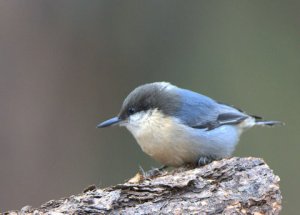 They’re adorable, with their short stumpy tails, tiny bodies and toddler-round tummies. They’re constantly active, hopping from branch to branch. Can you tell? Pygmy Nuthatches are one of my favorite birds! I love to watch them fly down to the feeder to grab a seed, then bolt back into safety before “hacking” (“nut hack” has become “nuthatch”) the sunflower shell open against a branch. Sure seems like a lot of work, especially compared to the finches who just sit there shelling and swallowing seeds as fast as they can.
 The gift-giving season is upon us, and many people are scratching their heads, trying to figure out the perfect gift for that special birder in their life. I thought I’d make it a little easier for you and spell out exactly what I would like to receive this year. I bet other birders would like many of the same things as I do. (I seem to be into lists lately.)

 The seasons have changed. The grosbeaks, hummingbirds, and other birds of summer have left for more tropical climates, but they’ve been replaced. Ducks, loons and grebes that spent the summer in the far north are showing up on local ponds. Rough-legged Hawks sit where Swainson’s hung out a month or two ago. Sandhill Cranes are headed for their winter feeding grounds in New Mexico. Instead of Chipping Sparrows at my millet feeders, I have flocks of Juncos.
 I recently posted my
 The tiny bird fluffs its feathers against the cold, while the north wind whips sleet into the pine branches surrounding its perch. With all water sources frozen, it has to use precious body warmth to melt the snow it eats. Last year’s crop of seeds is buried under a layer of white. Wild birds are amazingly hardy creatures, but even the sturdiest Mountain Chickadee (above) finds conditions like these a challenge.

