
You have to see these photographs.
I am very aware that there are hundreds, if not thousands, of emails making the rounds, not to mention blogs and other websites, all with cute or unbelievable photographs in them. This is not one of those.
Well-known photographer Igor Siwanowicz is in a class by himself. If I can manage to create photographs half as incredible as his are, I will consider myself an unbridled success.
The above link takes you to just 60 of his close-ups of insects and other small creatures. Each one is a work of art. Please take the time to look. You’ll be so glad you did.
 For the first time in recent memory a flock of Lewis’s Woodpeckers has taken up residence near Colorado Springs. Only 11 miles south of Colorado Springs, they are busy harvesting acorns in the picnic area at Fort Carson’s Turkey Creek Recreation Area. These uncommon (at least along the Front Range) woodpeckers are attracting every birder in town. A couple of friends and I made our migration at dawn two weeks ago, hauling binoculars, spotting scopes, and at least 50 pounds of camera gear. We weren’t disappointed.
 This Friday, the Aiken Audubon Society and Bear Creek Nature Center will be airing “Ghost Bird.” If you live anywhere near Colorado Springs, Colorado, I highly urge you to come learn more about the elusive Ivory-billed Woodpecker, believed to be extinct since the 1940s. Does it still exist? Here’s what the movie’s creators have to say:
 Birders in the U.S. are supposed to hate European Starlings (Sturnus vulgaris), and there are plenty of reasons to do so.
 Late August is one of my favorite times to go birding. Maybe that’s because I really like shorebirds. I grew up near the beach, and studied marine biology in college—and I still get excited about anything to do with the ocean. The shorebirds here in Colorado are nowhere near a coastline, but they’ll have to do, at least for now.
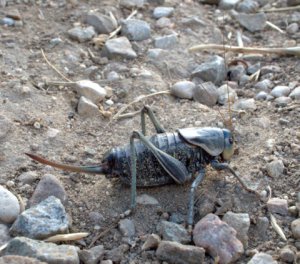 “What is that huge, weird bug in the road? And what is it doing?”

 Summer birding can be somewhat unproductive, but that doesn’t mean you should stay home in front of the air conditioning. So what if the birds are busy nesting and raising young? Birds aren’t the only attraction in the great outdoors.
 With the Gulf oil spill continuing to dominate the news, many conservation organizations are soliciting funds, ostensibly to help wild birds caught up in the environmental disaster. That is certainly implied by the (extremely misleading) picture to the left, gleaned from a well-known non-profit’s website. However, if you read the fine print on the donation page, it becomes clear that rather than being specifically targeted to the rescue of oiled birds, all these donations are simply being added to an organization’s general fund. As another website truthfully states:
