
 When you call someone an “old coot,” just what exactly are you implying? Perhaps we should take such name-calling as a compliment. In many ways, coots are pretty respectable birds.
Although they share habitat with ducks, and superficially resemble them, coots have lobed toes and a beak instead of webbed feet and a bill. They are members of the rail family, and are related to cranes and limpkins. Their other common name, marsh hen, comes from their chicken-like head bobbing as they walk and feed.
Far from being weaklings, coots display considerable stamina. American Coots have managed to fly across the Atlantic Ocean at least 23 times. Even more remarkable, in 2003 two birds were sighted in Tasmania, a whopping 8,000 miles from home!
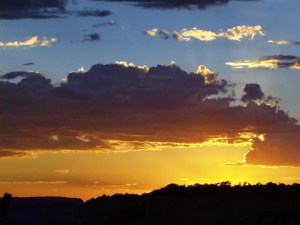 Spring migration is over, and the birds are all focused on mating and raising their families. The weather is too darn hot outside to be enjoyable, especially when one is hauling binos, field guide, water, scope with tripod, notebook, lunch, and possibly a camera. Then, to top things off, the sun is coming up at an hour when even birders would prefer to catch a few extra zzz’s. The early birds can have their worms.
 June isn’t a great time to go birding. In most parts of the country, territories are established, nests are built, eggs are laid, and the birds are either busy incubating those eggs or are run ragged trying to satisfy the insatiable appetites of their demanding offspring. Either way, the parents are being especially careful to hide the whereabouts of their progeny, making it very difficult for us birders.
 Vast open spaces, blooming yucca, and constant wind were our companions on a recent hike to Corral Bluffs, an area under consideration as a new El Paso county park.
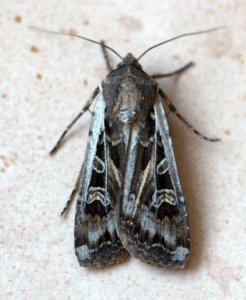 As I unlocked my mailbox to retrieve my mail, a cloud of wings billowed out of the opening. My bedside lamp is surrounded by a throng of fluttering insects leaving dark smudges on the lampshade. Every windowsill is littered with gray bodies. The final straw came a few moments ago when I opened the lid on the toilet and discovered a moth convention assembled on the seat. Yup, it’s Miller time.
 Plop, plop, plip plop… it sounded as if it was raining, but the sky was blue and the sun was shining. I was happily prowling a row of tall cottonwoods growing thickly along a creek, searching for flycatchers, migrating warblers, and anything else of interest. Now, something was falling out of the tree tops, but it couldn’t possibly be rain.
 Have you ever watched a bird leave its perch? I mean, really looked? Lately I’ve been paying close attention to various species as they fall, tumble, leap, or launch themselves from the branch or fence post on which they’ve been standing. I’ve been amazed by the many different ways birds take to the air.
 Loons require a long runway, and it has to be water. If they get stranded on land, they’re stuck, unable to fly. Other waterfowl seem to do a lot of flapping before becoming airborne, but then they’re starting from ground (or water) level. I’m actually pretty impressed that ducks manage to gain altitude at all. From my perspective, they just don’t look like they’re engineered for flight.
 If you feed them, they will come. Anyone who puts sunflower seeds into a birdfeeder sooner or later has to contend with squirrels. And if you grow a garden—well, squirrels like many of the same foods we do, plus flowers, tulip bulbs, and numerous other plants. The question isn’t whether or not you’ll have squirrels in your yard. You will. The question is, what are you going to do about them?
 Chico Basin Ranch is a great place to bird all year round, but it is a must-see during spring migration. It’s easily worth the 45 minute drive from Colorado Springs, and the $15 daily access fee (annual passes are also available).
 A look at a map of Colorado shows why birds and birders love Chico Basin. Straddling the El Paso/Pueblo county line, the ranch attracts species found in the southeast corner of Colorado as well as those more that live in the north and west. Strategically situated between miles of arid, short-grass prairie on one side, and more miles of arid short-grass prairie on the other, the year-round ponds and green trees are a welcome rest stop for tired and thirsty migrating birds.
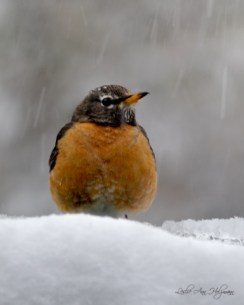 Robins are often considered harbingers of spring, and in some places they are, but here in Colorado they hang out year round. In fact, on the 2006 Christmas Bird Count, in the middle of a blizzard—with the thermometer registering a whopping 6 degrees—we tallied over 200 American Robins in our sector alone… and those were just the ones we could see in white-out conditions.
