Sunday is Mother’s Day, so I thought it would be appropriate to celebrate motherhood as seen through my lens.


Sunday is Mother’s Day, so I thought it would be appropriate to celebrate motherhood as seen through my lens.
 Florida is a birder’s paradise—if you don’t count the mosquitoes, alligators, fire ants, and other hazards—and one of my favorite Florida birding spots is Audubon’s Corkscrew Swamp Sanctuary. Located more or less in the middle of nowhere, just north of the Everglades, the closest place to stay is Bonita Springs, south of Ft. Meyers on Florida’s west coast.
The 13,000 acre sanctuary preserves the largest remaining stand of old growth bald cypress in North America, along with plenty of plants and animals. I arrived shortly after 7 am, when the 2¼ mile boardwalk opens, and spent the next six hours watching wildlife, taking photos, and ticking off bird after bird.
 I am ridiculously excited. Mission Coffee Roasters and Cafe, offering the best coffee in Colorado Springs (and maybe the world), is hosting my photographs from now through the end of April. There are over a dozen prints of all sizes, from an 8-inch square framed portrait of a Flamingo to huge, 2 by 3-foot gallery wraps of some of my favorite landscapes. They’re all on display, and they’re all for sale.
 Perhaps you’re an avid birder, or maybe you want to do something about noxious weeds. You might have a telescope, and you spend your nights looking at the sky. Or maybe you drove your parents crazy (as I did) bringing home bugs and rocks and frogs and snakes—and you still haven’t outgrown your fascination. Having a hobby is fun, but turning it into something more significant is even better. No matter what your interest, you can put your knowledge and skills to good use as a citizen scientist.
 It’s hard to imagine 14,280 acres of burned forest, or 509 houses totally destroyed. While the human toll is devastating, I started wondering what happened to the wild animals that also called Black Forest home. Maybe that’s because I still have that scene from Bambi in my mind—the one where all the animals are fleeing the forest fire. Is it accurate? What do animals do in a fire? Do they survive? And if so, how?
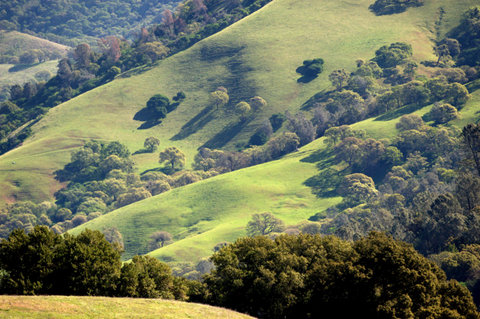 As birders, our goal when going birding is to see—birds! We may or may not have a target species we’re seeking, but a trip is generally rated as a success or a dud by the number of species we see. Rarities are a bonus.
But there’s another part of birding we might overlook. Just being out in the field means we have a shot at seeing other aspects of nature. Wildflowers and insects (especially butterflies and dragonflies) are garnering much attention these days, and for good reason. They’re just as interesting as birds, and more of a challenge. (Have you ever tried ID-ing a moth or beetle?)
 Last month I explained how amphibians, such as frogs and toads, and reptiles, such as snakes and lizards, are beneficial to our gardens. This time I’ll focus on birds and mammals. Inviting these wild animals into ours gardens is yet one more way that we can control the pests that dine on our flowers and veggies.
Birds
As an avid birder, I have up to a dozen feeders scattered around our yard. It may seem as if I’m doing the birds a favor, but it’s really the other way around! While most birds attracted to feeders eat seeds, many of those same species switch to bugs, with their higher protein content, during the breeding season.
 Here it is the middle of winter, and garden pests are out of sight and out of mind. Yet, we know that those critters are out there, waiting for warm weather to bring out the first sprouts of spring—just so they can gobble them up! It’s a very good thing, then, that there are other creatures biding their time, waiting to eat those garden pests! I’ve already talked about bug-eating invertebrates. This time I’ll focus on those animals with some backbone, so to speak. Being biologically minded, I’ve sorted these helpful vertebrates by which taxonomic class they belong to.
Amphibians
 One of the most helpful animals to welcome into your garden is a toad. Like frogs and salamanders, their close relatives, toads eat tons of bugs, and they don’t need a pond to live in. Experts say they eat up to 100 bugs every day, and while they don’t discriminate between “good” bugs and bad ones (they’ll nab anything that moves), it’s nice to see cutworms, grasshoppers, flies, and slugs disappearing into their wide jaws.


