Winter Birding in Colorado

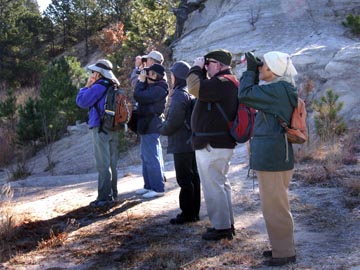
kettlecreeklakes_2008-11-22_lah_361rOur recent warm spell is lovely, but it’s still January. Temperatures swing back and forth between cool and freezing. Trails are icy, and sometimes blocked by snow. This is traditionally a time to hole up and hunker down. We are attracted to warm firesides, hot chocolate, and snugly quilts. But if you, like me, are passionate about nature, and birds in particular, can we be content to sit by the fire? Just because the temperature outside is in the single digits, are we to ignore our obsession and hibernate like bears?

Of course, some birds have opted for tropical vacations, and I’m sure we would love to do likewise. But if the schedule and budget don’t allow for a trip to Central America, be encouraged. There are plenty of birds to be enjoyed right here. A surprising number of species hang around for the season.

(more…)

Winter Color

Do weeks of staring at snowy white landscapes have your eyes screaming for color? Winter gardens don’t have to be drab, lifeless affairs. Flowers may not be in bloom, but many plants have leaves, stems, or berries in shades of bright red, golden orange, or silver-blue and plum. Put them together and your winter garden springs to life.

Mahonia repens (also known as Oregon Grape Holly)  is an attractive groundcover year-round, but it really shines in winter. While other plants shed their leaves, Mahonia’s foliage turns a stunning bright red.

Yellow flowers in spring and showy blue berries in early fall add to this native’s year-round interest. Mahonia repens is drought tolerant, and handles full sun to part shade.

Juniper horizontalis ‘Blue Chip’ is another groundcover that remains attractive all year. While many junipers grow much too large for our small yards, Blue Chip stays under a foot high. Its feathery foliage is a beautiful steel-blue all year, with the addition of silver-plum tips in winter. Plant it in full sun, where it will quickly spread up to ten feet in diameter. Junipers are very xeric once established.

(more…)

Book Review: Outwitting Squirrels

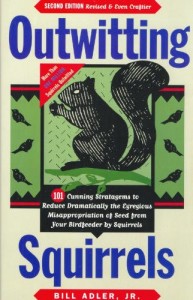
Outwitting-Squirrels-193x300Anyone who puts out food for wild birds quickly learns that the squirrel food alert network is very efficient. Within hours, often before the birds find your new feeders, the squirrels are on site, shoveling sunflower seeds into their mouths as fast as they can. That’s pretty fast.

Some people actually like squirrels. That’s fine with me. If they want to feed expensive seeds and nuts to squirrels, let them go right ahead. Of course, their largess will encourage the production of more squirrels….

On the other hand, most bird feeders want to feed birds, not rodents. Banging on the window and waving your arms may alarm the neighbors, but it won’t faze the squirrels for long. So what’s a frustrated bird lover to do?

(more…)

Earthworms

Photo: Joseph Berger, bugwood.org

We hardly notice them most of the time… they’re out of sight, underground, aerating the soil, creating humus, increasing fertility. It’s only after a rain storm, when the ground is saturated, that they come up for air. Then we see their desiccated carcasses strewn across the pavement. Robins eat them, anglers use them for bait, and little kids bring them home in their pockets as pets. Most of us dissected one in biology, carefully counting the five aortic arches while debating the coolness of being squeamish. Yet, for all their inconspicuous habits, earthworms play a major role in both our gardens and in the wild.

(more…)

Flying Dragons

dragonfly-noxubeenwr-lah_4026Hot August weather. Wetlands, tadpoles, mosquitoes in abundance. Cattails and algae blooms. And of course, dragonflies!

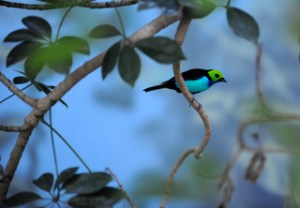
There’s a good reason you find dragonflies near water. The eggs are laid on submerged plants, and hatch into an immature form called nymphs. Nymphs have gills on their posteriors, and use them for both breathing and as jet propulsion. Isn’t nature amazing? Dragonflies live most of their lives as nymphs. Finally, after six months to six years, depending on the species, the nymphs crawl out of the water and metamorphose into the familiar flying adults.

(more…)

Hand-Pollinating Zucchini

It’s time to learn about sex. Oh, you think you already know all about that? OK, but how much do you know about making baby zucchinis?

Perhaps your zucchini (or other squash) plants are producing plenty of flowers, but no squash. Or, maybe they start to grow little squashes but then the babies turn yellow to brown, get all wrinkled, and fall off. What’s wrong? It’s highly likely the problem involves zucchini sex.

All squash plants (and related crops such as cucumbers) produce two kinds of flowers, male and female. Here’s how to tell them apart:

zucchini-blossom-male-femalecsu-23jul04-lah-033s

(more…)

New Photo Galleries

paradise-tanager-denverzoo-20090527-lah-236rI’d like to highlight my two new photo galleries, featuring my favorite photographic subjects: birds and flowers.

Instead of writing an article this time, I’ll let my pictures speak for me.

You will find them in the list of  links to the right side of this page. I expect to be adding more photos as I get chances to go take them, so check back every so often.

The Birds and the Bears

Grizzly Bear_DenverZoo_LAH_1488Last week’s news story about a local woman’s encounter with a bear while out walking prompted me to consider the responsibility we have in preventing this sort of event, which resulted in the death of the bear.

In most cases, bears approach humans because they associate us with food. As one who delights in feeding birds, I’m very aware that what I intend for the birds may also be relished by bears. While bear sightings in my neighborhood are very rare, many neighborhoods along the Front Range extend into bear habitat. We would do well to take precautions.

(more…)

A Garden for the Birds

The following article was first published by the Colorado Springs Gazette on March 21, 2009:

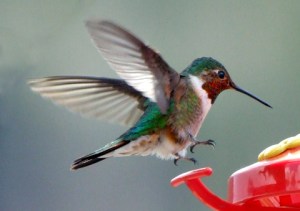
broadtail-hummingbird-keystone-20may07-lah-837rA brightly colored hummingbird zooms past on its way to a feeder. A finch fills the air with music. Birds provide us with hours of entertainment. How can you welcome more wild birds into your yard?

Like other animals, birds have a basic need for five essential elements: water, food, shelter, safety from predators, and a place to raise their young. While it’s fun to provide bird houses and feeders full of seed, you can design your landscape to offer these necessities and truly give yourself a yard for the birds.

(more…)

What’s that bird that’s driving me crazy?

BAM BAM BAM BAM BAM. I was awakened early this morning by insistently loud hammering on the metal chimney guard on our roof. Yup, it’s that time again. Our resident Northern Flicker is announcing his ownership of our property. This year we’re ready. But last year we had a major issue with these woodpeckers. They drove my husband crazy, and inspired me to write the following story:

Not even the cat is awake before 5 am. Soft snoring comes from the bedroom, darkened by shades against the early appearance of the sun this time of year. It’s a lazy Saturday morning in mid-March. Nothing important is scheduled for hours. Later there will be errands to run, chores to catch up on, phones ringing and dishes. Right now, all is peaceful, all is calm.

BAM BAM BAM BAM BAM

Like a staccato burst of machine gun fire, the noise reverberates off the metal gutters directly outside our bedroom window.

(more…)