
 What genus of flower is beloved by millions? Comes in every color of the rainbow (except green), plus black and white? Has species native to Hawaii—and the Andes? Can bloom through the snow in the dead of winter? Is tolerant of wet soil—or survives drought? Handles full sun or shade with equal enthusiasm? Includes annuals, biennials, and perennials? Always elicits a smile? Is the “birth flower” of February? The lowly Violas—which include pansies and violets—are all this and more.
Category: Gardening
Garden Advice: Baking Soda Balderdash
 Type “baking soda garden” into your web browser and you get over a million hits. Not surprisingly, most are something along the lines of “17 Smart Baking Soda Tips,” and “7 Natural Uses for Baking Soda.” Depending on which list you read, it sweetens tomatoes, increases the blooms on geraniums, begonias, and hydrangeas, prevents black spot on roses, cures powdery mildew, discourages soil gnats, and kills slugs and other harmful insects “while not harming beneficial insects.” (So tell me—how does it know which are the bad bugs?) Plus, it’s natural, cheap, and readily available.
Seeds to Start in January
 For an avid gardener, January can be a difficult time of year. Sure, we can dream. The seed catalogs that have been arriving for a month now are filled with post-it notes, dog-eared corners, and bright yellow highlights. At the same time, I’ve decided and re-decided (at least a dozen times) where I’m going to plant each seedling once the weather warms. I love the optimism of dreaming, but sometimes I just want to get my fingers into some soil—even if the “soil” came out of a bag of potting mix.
At this time of year, gardening outside is pretty much impossible. The ground is frozen, and there’s still a layer of snow in the shadows on the north side of the house. Besides, it’s cold out there!
A Tropical Paradise
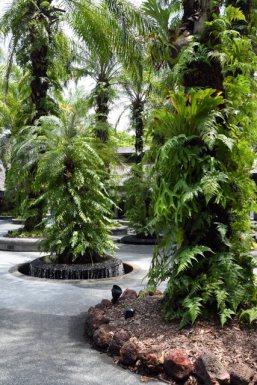 Last November I took you on a virtual tour of the Royal Botanic Garden in Sydney, Australia. Today we’re going to visit the Singapore Botanic Gardens. According to Wikipedia, “It is one of three gardens, and the only tropical garden, to be honored as a UNESCO World Heritage Site.” One visit, and it’s easy to see why.
The gardens were first planted in 1859 and presently contain over 60,000 plants. The place is huge—it took us hours to walk from one end to the other, but then I had to stop and appreciate every plant (and bird) I passed.
A Flower of the Gods
 Just as each month is associated with a particular birthstone (January’s being a garnet), so is each month paired with a particular flower. According to folklore, each of these flowers symbolized specific characteristics, which were in turn assigned to those born during that month. While some claim this custom arose with the Roman empire, I suspect that the florist industry might also have had something to do with it.
Well, it turns out that January’s “birth flower” is the carnation. Carnations are on my Top Ten list of flowers. They’re pretty, typically inexpensive, last a long time as a cut flower, and have a scent that I swoon over. Apparently, I’m in good company. Their genus, Dianthus, comes from the Greek for “flower of the gods.” How appropriate! (more…)
I’ll end the year with…

I first saw this poem published on the Garden Professors blog. It made me smile, so I’m sharing it with you. I hope you enjoy it too.
Botany
There should be no monotony
In studying your botany;
It helps to train
And spur the brain—
Unless you haven’t gotany.
Love Poinsettias? Thank a Phytoplasma.
 For many of us gardeners, poinsettia plants are an essential element of our Christmas decorating. I love the huge displays at church and in the stores, even if I don’t have room for that many in my home. I’ve written about how to keep the plants alive (see my 2012 post on “Pretty Poinsettias”). But this year I learned something new.
When I was small (I had my sixth birthday on the trip), my parents and I spent four weeks traveling around Mexico, from early December to early January. It was a wonderful time to visit, with all the Christmas and New Year celebrations. One common sight we couldn’t miss were the gardens full of bright red poinsettias in full bloom.
Creeping Mahonia
 When you have a smaller yard, you want every plant to earn its keep. With fragrant yellow flowers, blue berries, and green leaves that turn purple in winter, Creeping Mahonia (aka Oregon Grape, Mahonia repens) definitely deserves a spot!
These are low-growing plants, about 12” to 18” tall, with underground stems (stolons) that spread up to three feet in width. Spring brings an abundance of small, deep yellow flowers, attractively set off by the dark green leaves. By late summer, these mature into clusters of small, dusty-blue berries that are sour but edible. (A similar species, M. haematocarpa, has red berries). The holly-like foliage persists into winter, turning a lovely plum with the advent of cold weather.
Great Gifts for Gardeners
 Ah, Christmas time. The fresh scent of evergreens. Tasty cookies and other special treats. Carols, decorations, and, yes, gifts. I love giving gifts—when I know just what to give. If you have gardeners on your list, lucky you—you shouldn’t have any problem picking out something they’ll love. Perhaps one of these ideas will be perfect.
Gardens Fit for Royalty

One of the joys of traveling is that you can visit gardens in other parts of the world—places with different climates growing plants totally unlike those in we have here in Colorado. I just returned from a long overseas trip that included visits to botanic gardens in both Australia and Singapore. Talk about different! On the one hand, the tropical blossoms and exotic ferns were a delight to the senses. On the other hand, there is no way I could ever grow any of them at home, except as houseplants. And even then, our low humidity would discourage most of these species.
 Mountain Plover