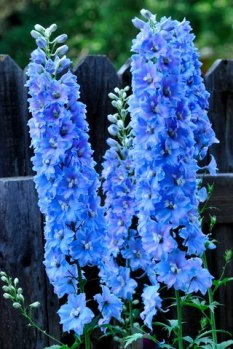
 Most people recognize Delphiniums in the cottage garden. With their tall spikes of vibrant blue (or red, pink, rose, white, orange, or purple) flowers, nothing else is quite like them. Huge delphiniums are a staple in England, where cool temperatures and fog provide a perfect environment. But I despaired of having these heavenly blue blossoms in my Colorado garden. It’s just too hot and dry.
Colorado gardeners do manage to grow spectacular hybrid Delphiniums, but as one Colorado master gardener put it, a delphinium is
“… one of the neediest perennials ever. It likes sun but not in the hottest part of the day. It needs even moisture, mulching and careful watering. It reacts poorly to extremes of heat and cold, and requires a lot of fertilizer. To top all that, it requires its devoted fans to cut it back immediately after early-summer flowering before it will even consider reblooming a full three months later. (Many years, early June bloom is all you get, given the extreme pickiness of this flower.) Finally, unless it really, really likes its location, it may never be seen again after that September curtain call.”
 I’m not that dedicated to fussing over a particular plant, no matter how gorgeous, which is why I was delighted to discover that the familiar, tall Delphinium grandiflorum isn’t the only kid on the block. Other cultivars and species are much better adapted to our challenging conditions.
Blue Butterflies (right) is a cultivar of D. grandiflorum, but you’d never recognize it. Growing only one to one-and-a-half feet high, these bushy plants are covered with purple-blue flowers that are more open than the Giant Pacific Hybrids. Instead of big leaves, the foliage is finely divided, giving it a lacy look. You still need to provide moist, rich soil, and they need to be deadheaded, but at least they survive a windy day much better than the staked varieties. My Blue Butterflies did eventually die, but it lived for several years without any special attention on my part. I was impressed.
 Delphinium exaltatum (left, photo courtesy of Wikicommons) is a perennial species native to the eastern U.S. As you might expect, it must be kept constantly moist, but it tolerates Colorado’s lime soils. Plant in morning sun or bright shade (it needs full sun where skies are often overcast) and provide protection from strong winds. Fertilize regularly. As they fade, remove the flower spikes to encourage additional bloom (maybe). You can buy seedlings or start your own; a cold treatment is needed for germination.
Delphinium x belladonna is another hybrid perennial that is easier to grow. It prefers full sun, well-drained soil with high fertility (amend, amend!), and shelter from strong winds. It’s a good idea to stake the tall flower spikes. This delphinium originated in Europe. It’s best to buy transplants.
 We haven’t mentioned pests and diseases yet, but there are plenty of both. Delphiniums are susceptible to powdery mildew, southern blight, root and crown rot, botrytis blight, fungal and bacterial leaf spots, white rot, rust, white smut, leaf smut, and damping off. Slugs love them, although that’s not a huge problem in Colorado. They also get cyclamen mites, borers, and leaf miners. To top it off, all parts of Delphinium plants are poisonous; even handling the plants can cause skin irritation.
Given the difficulty of growing your own, perhaps a better solution is to enjoy the delphiniums that Mother Nature grows. An easily-recognized wildflower (it’s the tall, blue or purple one), most wild delphinums are annuals, and are referred to as Larkspur. The Colorado Rockies offer several species. One good location is Crested Butte in mid-July, or try Yankee Boy Basin above Ouray (4-wheel drive needed).

 I have a new job, and I love it. It involves identifying plants and finding out what ails them, quite a bit similar to what a master gardener does. Sure there are frustrations…




 Mountain Plover