 Just as each month is associated with a particular birthstone (January’s being a garnet), so is each month paired with a particular flower. According to folklore, each of these flowers symbolized specific characteristics, which were in turn assigned to those born during that month. While some claim this custom arose with the Roman empire, I suspect that the florist industry might also have had something to do with it.
Well, it turns out that January’s “birth flower” is the carnation. Carnations are on my Top Ten list of flowers. They’re pretty, typically inexpensive, last a long time as a cut flower, and have a scent that I swoon over. Apparently, I’m in good company. Their genus, Dianthus, comes from the Greek for “flower of the gods.” How appropriate! (more…)

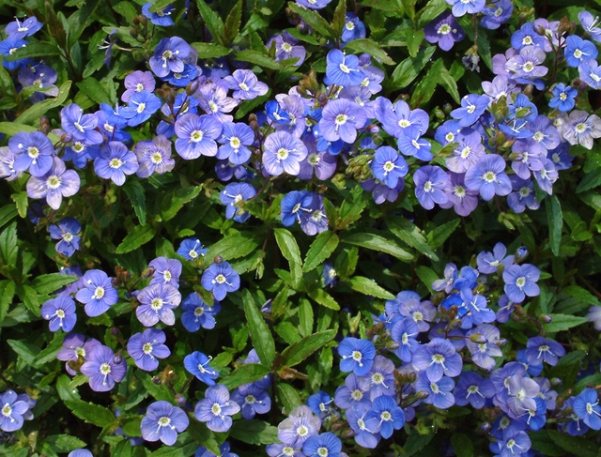


 Looking for a small perennial with a big impact? Consider Pineleaf Penstemon (Penstemon pinifolius). True to its common name, this low-growing plant has long, narrow leaves similar to pine needles. They hang on well into winter, and may be evergreen even in some colder climates. But it’s the flowers that steal the show. The dense mass of vivid scarlet red simply takes your breath away!
 As an enthusiastic gardener, I spend a lot of time in my yard, but it’s always a treat to visit other gardens. Just as sandwiches always taste better if I don’t have to make them, a garden I haven’t tended seems more lovely somehow. Perhaps it’s because I’m not responsible for pulling every weed; I can just relax and enjoy the flowers.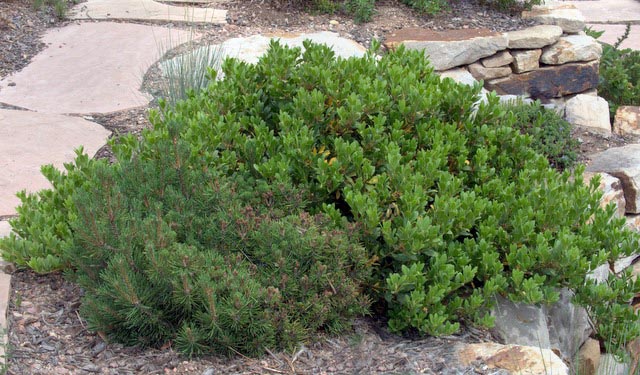
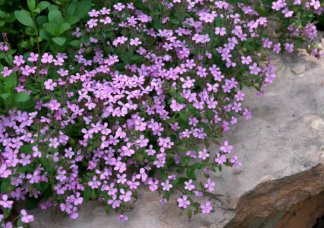 It’s such a pretty plant, petite and delicate, only a few inches high and covered with quarter-inch flowers of the softest pink. It’s the kind of groundcover perfectly suited for small spaces, rock gardens, and fairy bowers. It can even be used as a lawn substitute, as it tolerates limited foot traffic. With so much to recommend it, I’ve often wondered why this hardy perennial isn’t more popular. Perhaps it just needs a better name. “Soapwort” fails in the marketing department!
 The tree had clearly expired. What leaves remained had turned a sickly yellow-brown, and hung limply on the branches—in mid-August! Yet, when our neighbors planted it last year it had been perfectly healthy. Something was obviously wrong, and I had a hunch I knew what. (I’ve often said that master gardeners kill just as many plants, we just know why they died.)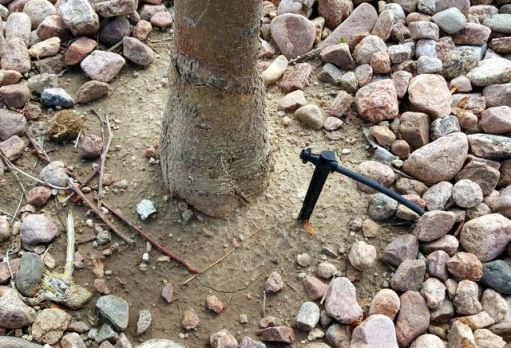
 Mountain Plover