Gardeners, Start Your Bulbs!

crocus-blackforest-27mar2006-lah-001-cropThe first crocus of spring. Sunny yellow daffodils naturalized under trees. Beds full of crimson tulips—it all starts now.

After gardening all summer, it’s hard to add yet another chore to the pile of things to do this month, but planting bulbs should be near the top of the list. Getting them in early not only affords you the best selection at the garden center, but gives roots time to grow in still-warm soil, preventing frost heave and providing the best start to next spring’s bloom.

Pick a location that gets plenty of sunlight, particularly if you intend for your bulbs to come back year after year. Most bulb species bloom well the first year, but here in Colorado they tend to diminish with each successive growing season. Especially in the case of tulips, assume that you will need to replace them annually for the best display. Even other species will need ideal growing conditions if they are to increase in size and number.

(more…)

Snowberry – Symphoricarpos albus

Symphoricarpos albus_Snowberry_XG-CO_LAH_3119While most fall and winter berries are red, or perhaps dark blue, snowberries sport showy clusters of pristine white, berry-like fruit. If not eaten by the birds, the fruit will adorn the bare branches in winter. The upright, finely-branched shrubs are about three feet tall. Moderate growers, they are long-lived, with tiny pink, bell-shaped flowers that appear in early summer.

A Colorado native, snowberry is well adapted to our growing conditions, and is hardy to zone 3. Soil type doesn’t matter, so long as it’s moderately fertile and reasonably well-drained. Plant in full sun, and water until established. While mature plants are highly drought tolerant, they also survive once-a-week watering, which also results in heavier fruit crops. Prune only to remove old, dead wood.

symphoricarpos-albus-snowberry-dbg-lah-263While the slightly toxic berries are considered inedible by people, deer will browse on the plants. With its dense foliage, snowberry makes a good foundation shrub. For a woodland feel, plant with other natives such as Oregon grape and ponderosa pines.

Growing Garlic

garlic-wikicommons-warzywa_czosnek002-1You may overlook the display at first, hidden among the photos of bright red tulips and sunny daffodils. Bulb planting season is here, and garden centers have towers of cardboard boxes labeled with spring blooms, somewhat incongruous at this time of year. Go ahead and pick out those hyacinths and crocuses, but don’t forget the garlic!
Sure, you can buy garlic at the market, but it’s one of those crops that is much better when home-grown. In this case, it’s not so much the just-harvested freshness as it is the variety. Most grocery stores do not sell the Good Stuff.

(more…)

I’m a Master Gardener Again!

After a year’s hiatus due to some major funding gaps, the Colorado State University Extension Master Gardener program is once again up and running in El Paso County. Yup, that means I can once again pin on my Master Gardener badge.

It also means that I’ll be volunteering again, putting in countless hours writing articles, taking photographs, teaching classes, and answering questions. It means our horticultural agent will be looking over my shoulder, making sure that my advice is solidly based on scientific research.  And it means that I’ll again have access to CSU Extension’s excellent continuing education opportunities, keeping me up-to-date on the latest developments in horticulture.

(more…)

A Gardener’s Guide to “Quantities”

A “few” bags of compost?

I was wasting time doing online research when I came across this delightful gardening blog. Clearly this post was written by a gardener, someone I can definitely relate to. The blogger identifies herself as “Carol,” an eccentric gardener, gardening geek, passionate about plants.

I thought Carol’s commentary on how gardeners count was too fun to keep to myself, so I’m sharing it here. Besides, this way I get to take a  break do more research for future articles. I hope you enjoy it as much as I did! And while you’re at her site, be sure to admire her extensive hoe collection.

May Dreams Gardens: A Gardener’s Guide to “Quantities”

An Oasis in Monument Park

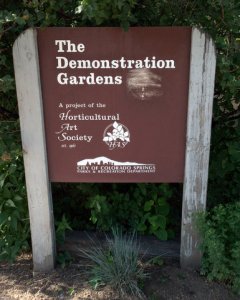
entrance_has-cospgsco_lah_0290A calm oasis in Monument Park, the Horticultural Art Society’s Demonstration Garden is the perfect summer retreat. Surrounded by mature trees that provide shade for much of the day, and full of flowers, it’s a place to linger and relax. Perennial borders encircle several planted islands, set off by a sea of green grass; the total effect is lovely.

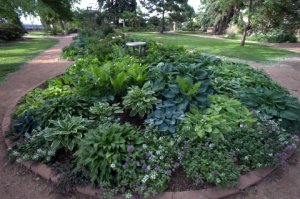
hosta-bed_has-cospgsco_lah_0294As you enter off Mesa Road (a continuation of W. Cache la Poudre Street) or Glen Avenue in downtown Colorado Springs, the noise of the street fades, replaced by the chirping of birds and the gentle sigh of a cool breeze. Rarely are more than a few other people present.
(more…)

Tumbling Seed Spreaders

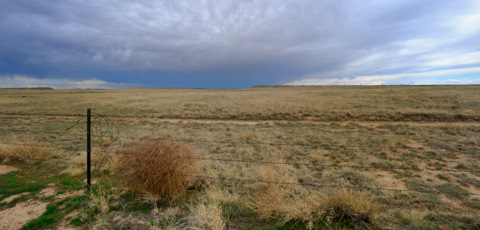
tumbleweed_commanchegrasslandsco_20100414_lah_2566

An iconic symbol of the West, tumbleweeds conjure images of cowboys, cattle drives, and barbed wire. They even have their own song—“Tumbling Tumbleweeds” was written by Bob Nolan in the 1930s, and seems to reappear as often as the weeds for which it’s named.

Yes, we’re all familiar with tumbleweeds. But, as a result of my Colorado Master Gardener training, I have insider information that will stun, shock, and astonish you. Tumbleweeds are aliens!

Yes, it’s true. Before the Europeans stumbled across the western hemisphere, there were no tumbleweeds on the plains. Of course, there were no cowboys, either—no horses, no cattle, and no chuckwagon bean dinners. Tumbleweeds arrived, not in flying saucers, but in seed shipments from Europe and Asia.

(more…)

California Fuchsia (Epilobium canum)

epilobium-california-fuschia_xg_090720_lah_7368Also known as Garrett’s Firechalice and Garrett’s California Fuchsia, Epilobium canum* is a spectacular plant for the fall garden, no matter what you call it. Flaming orange-red flowers from early July until frost make California Fuchsia a focal point in any xeric garden. Low-growing mounds of narrow, grey-green leaves spread two feet wide. The brilliant blossoms are a hummingbird magnet, giving them yet another common name, “Hummingbird Trumpet.” Plants look especially nice in front of contrasting companions such as dark junipers, purple asters, or silvery Artemisias.

(more…)

Heavenly Lawns

This has been making the email rounds for a while now, at least among us gardeners. But as it is one of my favorites, I wanted to share it just in case anyone has missed it so far. I wish I knew who the author was, so I could give them full credit for this masterpiece.

Heavenly Lawns
zeroscape-colospgs-2008sept18-lah-312r-1One heavenly spring morning, God got into a conversation with St. Francis about lawns. The conversation went something like this…….

GOD: St. Francis, you know all about gardens and nature. What in the world is going on down there in the USA? What happened to the dandelions, violets, thistle, and the other stuff I started eons ago? I had a perfect, no-maintenance garden plan. I created plants that grow in any type of soil, withstand drought, and multiply like crazy. The nectar from the long lasting blossoms attracts butterflies, honeybees and flocks of songbirds. I expected to see a vast garden of colors by now. But all I see are these green rectangles.

ST. FRANCIS: It’s the tribes that settled there, Lord. The Suburbanites. They started calling your flowers weeds, and went to great lengths to kill them and replace them with grass.

(more…)

Why I (am trying to) Like Garden Spiders

spider-on-daylily_cottonwoodxg_lah_2524I admit to being an arachnophobe. Even though intellectually I know how helpful spiders are in the garden, I still get the shakes and run screaming when I see them. Still, we can change, right? I’m doing better. In fact, I’ve struck up an arachnid pact (well, it’s one-sided, but still…)—any spider in the garden is welcome to stay and make itself at home. Any spider that dares infiltrate my home? Let’s just hope my husband is around to rescue it.

spider-on-thermopsis-montana_golden-banner_blkforest-co_lah_8459In return for my beneficence, I expect some payback. That garden spider is tasked with taking care of any harmful pest infestations. Happily, I can have my garden and the spiders can have their lunches. All spiders are predators, and never feed on plants. That’s a pretty sweet combination.

(more…)