It’s a Bird, It’s a Plane…

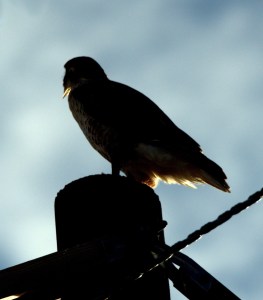
Red-tailed Hawk_ElPasoCo_LAH_9836r

I thumbed through the field guide. Let’s see… a Red-tailed Hawk is 19 inches, head to tail, with a wingspan of 49 inches. A Rough-legged Hawk is a couple of inches longer, 21 inches tall with a 53 inch wingspan. And a Ferruginous Hawk is larger still, 23 inches tall and 56 inches across.  Or, it could be a Northern Harrier, checking in at 18 inches by 43 inches. So which hawk was it sitting on that pole, silhouetted against the sky? I was glad that there were only a few real options in eastern Colorado at this time of year.  I flipped the page to a Golden Eagle, 30 inches in height, wingspan of 79 inches. No, surely I’d be able to tell if the bird was that large! It had to be a hawk.
(more…)

Black & White

Black coleus & White zinnias_DBG-CO_LAH_7679r

Normally, when we visualize a flower garden, we think color—yellow coreopsis, purple catmint, bright red tulips. Or, you could be more subtle, with a refreshing look in myriad shades of white. But how often do you see a garden full of flowers in monochromatic black and white? Yet, that’s one of the combinations offered last summer at Denver Botanic Gardens. And surprisingly, the results were beautiful. (more…)

Deadly? Or Delicious?

Devil’s Trumpet (Datura sp.)

Eating just a few leaves or berries will leave you writhing on the ground. Your mouth dries, your pupils enlarge, and you run a fever. Within minutes, you gasp as painful cramps turn into vomiting and diarrhea.  First your pulse races, then it slows, as does your breathing. Your head pounds, and then the hallucinations start. You’ve become paralyzed.

But soon, none of that matters any more—because you’ll be dead.

Happily, if you do manage to get to a hospital in time, there’s a good chance you’ll recover, although the symptoms can last up to three days. Eating an unidentified plant is never a good idea, but if it happens to be one of the more dangerous members of the nightshade family, it could be fatal. (more…)

Colorful Birds: Part 1

What’s the first thing you see when you look at these birds? For me, it’s their incredible diversity of color! And it’s not only tropical birds—even cold climates produce blue Steller’s Jays, red House Finches, yellow goldfinches, and pink rosy-finches. Or consider the ruby gorget on a Broad-tailed Hummingbird, flashing its iridescent hue when the sunlight hits it just right. How can feathers be all these colors? It varies.

(more…)

Beaks

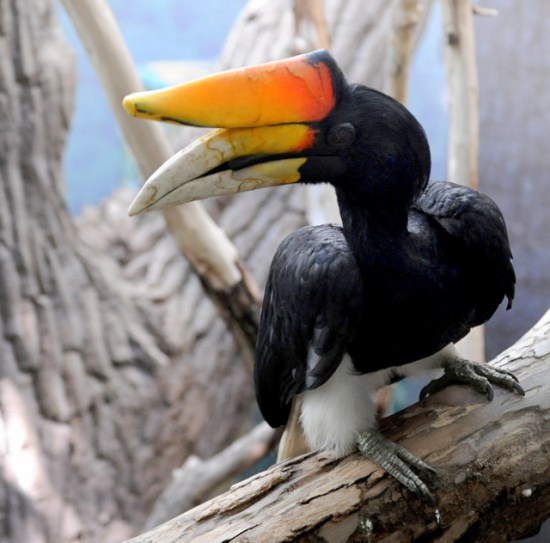
Rhinoceros Hornbill @DenverZoo 20090527 LAH 238r

We have hands. Birds have beaks. Have you ever noticed how useful a beak is? While lacking our manual dexterity, birds have no problem securing their dinners and stuffing said meal down the gullets of their young. Beaks are used to manipulate objects and preen ragged feathers. Some birds use their beaks to impress potential mates, or to scare away intruders. Beaks can even be used as weapons. Have you ever tried to steal an egg from under an irritated hen?

Beaks are also useful to birders, as their size, shape, and color are all helpful when it comes to identifying bird species. In fact, the more attention I pay to birds’ beaks, the better birder I become.

(more…)