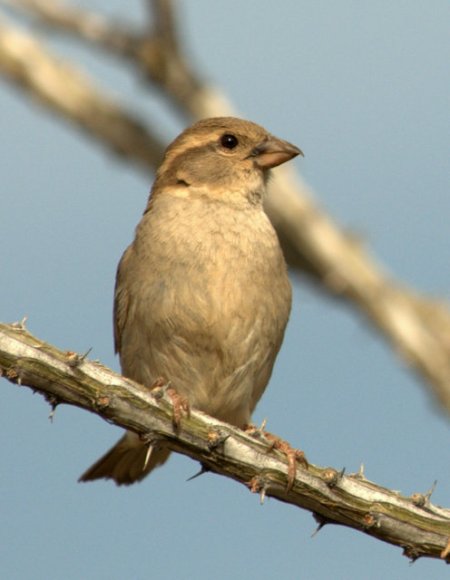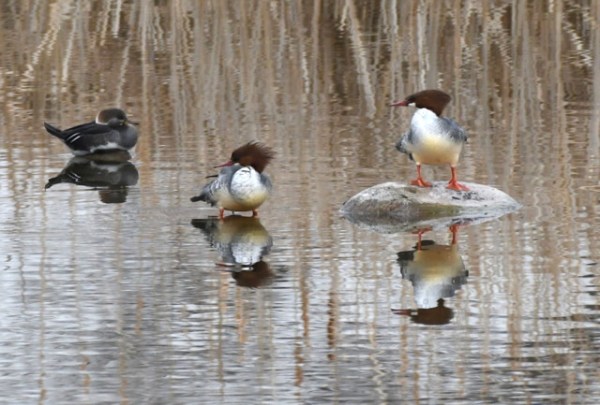
Can you identify this bird? The photo was taken in Colorado in July. I will post the uncropped photo on Saturday, giving you one more chance to identify this bird. The answer will appear at the end of next Monday’s post.

Can you identify this bird? The photo was taken in Colorado in July. I will post the uncropped photo on Saturday, giving you one more chance to identify this bird. The answer will appear at the end of next Monday’s post.


It’s helpful to understand your equipment, to know how to set up your camera so your subject will be in focus and properly exposed. Knowing how everything works will allow you to avoid mistakes and the frustration that accompanies them. If you’re especially enamored of technical things, you’ll probably enjoy trying out all your camera’s menu choices, dials, and buttons, learning what it’s capable of. But just as most of us don’t pull out our phone simply to play with the settings, understanding the technical aspect of photography isn’t our final goal. Rather, it’s the means to an end. We want to create quality photographs.

I can’t tell you how thrilled I am. Last night our daughter sent us the following text about two of our granddaughters, currently aged 4 and 6:
G: Look W–! A chickadee! (Gasp!) Two!
W: Yeah! Aww, they flew in the tree. (Runs to another window.)
W: I found them!
G: A chickadee! Two chickadees!
and so on…

How would you like a perennial that is hardy from USDA zones 3 through 9, tolerates browsing deer, drought, and smog, while attracting butterflies with its brilliant flowers? Moss phlox (Phlox subulata, also known as moss pinks and creeping phlox, does all that, and more. A very low growing groundcover that barely reaches six inches in height, moss phlox spreads to a diameter of two feet, making it ideal for the front of a border. The leaves resemble short, prickly pine needles, and are a gray-green in color. But it’s the flowers that cause me to run to the garden center for more.
I was adding some recent sightings to my life list when I got distracted reading down the list of the world’s bird species. There are so many—and some have pretty peculiar names! I started wondering how birds get their common names.
There’s always the old standby of choosing a name based on appearance. Red-headed Woodpeckers, bluebirds, and Black-throated Gray Warblers fall into this category, as do spoonbills, crossbills, and hornbills. Other names are based on location—you know where to look for the West Indian Whistling-Duck, Chilean Flamingo, or Galapagos Petrel. Some names are based on size, with plenty of “greater” this and “least” or “lesser” that.
Yuccas are as much a part of the Colorado landscape as red rocks and towering peaks. I admit, I didn’t like them at all when we arrived 25 years ago. Yuccas? Yuck! But in the intervening years, they’ve grown on me. I now acknowledge that yuccas have their place—as long as it isn’t in my yard.
I think my initial antipathy came from driving by a yard in a Colorado Springs neighborhood. The homeowners clearly didn’t want to deal with landscape maintenance; their front yard was mostly rocks. A scraggly Ponderosa sat to one side. The only other plants were a few yuccas stuck between some ugly boulders. It was probably intended to be a xeriscape. I thought it was a “zeroscape”!
Would you like your bedroom to be infested with spiders? I can’t count the nights I’ve spent wide awake in bed. staring at a suspicious black blob on the ceiling (I’m rather nearsighted without my glasses). Was it a spider? Should I turn on the light? It might move if I take my eyes off it to find my glasses. What if it is a spider? Is it going to fall on me in the middle of the night?
You can tell I don’t appreciate spiders in my bedroom. It’s a good thing, then, that I’m not a House Wren.
If you were stymied on Monday, now can you name this bird? The photo was taken in Colorado in June. The answer will appear at the end of next Monday’s post.

Every so often I come across an article that explains something so much better than I ever could. This is one of those times.
Tsu Dho Nimh writes a blog called Lazy Gardening SMACKDOWN. Back in 2013, he tackled the viral advice about making your own herbicide out of vinegar, detergent, and some other ingredients. I’ve been meaning to cover this topic, because this homemade “herbicide” doesn’t work. But then I saw Nimh’s article, and realized that he did a much more thorough job of explaining it all.
Can you identify this bird? The photo was taken in Colorado during the month of June. The answer will appear next week.