If you were stymied on Monday, now can you name this bird? The photo was taken in Colorado in January. The answer will appear at the end of Monday’s post.
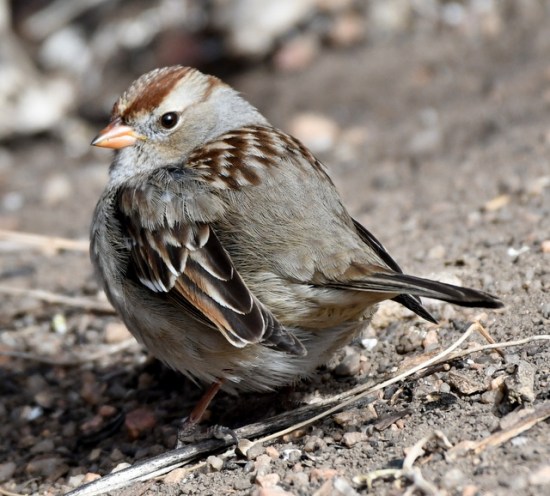

If you were stymied on Monday, now can you name this bird? The photo was taken in Colorado in January. The answer will appear at the end of Monday’s post.
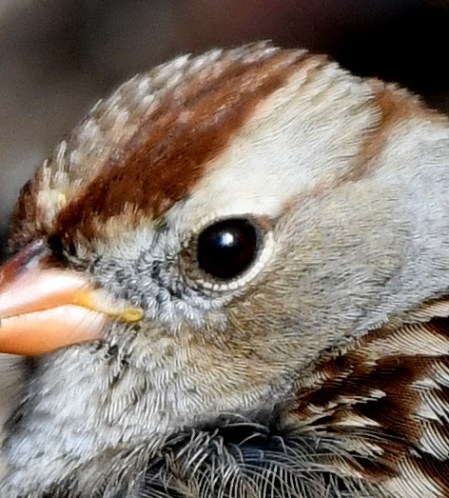
This bird was photographed in Colorado in January. Can you name it? I will post the uncropped photo on Saturday, giving you one more chance to identify the bird. The answer will appear at the end of next Monday’s post.

It’s only November, but when it comes to gardening in a cold weather climate, it may as well be winter. From the first sudden freeze, now months ago, the leaves have been brown. For those of us who have gardened in more mild conditions, we crave green, especially evergreen shrubs, but the choices are severely limited. There are the ubiquitous junipers and other dwarf conifers. Yuccas. Firethorn (Pyracantha). Perhaps some Oregon Grape Holly (Mahonia) if you have a sheltered spot so the leaves can avoid desiccation. Even my supposedly evergreen Cotoneaster is brown. But there’s one often-overlooked shrub that stays green all winter—even if it doesn’t exactly have noticeable leaves.


One of the delights of living near the US Air Force Academy is watching the various ways the cadets get into the air. There are the small training planes, the gliders, and the air mattress-like parachutes. Every so often, most often during football season and at graduation, we’re treated to an old bomber or two. And then there are the incredible Thunderbirds, whose aerial display comes right over our house. What a view!
Of course, you can immediately tell when the Thunderbirds are in town—you can hear their screaming engines echoing off the Front Range mountainsides. (If you want to actually see the jet, look far ahead of the point where the sound seems to be originating.) But let’s eliminate the sound for a moment. How can you identify a single-engine prop plane from a glider from a parachute from a jet? Easy—look at the shape of the wing.

Who doesn’t like marshmallows? Floating in your cocoa, shaped into a peep, or toasted over a campfire and smashed into a s’more, we all love the squidgy sweetness. I have always wondered where the name came from. What’s a mallow, and what is it doing in a marsh?
Turns out, Malvaceae is yet another family of plants, and one that most gardeners will recognize.


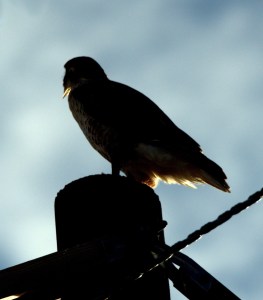
I thumbed through the field guide. Let’s see… a Red-tailed Hawk is 19 inches, head to tail, with a wingspan of 49 inches. A Rough-legged Hawk is a couple of inches longer, 21 inches tall with a 53 inch wingspan. And a Ferruginous Hawk is larger still, 23 inches tall and 56 inches across. Or, it could be a Northern Harrier, checking in at 18 inches by 43 inches. So which hawk was it sitting on that pole, silhouetted against the sky? I was glad that there were only a few real options in eastern Colorado at this time of year. I flipped the page to a Golden Eagle, 30 inches in height, wingspan of 79 inches. No, surely I’d be able to tell if the bird was that large! It had to be a hawk.
If you were stymied on Monday, now can you name this bird? The photo was taken in Colorado in January. The answer will appear in Monday’s post.
 Q: What has ears but cannot hear?
A: A field of corn.
Q: Why is corn such a good listener?
A: Because it’s all ears!
Q: Why shouldn’t you tell secrets on a farm?
A: Because the potatoes have eyes, the corn has ears, and the beans stalk.
Are you groaning yet? We make (bad) jokes about ears of corn, but it appears that plants might really have ears.
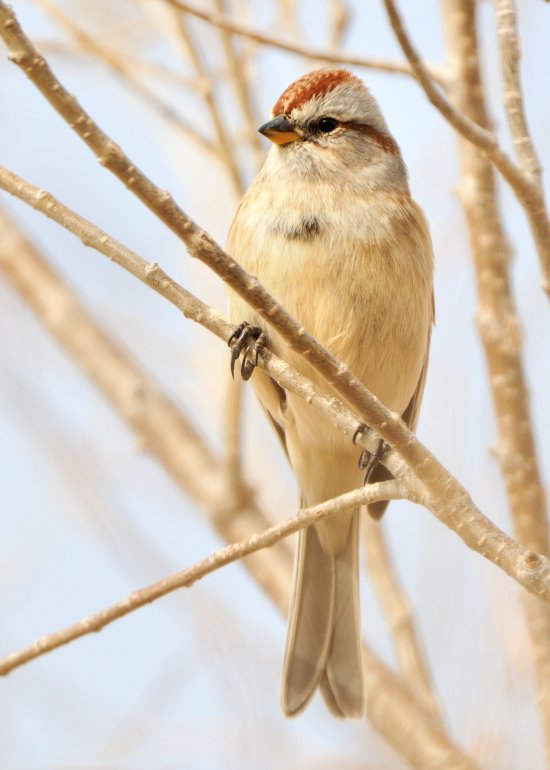
This bird was photographed in Colorado in January. Can you name it? I will post the uncropped photo on Saturday, giving you one more chance to identify the bird. The answer will appear at the end of next Monday’s post.


Normally, when we visualize a flower garden, we think color—yellow coreopsis, purple catmint, bright red tulips. Or, you could be more subtle, with a refreshing look in myriad shades of white. But how often do you see a garden full of flowers in monochromatic black and white? Yet, that’s one of the combinations offered last summer at Denver Botanic Gardens. And surprisingly, the results were beautiful. (more…)

