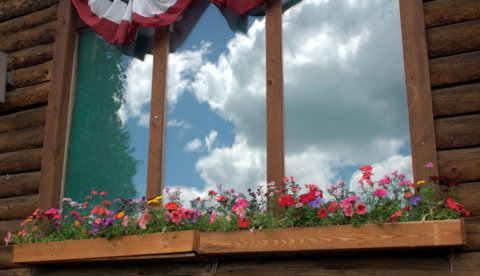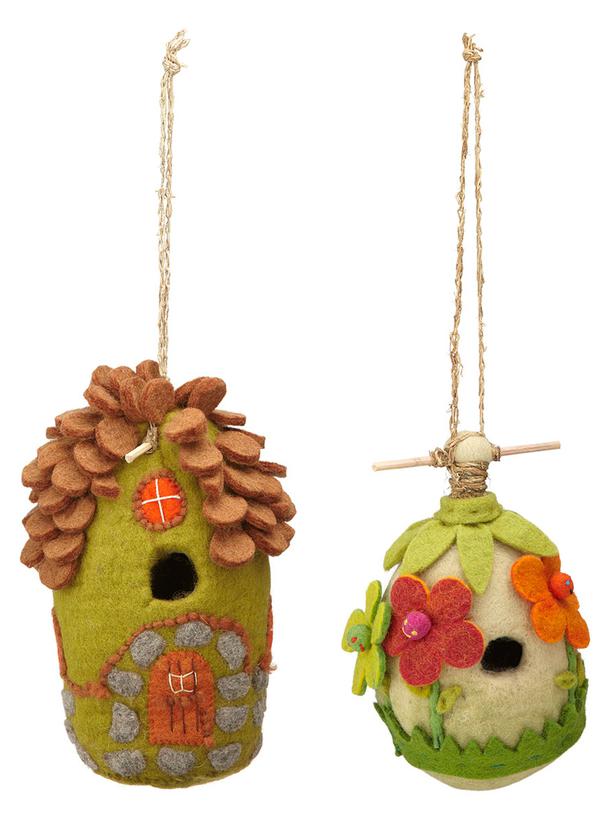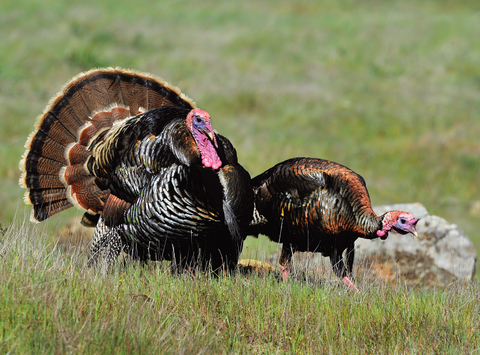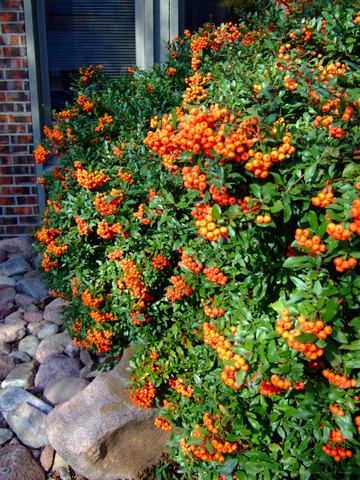
To refresh your memory, here again are the photos for Bird Quiz #5. Read no further if you still want to have a shot at identifying these birds.


(more…)
To refresh your memory, here again are the photos for Bird Quiz #5. Read no further if you still want to have a shot at identifying these birds.


(more…)

Girl eggplants? Boy eggplants? Does one taste better than the other? And what does all this have to do with plant sex?
In researching my recent post on eggplant, I discovered a bunch of discussion about “male” vs. “female” eggplants. We’re talking about the fruit—the eggplants that we eat—not the individual plants on which the eggplants grew.
From a botanical point of view, this whole debate is nonsense. Let me explain:
(Make sure you also see the previous months’ Bird Quizzes!)
Can you identify these birds? The first photo was taken in Colorado in May. The second photo was taken in California in March. My answer will appear next Monday.


Eggplant Parmigiana, Moussaka, Moroccan Eggplant Salad, Baba Ganoush… there are plenty of delicious ways to eat eggplant. Growing it in Colorado is a whole different story. A native of warm and humid southeast Asia, it takes a bit of persuasion to convince this tomato family member to thrive in our cool, dry climate.
As Colorado gardeners, we have all sorts of tricks to modify the microclimate around our plants and extend a too-short growing season. Cloches, cold frames, copious use of plastic and accessories such as Wall ‘ O Water are all helpful. However, choosing the right varieties can mean the difference between crop failure and Ratatouille. (For more on how to grow eggplant, see the CSU Fact Sheet on “Peppers and Eggplants.”)
“I’m interested in learning how to watch birds. How can I get started?”
The question was music to my ears. Who doesn’t love to share their passion with someone else? It wasn’t so long ago that I was a new birder, trying to juggle a crummy pair of old binoculars with a mysterious field guide, all while trying (unsuccessfully) to keep an eye on the bird I was trying to identify. I’ve come a ways since those early days and even though I still have much to learn, I’m eager to pass on my limited birding skills.
Spring flowers are finally filling the fields. Milk vetch, penstemons, wild onions and marsh marigolds all caught my eye as I hiked though the towering cottonwoods along Fountain Creek, at the base of the Rockies here in central Colorado. I was particularly impressed by huge swaths of a foamy white flower I didn’t immediately recognize.
Counting the petals—each tiny flower had four—and examining the foliage led us to conclude the plants were Crucifers, members of the mustard family. Sure enough, we were enjoying the pretty flower heads of Whitetop (Cardaria draba), an aggressive import from Europe and Asia that is listed as a noxious weed here in Colorado (List B). Oh dear.
It was like a bird-shaped ghost—we couldn’t quite believe our eyes. My friend Debbie and I were birding near Grand Junction, in Colorado National Monument—a spectacular place of sheer cliffs, rock pinnacles, and copper-colored sandstone.
We had stopped for lunch, and were alternately taking bites of our sandwiches and grabbing our binoculars. Blue-Gray Gnatcatchers, Rock Wrens, and Gray Vireos abounded. I was surprised to see Gambel’s Quail running under the junipers; I thought of them as living a bit more to the south. I was told that the species had been introduced to Western Colorado as a game bird.
Is your garden being bugged? While 95% of all insects are either beneficial or benign, that last 5% can eat us out of house and home—or at least out of cabbage and broccoli. If insect invaders are on the attack, sometimes you just have to fight back.
Pests may be persistent, but we gardeners are not helpless. I like to remind myself that I am smarter than an aphid and more cunning than a flea beetle. When it comes down to a battle for the harvest, there are lots of tools at our disposal. As a master gardener, I was taught the principles of Integrated Pest Management, or IPM. Rather than just reaching for a spray can, this approach is multifaceted. There are many ways to outwit a weevil.
Right on schedule, I hear the shrill whistle of a Broad-tailed Hummingbird’s wings. I’m writing this on May 1, and I just had my first tiny visitor of the season—on the exact same date as last year. I’d hung the feeder a few days ago, just in case, but not one bird stopped by until today. Amazing.
I’ve had a feeder outside my kitchen window every summer for about eight years now. One year, May 1 brought a heavy snowfall, with temperatures in the 20s and the wind whistling about the eaves. Surely the birds were snuggled somewhere safe and warm, I thought. Maybe most birds were, but at least one Broad-tail braved the storm to get to my feeder. If the hummingbirds are that eager (desperate?) to have a sugar water snack, the least I can do is offer what they expect.
When it comes to the perfect tomato, we gardeners have sky-high expectations! We all have our own concept of tomato heaven—healthy plants bearing tons of huge fruit with exactly the right sugar-to-acid balance, thin skin (but one that doesn’t crack), early, full of flavor, and resistant to whatever Mother Nature can throw at it.
Here in my high altitude garden, I can’t afford to be so picky. Forget long-season heirlooms and humongous beefsteaks. I just want a tomato that will ripen before it freezes to death! It does, however, have to taste better than store-bought. Isn’t flavor the whole reason to grow tomatoes in the first place?