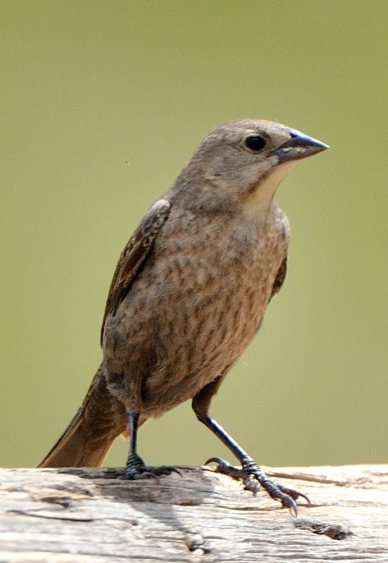
To refresh your memory, here is the photo from July’s Bird Quiz. The bird was seen in Colorado during the month of July. Don’t read any further if you want one last chance to identify this bird.


To refresh your memory, here is the photo from July’s Bird Quiz. The bird was seen in Colorado during the month of July. Don’t read any further if you want one last chance to identify this bird.
Can you identify this bird? The photo was taken in Colorado during the month of July. The answer will appear next week.
 Crows can make tools, or unzip your backpack to extract your lunch. Macaws have been known to open complicated latches their cages in order to escape their captors, demonstrating insight into complex problem solving. Jays can remember where they stashed each and every one of thousands of nuts. And I knew an African Gray Parrot that, in an effort to keep its owners home (and therefore receive more attention), mimicked the telephone’s ring every time anyone started to leave the house. In fact, many birds are exceptionally intelligent. But how do they fit those smarts into their tiny brains?
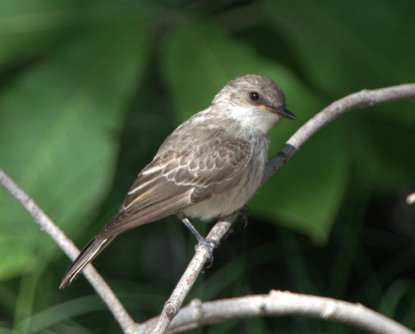
To refresh your memory, here is the photo from June’s Bird Quiz. The bird was seen in New Mexico during the month of June. Don’t read any further if you want one last chance to identify this bird.

Can you identify this bird? The photo was taken in New Mexico during the month of June. The answer will appear next week.
We’re familiar with these facts:
 Brown Pelicans are saltwater birds, sticking to the coasts.
We think we know. We think we understand. We’ve observed, conducted studies, collected facts. We think we have it right. And then Mother Nature confounds us.
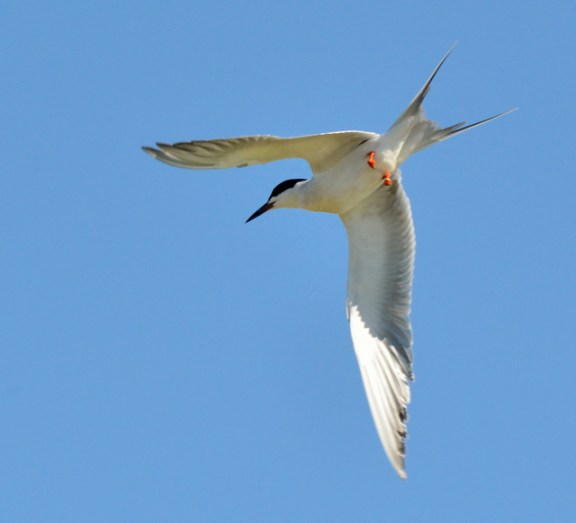
To refresh your memory, here is the photo from May’s Bird Quiz. The bird was seen in California during the month of April. Don’t read any further if you want one last chance to identify this bird.

Can you identify this bird? The photo was taken in California during the month of April. The answer will appear next week.

A shallow, warm sea reflects sunlight in the distance. Here on the shore, a flat beach is backed by low hills. The hillsides are home to dozens of large, circular depressions approximately six feet across. These are nests, and the assemblage is a rookery.
Some nests still contain eggs, others have young in residence. The nestlings have been here a while, hanging out with the their parents, who in turn provide both food and protection. (more…)
 Cryptic coloration—the ability of an animal to blend in with its surroundings—has always fascinated me. Cryptic coloration is the reason there are so many brown, striped sparrows. It’s why female ducks and other species lack the bright plumage of their mates. It’s why birds show regional differences. And it’s why I almost missed seeing the Long-billed Curlew shown here.
 Mountain Plover