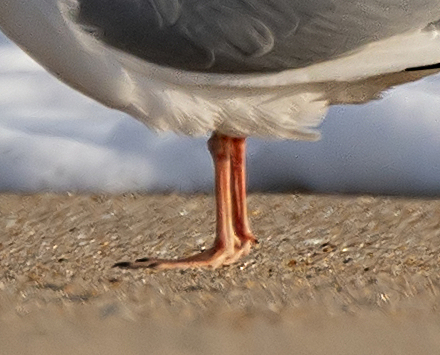
If you were stymied on Monday, now can you name this bird? The photos were taken in North Carolina on December 30, 2013. The answer will appear at the end of Monday’s post.


If you were stymied on Monday, now can you name this bird? The photos were taken in North Carolina on December 30, 2013. The answer will appear at the end of Monday’s post.


In case you haven’t yet heard, the 2019 Pantone color of the year is Living Coral. According to Pantone, Living Coral is an “animating and life-affirming coral hue with a golden undertone that energizes and enlivens with a softer edge.” Coral has always been one of my favorite colors. I think it’s pretty (and I like this shade much better than last year’s Ultra Violet, described as a “blue-based purple that takes our awareness and potential to a higher level”).
I’ve been studying eastern birds in anticipation of an upcoming trip to the southeast (I can hardly wait!). This bird was photographed in North Carolina on December 30, 2013. Can you name it? I will post the uncropped photo on Saturday, along with another picture of the same individual, giving you one more chance. The answer will appear at the end of next Monday’s post.
 Did you know that plants come in families?
You may remember learning taxonomy in your high school biology class. Way back when, I taught my classes of 15-year-olds the seven levels of classification: kingdom, phylum, class, order, family, genus, and species. (Since that time, scientists have been busy, and we now have domains, which precede kingdoms.) All these can have super- and sub- added to their names, as well. If you’re talking about plants, “phylum” is replaced by “division” and “order” is sometimes replaced by “series,” just to keep things as confusing as possible. (more…)

How did your garden grow this past year? Did everything flourish? Did you make mistakes? What do you intend to keep on doing, and what will you change for the future? Occurring as it does in the coldest part of the year, New Year’s is an excellent time to review last year’s garden and then apply the knowledge gained to this coming growing season.
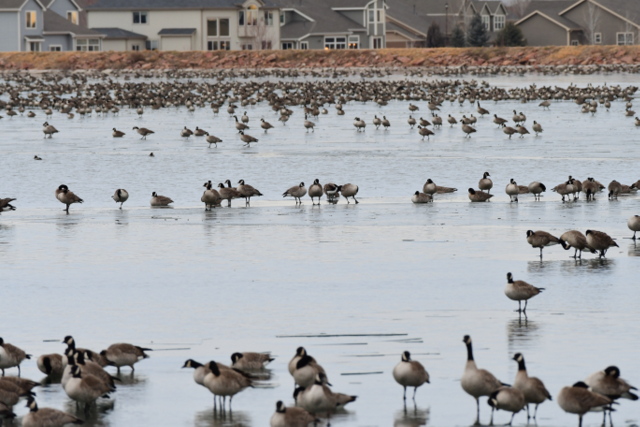
Have you heard? There’s a Pink-footed Goose at Milavec Reservoir (about 30 minutes north of Denver)! The word spread quickly throughout Colorado’s birding community. This was amazing. This was incredible!
As the Audubon website explains,
Although many Pink-footed Geese nest in Greenland and Iceland, these birds all migrate across the North Atlantic to spend the winter in Britain and northwestern Europe. Strays that have gone the wrong direction have been found in North America only a couple of times, in eastern Canada.

Looking for a last minute gift for a gardening friend? How about a houseplant? At this time of year, when the world outside is dormant, I depend on my houseplants to feed my need for color. And while I appreciate healthy, green leaves, we certainly don’t have to stop there.

If you’ve been birding for any length of time, you know that species come and species go. The birds don’t change, but our perception of which variations are actually different species is constantly undergoing review. We have lumpers, who combine disparate species into one, and splitters, who separate subspecies into two or more different species. Add in the (relatively) new ability to examine DNA, and you have a recipe for constant change.

When Russian Sage (Perovskia atriplicifolia) first appeared on the scene, I jumped right on the bandwagon, extolling its virtues and recommending it for Colorado gardens. I even planted it in my own yard. And yes, this hardy perennial lived up to my expectations. It was tough, drought-tolerant, and the deer and rabbits left it alone. On top of that, late summer brought a wealth of gorgeous lavender blossoms that covered the plant’s ferny, silvery-gray foliage. What’s not to like?
I’ll tell you. The plant is a thug.

 Mountain Plover