
Here are three more cases where the standard gardening advice won’t do your plants any favors. (If you missed my previous posts on this topic, try typing “garden advice” into the search box at the top right of this page.)
 Vitamin B1 stimulates root growth. No, it doesn’t. A study done in the 1930s showed that when disembodied pea roots were placed in a petri dish saturated with vitamin B1 (thiamine), they grew. From this, they concluded that pouring a vitamin B1 solution over newly transplanted plants would help them get established. However, the plants in your garden are not detached pea roots, and they’re not growing in a petri dish. Further research has shown that adding B1 does nothing to help reduce transplant shock, but it will have an effect on your wallet. If you want to encourage roots, look for a product containing a rooting hormone instead.

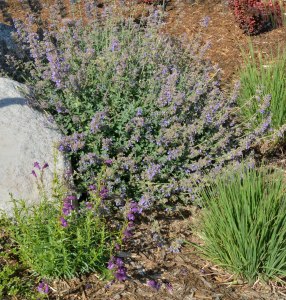 You’ve read the instructions; I’ve used them frequently here in my posts. “Drought resistant once established.” Sounds good—we’re always trying to save water—but how should you water these plants to start with? And what does “established” mean?
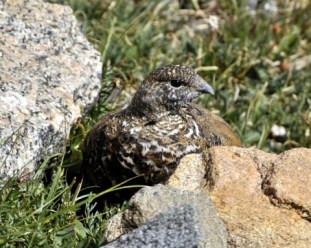 Last week I mentioned that we’d spent four days at Rocky Mountain National Park. One of the species all birders hope to see there is the White-tailed Ptarmigan. But unlike the Clark’s Nutcrackers, which happily pose at Rainbow Curve, ptarmigan are darned hard to find.
 Your carrots have finally reached harvestable size—you can tell from the broad shoulders slightly protruding from the soil that the crop is going to exceed expectations. Excitedly, you bend down and gently tug on the feathery green leaves. Pop! Up come the leaves and the top of a carrot—but wait! Where’s the rest? All you’re holding is a quarter inch of orange. The rest of the carrot is missing! Confused, you stick your shovel into the soil to bring up the next root, but it suddenly plunges downward, encountering no resistance. There’s a tunnel under your carrot bed. Grrrrr!
 Envision a woodland garden, and nodding columbine are one of the first plants that comes to mind. With their intricate shapes and rainbow of colors, columbines are deservedly popular perennials.
 It sounds too good to be true. Not only are marigolds pretty, but growing in your vegetable garden will protect your harvest from nematodes, beetles, hornworms, whiteflies, squash bugs, thrips, hornworms, and even rabbits. I know it must be so, because I read it on the internet: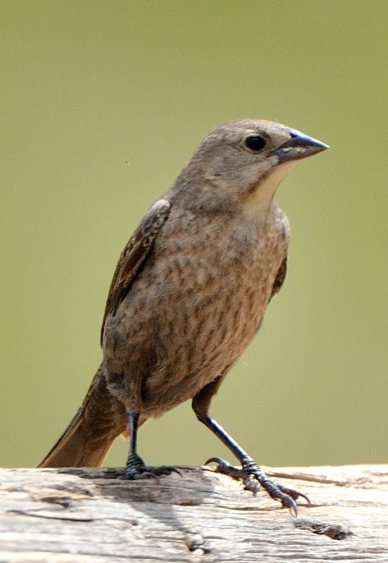
 Mountain Plover