A November Garden Beauty

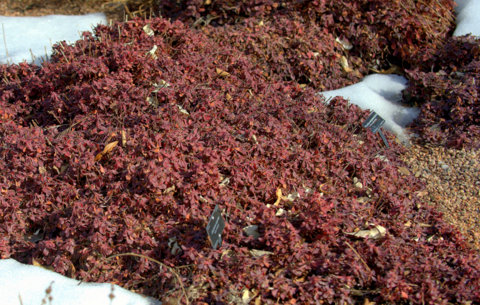
Eriogonum umbellatum var aureum - Sulfur Flower Buckwheat_DBG_10200118_LAH_7145My daughter was staring at the planters surrounding her patio, full of bedraggled and wilted plants. “I know it’s November, but is there something I can plant that will look nice now?”

Of course we’re not going to get the delicate flowers or green abundance of late spring or summer, but dead doesn’t have to mean ugly. Some plants manage to look good even after freezing nights and the season’s first snowstorm.

(more…)

Gardening Goes On… Indoors

Hoya @home 28mar2006 LAH 119rAs nighttime temperatures dip into the teens, I have to face the fact that I won’t be outside gardening any time soon. Happily, a good part of my garden lives in my house with me. After a busy summer (punctuated by fire, hail, and floods), I finally have time to give my houseplants the attention they deserve.

Unless the plants are in dire straits, I prefer to wait on repotting until spring. Then, the longer days, larger pot, and fresh potting mix combine to encourage new growth. Except for the plants that are winter bloomers (Christmas cactus, some orchids), at this time of year I give my plants a rest by cutting back on fertilizer and watering just enough to keep the soil moist.

(more…)

Blood Geranium

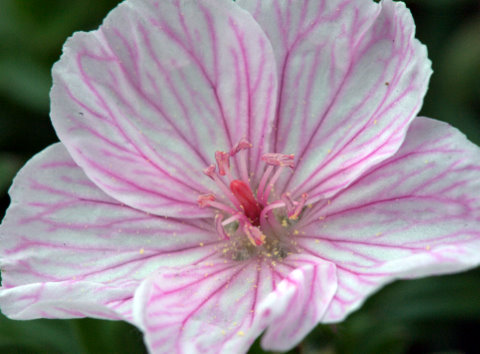
Geranium sanguineum 'Lancastriense'_Bloody Cranesbill_HudsonGardens-CO_LAH_2751Its name may be suitable for Halloween, but the Blood Geranium, aka the Blood Red Cranesbill, Bloody Cranesbill, or Geranium sanguineum, is anything but gruesome. In fact, the name comes from the bright crimson color of the fall foliage, rather than from the flowers or any tendency of the plant to bleed! In fact, Blood Geraniums are excellent plants for Colorado gardens.

Cranesbills are a type of perennial geranium with deeply divided leaves rising from a central point, and colorful flowers ranging from white through baby’s blush to shocking pink. Some flowers have brightly veined petals, as shown in the photo. The plants grow approximately 12 to 18 inches high and spread as wide or wider.

(more…)

Birding in the Margins

Swainson's Spurfowl_KrugerNP-RSA_LAH_1567
A camera enabled me to identify these Swainson’s Spurfowl after I got home.

I was so excited! About to leave on a 12-day trip, I was heading to a new destination—a new continent! Our destination was Swaziland, and I was drooling over the seemingly endless possibilities. The southern tip of Africa is home to more than a thousand bird species, far more than the US and Canada. I had my ticket and my passport. My camera and binos were packed, along with a pocket guide to the more common species. I was ready. There was just one minor issue.

This wasn’t a birding trip.

(more…)

Daddy Longlegs

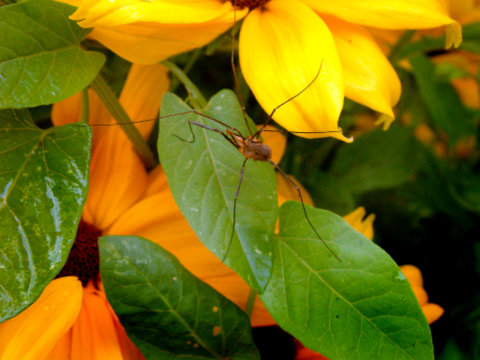
Daddy Long Legs @CSU LAH 077“Eeek! It’s a spider!”
“No, that’s just a Daddy Longlegs. It won’t hurt you.”
“Are you sure? I heard that they’re really venomous, but that their fangs are too small to bite me. Is that true?”

Everyone knows what a Daddy Longlegs is, or thinks they do. In fact, there are two different groups of animals with the name Daddy Longlegs, both Arachnids, but in different orders. (Scorpions are in yet another order of Arachnid.)

(more…)

Covering Your Dirt

Landscape fabric showing through mulch @ColoSpgs 2008oct16 LAH 068I’m out of town—very, very out of town. In fact, I’m in Swaziland, in southeastern Africa, almost 10,000 miles from home. If you want to know what my trip is all about, you can read the details on my other blog. Start here. If you want to read more, enter Swaziland in the search box at the top right of that page.

While I’m gone I’d like to direct you to this post my friend Carey wrote on landscape fabric, and why it’s probably not a good idea to use it in your garden.

Landscape Fabric – Why You Probably
Don’t Need or Want It

Carey is another former Colorado Master Gardener, and she is full of garden wisdom. In addition to her posts to Pikes Peak Gardening Help, she has her personal blog at Carey Moonbeam. You can see my links to both these sites at right.

See you next week.