To refresh your memory, here is the photo from February’s Bird Quiz. It was taken in Texas during the month of January. Don’t read any further if you want one last chance to identify this bird.
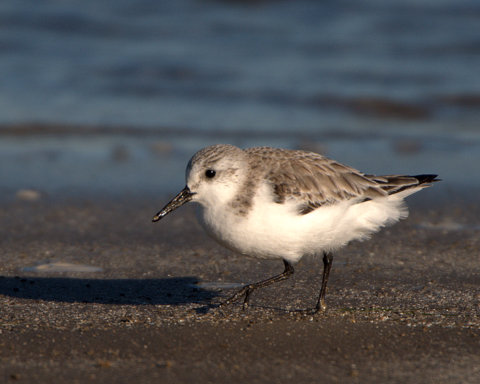

To refresh your memory, here is the photo from February’s Bird Quiz. It was taken in Texas during the month of January. Don’t read any further if you want one last chance to identify this bird.
 Last month I explained how amphibians, such as frogs and toads, and reptiles, such as snakes and lizards, are beneficial to our gardens. This time I’ll focus on birds and mammals. Inviting these wild animals into ours gardens is yet one more way that we can control the pests that dine on our flowers and veggies.
Birds
As an avid birder, I have up to a dozen feeders scattered around our yard. It may seem as if I’m doing the birds a favor, but it’s really the other way around! While most birds attracted to feeders eat seeds, many of those same species switch to bugs, with their higher protein content, during the breeding season.
(Make sure you also see the previous months’ Bird Quizzes!)
Can you identify this bird? The photo was taken during January in Texas. My answer will appear next Monday.
 I’m taking a break from blogging to bring you an important message from the Utah State University Extension. There seems to be an annual increase in gnome numbers immediately after Christmas, so this is timely information.
Growing conditions in Ogden, Utah, where this video was created, are very similar to those along Colorado’s Front Range, so I’m sure you’ll find this advice very helpful.
Please sit back, relax, and learn how you can deal with invasive garden gnomes!
Question: I’m a birder and nature photographer living in Colorado, with a limited budget for travel. Where can I go for fun and photos at this time of year?
Answer: Bosque del Apache National Wildlife Refuge!
 Just a day’s drive south of Colorado Springs, Bosque del Apache is the place to go for anyone interested in birds and/or photography. The week we visited, right after New Year’s, the refuge was home to 8,100 Sandhill Cranes, over 32,000 “light” geese, and a whopping 57,000 ducks! With such numbers, spectacular photos are pretty much guaranteed.
 Need some know-how on how to prune your lilacs? Want to cultivate the best-tasting carrots? Looking for a way to garden from your yard-less apartment? No matter what your gardening question might be, the National Gardening Association (NGA) has answers.
I first learned about this amazing nonprofit organization back in the early ’80s. My savvy husband subscribed me to their garden magazine, Gardens for All. It came on folded up, printed on thin, oversized paper… clearly a low-budget operation. But the information was first-rate.
 The phone rang. It was Debbie, my birding and photography buddy, calling to tell me that a male Eurasian Wigeon had been sighted in Cañon City! She had seen it on the area’s recent Christmas Bird Count, but she’d been without her camera. Now she wanted photographs. Did I want to go back to the area with her to look for it? You bet I did. It isn’t every day a Eurasian Wigeon comes to Colorado!
 Here it is the middle of winter, and garden pests are out of sight and out of mind. Yet, we know that those critters are out there, waiting for warm weather to bring out the first sprouts of spring—just so they can gobble them up! It’s a very good thing, then, that there are other creatures biding their time, waiting to eat those garden pests! I’ve already talked about bug-eating invertebrates. This time I’ll focus on those animals with some backbone, so to speak. Being biologically minded, I’ve sorted these helpful vertebrates by which taxonomic class they belong to.
Amphibians
 One of the most helpful animals to welcome into your garden is a toad. Like frogs and salamanders, their close relatives, toads eat tons of bugs, and they don’t need a pond to live in. Experts say they eat up to 100 bugs every day, and while they don’t discriminate between “good” bugs and bad ones (they’ll nab anything that moves), it’s nice to see cutworms, grasshoppers, flies, and slugs disappearing into their wide jaws.
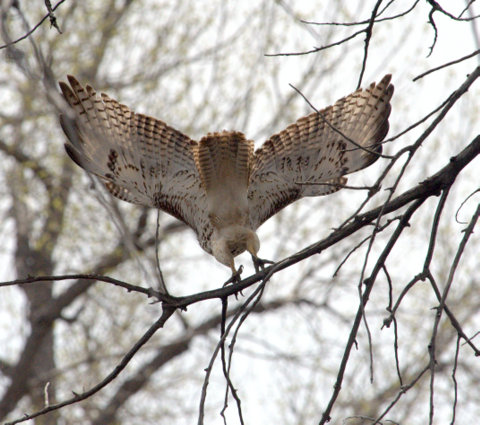
To refresh your memory, here is the photo from January’s Bird Quiz. It was taken in southeast Colorado during the month of January. Don’t read any further if you want one last chance to identify this bird.
 How would you like a houseplant that isn’t fussy about food, water, light, or much of anything else, is ignored by pests, and looks good year round? If that seems too good to be true, then you haven’t met the Ponytail Palm. Granted, I have yet to see flowers, but with all its good points, who cares about flowers?
While “Ponytail Palm” is the most widely used common name, you might also see these plants labeled as Elephant’s Foot, Monja, or Bottle Palm. This is a case where the botanical name (Beaucarnea recurvata) comes in very handy. At least that way we know which plant we’re talking about!
 Mountain Plover