
I took this picture at John Martin Reservoir State Park in SE Colorado. Do you see a problem?

I took this picture at John Martin Reservoir State Park in SE Colorado. Do you see a problem?
 I’m in California, and the birding is great! A generous friend gave my husband and I a pair of “buddy passes” on Alaska Airlines, and we used them to fly to Sacramento.
I ticked off Great Egret before the wheels even touched the runway. Not a bad start, even if it was pouring rain.
Keeping my notebook handy, I added a Yellow-rumped Warbler foraging outside the terminal and the huge flock of Brewer’s Blackbirds that filled the parking lot. Birding from the freeway is always a challenge, especially in a heavy downpour, but I listed 16 more species in the next 20 miles.
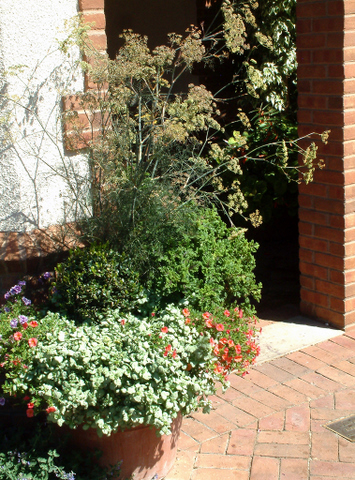 A tantalizing spell of sunny, warm weather had me out on my patio last week. It looks so bare. Most of my pots are still safely tucked into the garage for the winter. Repeated freezing and thawing can crack unglazed pottery. Since we were out of town a lot last year, I didn’t plant anything extra, not wanting to overburden our very gracious house-sitter. This year I’ll be home, and I’m already envisioning my containers.
A simple geranium in a flower pot is fine, but I have grandiose dreams. Paying particular attention to the containers at various botanic gardens has inspired me. Here are three tips on planting spectacular pots.
 Last week I wrote about the design and layout of chicken coops. Today we’ll talk about the inside.
If your coop is large, you’ll need some light inside so that you and the hens can see. Also, chickens lay eggs when days are long, then stop and molt when fall arrives. If you want them to continue producing eggs into the darker months, you’ll need an artificial light source (and electricity).

In honor of today being St. Patrick’s Day, I thought I’d celebrate “green” in the garden. No, I don’t mean about being environmentally friendly, although that’s certainly important. I’m talking about just plain green… as in chlorophyll-laden leaves.
This time of year, I’m pretty frantic for anything green. There aren’t many broad-leaved evergreens that tolerate Colorado’s winters. Even the conifers are more a blackish-olive drab—not nearly as nice as the “pine” of the decorating industry. Cold weather does that to leaves: many junipers turn plum-purple in winter. Leaves should not be that color. (Mahonia wears the same hue, but manages to look more attractive in it.) Hardy ice plant glows red, and ornamental grasses shimmer in copper and gold. Mostly, however, things look dull grayish brown, or just plain dead.
 The biggest investment in keeping chickens is their housing. Chickens are remarkably hardy birds, but they need some sort of shelter to make it though a Colorado winter. They also need protection from raccoons, possums, foxes, owls, coyotes, hawks, weasels, and neighborhood dogs.
Of course, the chickens don’t care what their coop looks like, just as long as it keeps them sheltered and safe. From our human perspective, appearance matters. So does convenience.
What should you consider when designing a coop (or choosing a plan)? Today and next week I’ll share what I’ve learned about housing chickens.
 Appearance
Aptly named Golden Currant blooms in early spring with showy clusters of small but fragrant trumpet-shaped bright yellow flowers. The blossoms are followed in summer by edible fruit that ripens from green through red to black. In fall, green leaves turn to amber or scarlet before falling. The arching branches can reach anywhere from three to nine feet in height, depending on age and habitat.

I’ve gone on this same field trip every year for the past five years. It’s always the first weekend in March. A dozen or so of us follow a series of barely-used back roads out onto the plains, searching for hawks, falcons, and other birds. Some years the snow falls, the wind howls, and the birds hunker on the ground. We see very little. Other years the weather is delightful, and the sky is full of soaring raptors.
The lead car gets the best view. Red-tails and Rough-legged Hawks perch on utility poles, kestrels balance on the wires, and Northern Harriers skim the short-grass prairie. The rest of us eat dust and catch glimpses of the back-ends of startled birds.
 It’s almost Saint Patrick’s Day, the traditional planting date for peas. Should you sow on March 17?
Not if you live along the Front Range! While St. Patty’s Day may work fine for New England, it’s probably the wrong day to plant for much of the country.
If you live in a warm climate (E.g., parts of California, Florida, and Arizona), you are far too late. Peas should be planted as a winter crop, so they can grow while the weather is cool and humidity is higher.
And if you live here in the Pikes Peak area, mid-March is much too early. Sure, peas planted now may survive and grow and produce a crop. But they may also rot in too-cold soil, waiting for temperatures at which they can germinate.

Eew! What was that horrible smell? Even with chronic congestion associated with my being allergic to nearly everything, I could tell something had died. Following my nose, I wandered downstairs, then into the corner of the basement with the seldom-used utility sink. As I got closer, I realized the deep sink was completely full of dirty water that lapped at the faucet and threatened to spill over the counter and onto the floor. I hastily ran upstairs to alert my handyman husband.
 Mountain Plover