Wind

windy_5

I know that wind is merely “air in motion,” but why does it have to be in such a hurry?

Here in Colorado, the wind has been blowing for weeks now—and not just gentle breezes, but howling gales that topple trees and suck every drop of moisture from already desiccated soil. First a dry winter, now this ceaseless wind.

As a gardener, there are times when I’m totally frustrated by too much wind. It stunts the growth of tender new shoots (I’m not trying to create bonsai tomatoes, but sometimes that’s what I get) and makes working in the garden a miserable experience.

(more…)

The Return of the Swainson’s Hawks

swainsons-hawk_lakepueblosp_lah_4891

It’s time for the changing of the guard. Rough-legged Hawks are on their way to the northern edge of the continent to breed and raise their young in the 24-hour summer sunshine. At the same time, Swainson’s Hawks are on their way back from Argentina in search of an endless summer.

Swainson’s Hawks were the first hawks I learned to identify as a fledgling birder. The dark-dark-light pattern of perched birds is easy to remember—dark head and chest, white belly. Plus, the russet cowl is distinctive. Smaller than other Colorado Buteos, their tiny feet allow them to perch on wires whereas other Buteos prefer trees and telephone poles. A friend described the white over their beak as their “searchlight” and the mnemonic stuck. And finally, no other American hawk has pale coverts with dark flight feathers. A soaring bird is instantly recognizable.

(more…)

Planting Done Right: Part 2

Trees

tilia-x-europaea-linden-cc-2003jul06-lah-003Today is Arbor Day, the traditional day for planting trees. Most of us treasure trees. Planting one is an act of faith, something we do for our children, and perhaps our grandchildren. Sadly, thousands of our nation’s trees now reaching maturity are destined to an early death. They were doomed the day they were planted.

Gardening practices have changed over the years. The days of digging a huge hole for a new tree are over. Research has shown that planting a tree too deeply is a sure recipe for trouble.

(more…)

Planting Done Right: Part 1

Shrubs, Perennials and Ornamental Grasses

plants-for-sale-lowes-cs_2008aug02_lah_5106-1It’s spring. I’ve been digging in the garden—at least between snow storms. My back muscles (and knees and shoulders) ache, there’s dirt under my broken fingernails, and a huge smile on my face. In fact, there’s dirt in my teeth—I’ve been pulling weeds and shaking the soil off their roots before piling them into the compost bucket, and I keep forgetting to close my lips.

One of the joys of spring is adding new plants to our garden. What gardener can resist the dazzling displays at the garden center? Forgetting about budgets and the size of our yards, we load up the cart. Then we get home and the work begins. It’s time to start digging holes.

(more…)

Crown of Thorns

euphorbia-splendens_crown-of-thorns_blkforest_lah_6087Tomorrow is Good Friday, the day Jesus wore a crown of thorns.  In visualizing that painful headpiece, it helps me to think about the sharp spikes on the plant with the same name.
As the scientific name indicates, Euphorbia Milii is first cousin to other Euphorbias, including poinsettias, the wide variety of spurges, and Snow on the Mountain. All these species share common characteristics such as inconspicuous flowers surrounded by showy bracts, and a toxic, thick, milky sap. This latex can not only cause skin irritation, but if it comes in contact with a mucous membrane, extremely painful inflammation can result. Some species’ sap is even carcinogenic.

(more…)

Annuals You Can Plant Now

Warmer days flirt with gardeners anxious to get outside and plant something, anything. But the harsh reality of cold nights, coupled with the persistent chance of frost—or even more snow—intrudes on our dreams of summer. It’s far too soon to be trusting Mother Nature with frost tender petunias, geraniums, or marigolds, but there are some annuals that can handle a bit of cold. Don’t expect them to survive wintry extremes, but they should still be alive and flourishing after lows in the 20s.

Pansies

viola-x-wittrockiana_pansies_dbg_20100417_lah_2623Annual members of the violet family, pansies are much hardier than they look. Hot and sunny summer days will fry them to a crisp, so now is the time to enjoy them. Pansies prefer enriched soil, and will do fine in full sun or light shade, as long as the weather stays cool. They are slow to start from seed, so buy transplants. Their small size makes them perfect for edging, or group them in containers where they won’t be overlooked. With colors ranging from deep purple and burgundy to pastel pinks, soft peach, and cheerful yellow and white, you can find just the right cultivar to fit any landscape scheme.

(more…)

New Advice on Soil Amendments

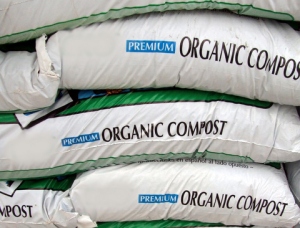
compost-in-bags-no-label-lowes-cs_lah_5090-1You’re gotten your test results back from the soil lab, telling you to add some organic matter. What’s the best thing to add?

In the past, I’d just bop on down to the local garden center and load up a few bags of… something. Soil amendment, composted manure, planting mix, potting mix, top soil, compost… there are hundreds of products, and the names are pretty random.

So are the ingredients. Since there are no legal standards, these bags can contain whatever the manufacturer wants them to. There’s no labeling law, either. If there’s a label at all, often you’ll see something like, “Contains (peat, forest products compost, and/or compost), wetting agent, fertilizer.” You have no idea if this particular bag has peat or compost, much less what went into that compost. And what’s a forest product? Bark? Sawdust? Squirrels?

(more…)

Choosing Your Chickens

cecilia-chicksIt’s spring. Bulbs are blooming, birds are singing, and feed stores have fluffy yellow baby chicks!

When we were still living in Silicon Valley, finding a source for baby chicks was a challenge. These days, no matter where you live, buying chicks is easy. There are lots of hatcheries that sell by mail-order. It may seem odd that day-old baby chickens are shipped in a cardboard box via snail mail, but it actually works very well. Newly hatched chicks can survive without food or water for the day or two it takes to arrive at their destination. The post office will call you as soon as the box arrives, and you have to be ready to rush over and pick up your brood.

(more…)

Take the Test!

The sun is shining, the lawn is turning green, and the birds are chirping. In fact, it’s a balmy spring day. Surely there must be something you can do to start your veggie garden! As a matter of fact, there is, but it doesn’t involve a single seed.

If you’re like most gardeners, you’ve never had your soil tested. Every year you dutifully spread a layer of compost and/or manure over your garden, dig it in, and plant. After all, that’s what every book, article, and website tells you to do. You might even add some fertilizer, just to be on the safe side. But if you’ve never had a soil test, you’re flying blind.

(more…)

A Second Opinon on Invasive Species

I recently read a confounding article on Garden Rant (a gardening blog like no other). The author was reporting on some new research suggesting that not all invasive species should be eradicated.

lonicera-honeysuckle-dbg-19sept05-lah-250-1Specifically, a Penn State biologist named Tomas Carlo studied Japanese Honeysuckle (considered a noxious weed in much of the eastern US) and found that its presence increased the biodiversity of bird species as well as the number of individual birds. In fact, the fall berries are a major source of food for fruit-eating birds.

(more…)