Foxglove ‘Spanish Peaks’

 (Digitalis thapsi)

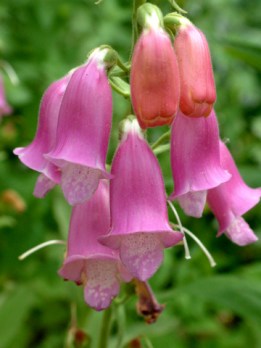
digitalis-thapsi-spanish-peaks-dbg-lah-002rWith one- to two-foot spikes of raspberry-pink flowers over a tidy mat of fuzzy foliage, perennial foxglove ‘Spanish Peaks’ isn’t your typical foxglove. Instead of the cool humidity of the British Isles, this hybrid is specifically recommended for Colorado gardens, doing well in our arid and unpredictable climate. As a result, it was named a Plant Select winner in 1999. The cultivar’s name reflects both the plant’s Spanish origins, and it’s suitability to Colorado, home of the Spanish Peaks.

Although attractive to bees and hummingbirds, ‘Spanish Peaks’ is usually disliked by rabbits and deer—probably due to its poisonous foliage. (The drug digitalis comes from plants in this genus.)

(more…)

Eating Locally in Colorado?

How much is local?
How much is local?

All over the country, foodies are advocating the wonderful benefits of eating locally. Save on transportation costs (both financial and environment). Know where your food came from and who grew it. Fresher is healthier. There’s no shortage of good reasons to base one’s diet on food produced within a hundred mile (approximately) radius. In fact, several noted authors have written books on the topic.

(more…)

Three Times Trouble

skunk-home-birdfeeders-8sept2005-lah-071I love living outside the city limits, but sometimes sharing our five acres with nature can have its challenges. I currently maintain seven bird feeders and a bird bath. Not only do we have lots of birds, but the availability of food and water brings in some unintended visitors as well.
I was attending a meeting at the nature center when my cell phone vibrated. Seeing it was Pete, I quickly excused myself and answered his call.

“Hi sweetie, what’s up?”
“I have a problem. How do I get a skunk out of the garage?”

(more…)

The CFO Convention: Part 3

robb-ponds-sp_grandjct-co_lah_2884-1

Saturday morning. Wakened by my alarm, I snuggled down into my sleeping bag and  listened. Trucks rumbled by on the nearby highway. The bird in the trees overhead kept up a constant chatter. But no drops were hitting the tent. The rain had stopped!

Thankfully, our field trip this morning departed at a leisurely 6:30 a.m., the first of two days photographing birds with Bill Schmoker. This was my primary reason for attending the convention, and I was eager to get started.

(more…)

The CFO Convention: Part 2

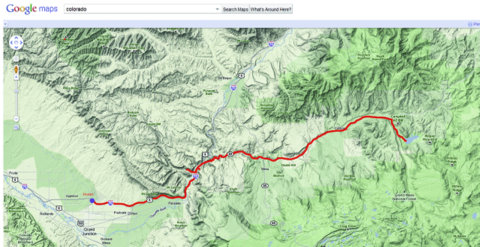
cfo-map-1

The saga continues…

The alarm on my phone chirped into the pre-dawn blackness. My friend Debbie and I both groaned. Between the 18-wheelers on near-by Hwy. 50 and the louder truck parked across the narrow driveway from us—the truck whose owner decided to idle for ten minutes, then rev the engine for another ten, and then finally to drive around the crunchy gravel loop a few times at 2:40 am!—we hadn’t slept at all well.

Still, an exciting day was waiting. We had each signed up for different trips, and mine was headed up Grand Mesa to look for (among other species) Chukar, Gray Flycatcher, Gray Vireo, eight warbler species, and Black-throated and Fox Sparrows. Since several of these would be new birds for me, the anticipation was enough to get me up at 4:30, and into the car by 4:45.

(more…)

Bird Mania—The 2011 CFO Convention

debbie_colonatlmon_lah_2978

I just got back from my first birding conference—the annual Colorado Field Ornithologists’ Convention. This year it was held in Grand Junction, on the western slope of the Rockies. My friend Debbie (above) and I enjoyed three days of beak-geek heaven, plus a full day each way for the 5 hour drive from home. Sometimes life can be pretty sweet.

As a newbie attendee, I really wasn’t sure what to expect. However, I had heard about the amazing field trip possibilities. After reading all the glowing descriptions on the conference website, I signed up for three outings, one a day. As far as the rest of the activities… well, I’d just have to wait and see.

(more…)

Forget-me-not (Myosotis sylvatica)

myosotis-forget-me-not-dbg-lah-011rAppearance
The petite, sky-blue flowers of forget-me-nots have charmed gardeners for ages. Also available in delicate pink or white, the blossoms are suspended by wiry stems above crinkled, heart-shaped leaves of forest green. The plants form a groundcover six to twelve inches high and two feet wide. Even though the species is native to Europe, it has naturalized in North America to the extent that the Forget-me-not is the state flower of Alaska.

(more…)

Bracelets for the Birds

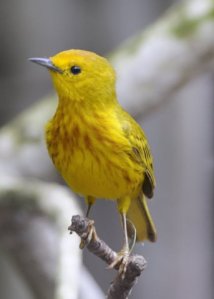
yellow-warbler_boqueronbirdrefugepr_20100527_lah_5179The sun is starting to color the eastern sky, although it won’t appear over the horizon for almost another hour. Flocks of songbirds that have been flying all night finally give in to the overwhelming need for food and rest before resuming their northward migration.
While most sensible people are still in bed, a team of dedicated volunteers is already hard at work. They’re bird banders. Capturing, measuring, tagging and releasing wild birds provides researchers with unique opportunities for study.

(more…)

When Is the Last Frost?

frosty-tree-home-2009-02-14-lah-253

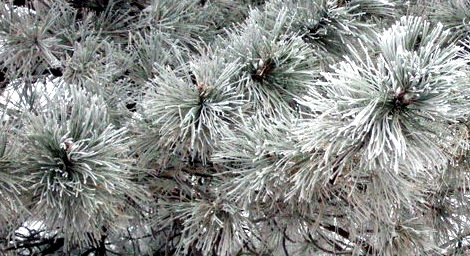
This last week of gorgeous spring weather has certainly brought out the crowds at the garden centers and home improvement stores. When I visited last weekend, carts full of geraniums, tomatoes, and other tender annuals were lined up at the checkout.

Today, the forecast is for snow. It was 30 degrees when I got up this morning. There was frost on the parked cars. As I type, big flakes are softly landing on the freshly turned soil out my window. I wondered how many of the people I’d seen at the store had gone home and planted their flowers, only to find them blackened after the sub-freezing night.

(more…)

How to Be a Mama Hen

hen-chicks_parguera-pr_20100526_lah_7179

Your chicks have arrived! You got the call from the feed store or post office to come pick them up. Now it’s your job to be a mother hen for the next several months. What do you do?

Newly hatched chicks have a few simple needs. Meet those needs and they should grow into adult, egg-laying hens in about six months.

(more…)