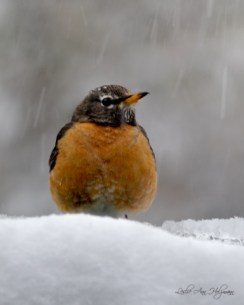
Everyone Likes American Robins

Robins are often considered harbingers of spring, and in some places they are, but here in Colorado they hang out year round. In fact, on the 2006 Christmas Bird Count, in the middle of a blizzard—with the thermometer registering a whopping 6 degrees—we tallied over 200 American Robins in our sector alone… and those were just the ones we could see in white-out conditions.

What spring actually brings is singing robins. For some reason, they have no sense of  decent timing, and will start in at 4 am with their cheerful cheery-o, cheery-o. The last thing I feel at that hour is cheery.
(more…)

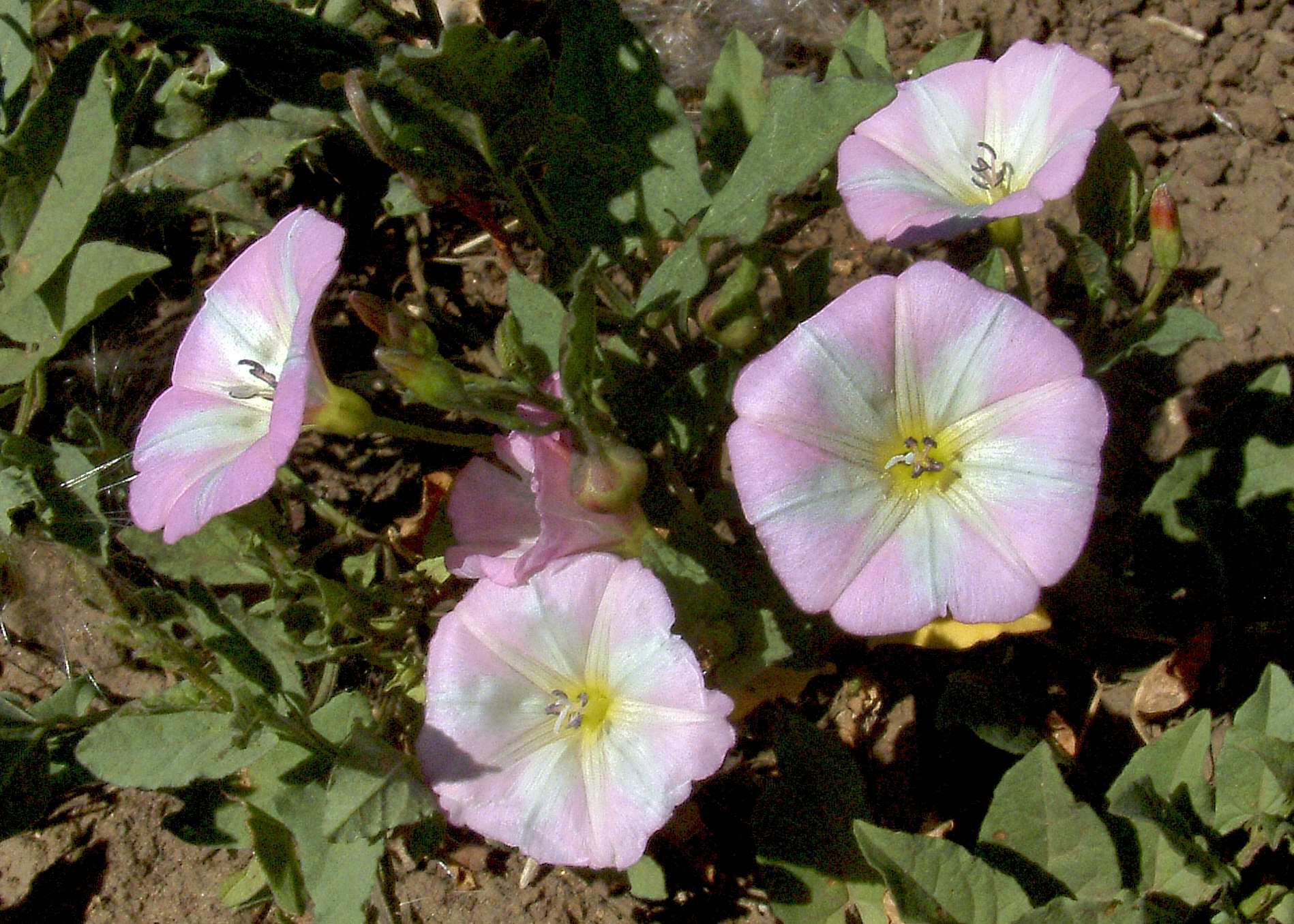
Bindweed

bindweed-bear-creek-pk-cs-lah-042rMost gardeners are all too familiar with bindweed, a member of the morning glory family. With its white to pink vase-shaped flowers and elongated green leaves, it spreads its twisting vines across areas of disturbed soil, such as vegetable gardens and flower beds. The more the gardener tries to pull it out, the more it spreads. Reproduction is by seed, which can remain viable in the soil for up to 50 years, and creeping rhizomes, which may extend up to 6 feet from the mother plant.

If that doesn’t scare you, consider that established plants have a taproot that can extend 20 feet below the soil surface, and lateral roots that grow 30 feet long! This root system stores enough food to keep the plant alive for three years, even if the area above it is paved over. Repeated applications of  herbicides may not kill those roots. Once an area is covered by bindweed, it is almost impossible for native plants (or anything else) to become established.

(more…)

This Book Shouldn’t Be a Secret

“My zucchini plants produce flowers, but no squash. Why?”

“Every year my lettuce gets bitter, then blooms. How can I keep it from bolting?”

“I set out my broccoli two weeks before the last frost, when the books tell us to, but it never got big, and it only produced tiny one-inch heads. What did I do wrong?”

“I want to be a better veggie gardener. What book should I read?”

garden-secretsI’d just given a two hour talk on high altitude vegetable gardening, and a crowd of people surrounded me, anxious to ask questions.

Happily, I knew the answers to all those questions. That’s because I’ve read The Book of Garden Secrets. It’s the most helpful book on vegetable gardening I’ve ever read. Since I’ve read dozens of books on growing veggies, this is high praise indeed.

(more…)

Aubrieta deltoidea


Appearance
aubrieta-deltoidea-var-macedonica-dbg-lah-002rAfter months of dreary landscapes, Aubrieta’s vibrant purple flowers bring welcome color to the April garden. The diminutive blossoms have four petals arranged in a cross, with a clump of yellow stamens in the center. In early spring, they bloom enthusiastically, completely hiding the low growing mats of evergreen foliage. The plants only reach six to twelve inches tall but they can extend as far as two to three feet wide.

(more…)

Being a Good Landlord

wren-box_blkforest_20100401_lah_1227I splurged on two nest boxes this week. I hadn’t meant to—they’re not in the budget—but I reasoned that attracting birds with bird houses was ultimately cheaper than buying ever more bird seed (although I’m sure I’ll do that too).

I recently made my early spring rounds to check out the accommodations I’m offering my feathered visitors. As landlord, I take responsibility for making sure the boxes are safe and clean. I remove any nesting materials from last year, to reduce the chance of parasites infesting the new family. I inspect the boxes for worn out joints, loose screws, and rotting wood. And I make sure they have some sort of predator guard around the entrance hole.

(more…)

Defeat Your Weeds

dandilion-boulderco-3may07-lah-048With the weather swinging wildly between winter storms and balmy sunny days, it must be springtime in the Rockies. The snow reminds us that it’s much too early to plant, but the warm days in between beckon us outside. What’s an antsy gardener to do? Happily, there are things you can do to prepare for the gardening season. Unhappily, one of the most important chores is weed control.
Daffodils and tulips are sending up leaves, perennials have tiny, tentative shoots, grass has a green tinge—and weeds are exploding out of the ground. This is the time to gain the upper hand.

(more…)

Three-toed Beetle-eaters

american-3-toed-woodpecker-grandlake_6285

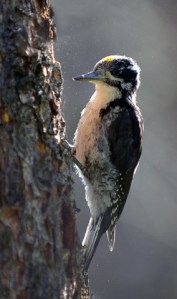
A couple of weeks ago I described the devastation being caused by the Mountain Pine Beetle. Happily, there is one bright spot in the middle of the dead trees. Stands of beetle-killed pines create an ideal habitat for the American Three-toed Woodpecker.

This species isn’t rare, but it lives in the boreal forest, out of reach of most birders. This far south it is only found at higher altitudes, and prefers to nest in areas of old-growth spruce, larch, fir and pine.

(more…)

Abusing Your Seeds

If you’re having trouble getting some of your seeds to germinate, it may be that you’re being too nice to them. Armed with tough defenses against all that nature can throw at them, some seeds refuse to grow unless they’re forced to. This year, consider seed assault and battery, followed by water torture. Here’s how to abuse your seeds.

Scarification

Morning Glories have hard seed coats.
Morning Glories have extremely hard seed coats.

The coat of some seeds is very hard and tough. Normally, this protects the seed and ensures that conditions for germination are favorable. In nature, seeds may pass through the digestive tract of a bird or animal, or be burned in a fire. A hard seed coat gives these seeds a longer storage life as well.

Since you’re unlikely to eat or roast your seeds, you need to provide another way for air and water to reach the tiny embryo inside that armored seed coat. Using chemical or mechanical means to create a weak spot or crack in the seed coat is called “scarification.”

(more…)

Noxious Weeds

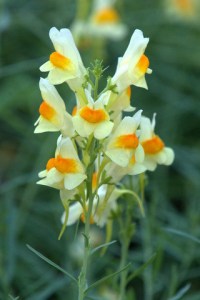
Toadflax is on Colorado’s Noxious Weed List “B”

There are aliens among us. They didn’t come from outer space. Instead, they invaded our country from their native lands around the world. Some hitchhiked in bales of hay or on unsuspecting travelers. Others were brought here deliberately, perhaps for their beauty or stalwart endurance in the face of adversity.

Once here, they took advantage of our hospitality and spread far beyond their original destination. These invaders are plants: grasses, flowers, even trees that are taking over our country. It’s time we fight back.

When aggressive plants arrive in a new environment, they upset the delicate ecological balance that sustains birds and other wildlife. We call them “noxious weeds” because they tend to take over the landscape, are difficult to control, and out-compete more useful natives. They are frequently useless as wildlife forage or shelter, while replacing plants on which wild creatures depend.

(more…)