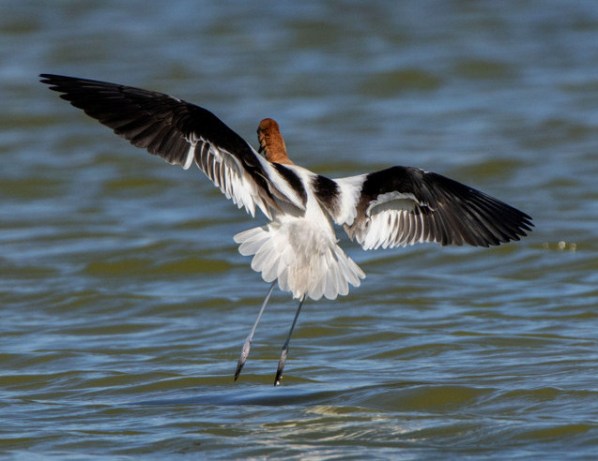
This bird was photographed in Colorado in June. Can you name it? The answer will appear at the end of next Monday’s post.


This bird was photographed in Colorado in June. Can you name it? The answer will appear at the end of next Monday’s post.
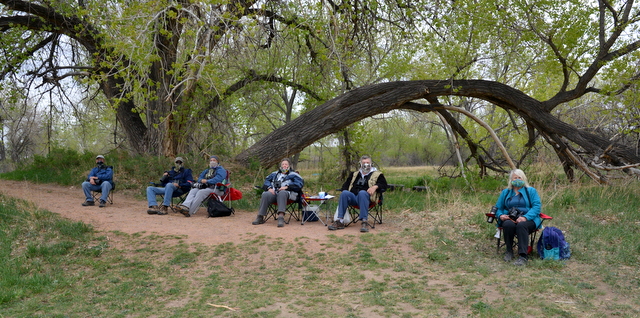 Birding is better with friends. For one, it’s more productive, as more eyes mean more birds spotted. I’m not an expert (by any means!) at birding by ear, but I know people who are. And sadly, a woman birding alone always has to take personal safety into consideration. Besides, birding with friends is definitely more fun!
While some states are beginning to open up, Colorado just instituted a new rule—we have to “recreate” within ten miles of our homes. No hiking in the mountains, unless we already live there. No driving out on the plains to look for raptors. No chasing rarities in other parts of the state. If the bird isn’t in my immediate area, I’m simply out of luck. I can’t even walk the trails at our county’s nature centers, as they’re at the other end of town, far past my ten-mile radius.
This bird was photographed in Colorado in May. Can you name it? The answer will appear at the end of next Monday’s post.

Two weeks ago I explained how birds manage to have sex. But somehow, there are always those species that make things more complicated. Last week’s explanation applied to 97% of bird species. But a few kinds of birds don’t follow the flock.
Take Cassowaries, for example. Both the male and female have what appears to be a penis attached to their cloacas, although the female’s is somewhat smaller than the male’s. It’s used during copulation, but it doesn’t channel sperm. Instead, after penetrating the female, the male expels his semen directly from his cloaca.


I love looking at birds. I love getting outside, going for a walk, spying that tiny ball of feathers nearly invisible in the bushes or hiding in the grasses. On a really good day, I even have the thrill of adding a new species to my life list. But now that I’ve been birding for 16 years, I find myself looking for an additional challenge.


Birding is not for prudes. Everywhere I look, birds are busy making sure there will be another generation to carry on. It must be spring.
First it was the Cooper’s Hawks. We noticed two on recent trip to a county park. The larger one, the female, was sitting on a branch, preening. The smaller male zigzagged closer and closer as he flew from tree to tree, finally landing beside the female. There was a bit of a chase, some friendly bickering, and the next thing we knew, she had flipped up her tail, allowing him access. He was quick to hop on, and in a matter of a second or two, the deed was over. I hadn’t even had time to focus.
This bird was photographed in Arizona in April. Can you name it? The answer will appear at the end of next Monday’s post.


Many plants and animals have either common or scientific names that honor people, often the person who discovered the species, or someone famous. For example, ‘Prince Charles’ and ‘Princess of Wales’ are both rose cultivars. Ornithologist Alexander Wilson named Lewis’s Woodpecker (Melanerpes lewis) after Meriwether Lewis, who discovered the species, and Clark’s Nutcrackers were named after his fellow explorer, William Clark. I find it interesting to learn a bit about the person behind various names, especially of species that I’ve seen and photographed. (more…)

When a birder travels halfway around the world, they expect that the birds they see will be new and exciting. But while that may generally be true, I was surprised to discover that a significant number of birds I saw on the other side of the globe were far too familiar.
 Mountain Plover