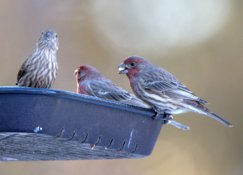
Do you really need another field guide to North American birds? Yes, you do. In fact, you need two of them—the sooner, the better. How many of your current field guides have entries for the Yellow-bellied Prairie Chicken, the Blunt-billed Woodpecker, or the Split Rail? None of them, I bet.
Do your current field guides explain how to correctly assemble the parts of a bird? I’m sure they don’t. Do you own a book explaining what to say to other birders while on a field trip? No? Well then…


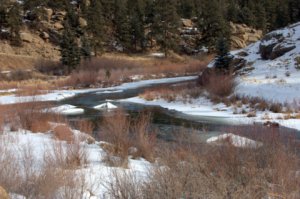 It was cold. Really cold. The car thermometer read -3 (yes, that’s a minus sign) and the wind was howling. That’s what you get when you’re birding at 8,500 feet in the Rocky Mountains at the end of December. Despite four layers of winter clothing, knit hat plus fleece-lined hood, and gloves, I was shivering—and having a tremendous time!
 We had a wonderful white Christmas, and the landscape is blanketed in a couple of inches of snow. But with highs below freezing and a predicted low of 10°F tonight, I was naturally concerned about the birds. Early in the morning I bundled up and ventured out to fill my feeders. I added a block of suet to my suet cage, topped off the mesh nyjer feeder, and carried a huge scoop of black oil sunflower seeds to my platform feeder. I assumed the abundant juncos, finches, nuthatches, and chickadees would keep the snow cleared enough to feed. And, for a while, they did.