
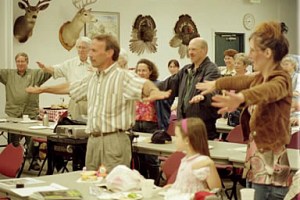
Do you want to be a better birder? Would you like to meet more people who share your interest? Are you curious about some near-by birding hotspots, but you’re not sure exactly where they are, or how to get there?
While birding is fine as a solo pursuit, there are times when hanging around other birders is just a lot more fun.
One day, about eight months after I first became interested in birds, I was finishing up a walk around the ponds at our local nature center. I stopped by the visitor center to see if anything special had been sighted recently. The volunteer behind the counter saw my binos and asked if I was a birder.
 I was a woman with a mission. On our previous trip to southern Texas (five years ago) I had added the Ringed Kingfisher to my life list, but the Green Kingfisher eluded me. In the following years, I’d hiked miles of southern Arizona, following tips from local birders, but still—no Green Kingfisher. Now that we were back in Texas, I was determined to not only see one, but photograph it as well.
 To refresh your memory, here again is the photo for Bird Quiz #1. Read no further if you still want to have a shot at identifying these birds.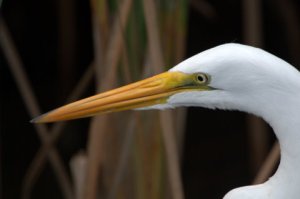
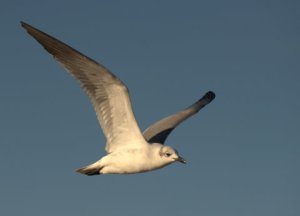 The sun was already low in the sky when my husband and I arrived at Boca Chica beach, just north of Brownsville, Texas. We had spent most of the day at
  Although it’s legal to drive on the packed sand, we opted to park at the entrance. Peeling off our shoes and socks, we rolled up our jeans and strolled down the packed sand. It was late December, but the temperature had reached the upper 70s that day, and the humidity retained the heat. The water was cool and refreshing, and two little girls were splashing in the surf. I had to try it out as well, but only ankle deep.
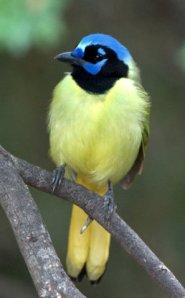 Did you hear? There’s a Golden-crowned Warbler at Fontera! And there’s a Rose-throated Becard at Estero Llano… and an Anna’s Hummingbird at Sabal Palms, a Rufous Hummingbird at Estero… a Crimson-collared Grosbeak at Fontera… a Black-vented Oriole at Bentsen…
 Once again, it’s time for Audubon’s
 This being Colorado, the weather is just a tad unpredictable. A few years ago we were dealing with temperatures that reached all of 6 degrees and heavy snowfall that created near-whiteout conditions. We kept expecting to encounter a penguin or two. This year the weather was lovely—sunny and relatively warm (with a high of 50 degrees). After our recent cold spell, it seemed almost tropical… so we weren’t too surprised to see a pair of flamingos, all decked out for the holidays.
