How to Help Hummingbirds

Anna's Hummingbird_EdmondsMarsh-WA_PLH_7848I was out birding last weekend, scanning the foliage for a glimpse of feathers or the movement of a leaf unexplained by the light breeze, when I heard a high-pitched twit twit. It was a familiar sound, but one I hadn’t heard since early last fall—the call note of a hummingbird!

If I was in Colorado, I’d be quite surprised to find a hummingbird this early in the season—my first Broad-tailed hummer consistently shows up at my feeders on April 30 or May 1. However I’m not in Colorado, I’m currently in Washington. I was birding at Nisqually National Wildlife Refuge, located between Olympia to the west and Tacoma to the east. (My trip includes a little bit of birding and a lot of our new baby granddaughter!)

Here, Anna’s Hummingbirds linger year-round. What a treat! (more…)
Avoiding Window Collisions

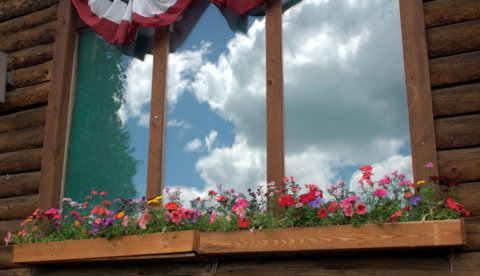
Window_GrandLakeCO_LAH_6579I’ll be sitting at my computer, enjoying the quiet of living in the forest, when THUD!! I cringe, knowing that another bird has just hit the window. If it’s lucky, the bird is merely stunned and will fly away in a moment. Unfortunately, all too often the impact is fatal.

Window collisions kill millions of birds every year. High rise office buildings account for some of this carnage, but ordinary homes pose the most severe threat. Pete and I live in a passive-solar house, which means that much of our southern wall is glass. Add in my abundance of bird feeders, and the outcome is inevitable. Birds I’ve welcomed into my yard with food, water, and bird-friendly habitat end up as casualties. What can we do?

(more…)

Be a Citizen Scientist

AndromedaPerhaps you’re an avid birder, or maybe you want to do something about noxious weeds. You might have a telescope, and you spend your nights looking at the sky.  Or maybe you drove your parents crazy (as I did) bringing home bugs and rocks and frogs and snakes—and you still haven’t outgrown your fascination. Having a hobby is fun, but turning it into something more significant is even better. No matter what your interest, you can put your knowledge and skills to good use as a citizen scientist.

(more…)

Cover Your Pipes!

I prefer to write my own posts, but when I saw this article from the U.S. Fish and Wildlife Service Division of Migratory Birds, I had to share it with you. I had no idea that open pipes were such a hazard to birds and other wildlife!

Death by Pipe: Birds in Crisis

Bird carcasses recovered from mining claim pipes in Searchlight, NV. Photo: Christy Klinger, Nevada Dept. of Wildlife.
Bird carcasses recovered from mining claim pipes in Searchlight, NV. Photo: Christy Klinger, Nevada Dept. of Wildlife

Trapped in a small space, unable to move, with no food or water, slowing dying of stress, starvation, or dehydration; most of us can’t imagine a less appealing end. Unfortunately, this is the reality for hundreds, thousands, possibly millions of birds and other animals each year. Recent inspection of open or uncapped pipes has uncovered a grisly secret: countless bird and other animal carcasses collecting inside. Open or uncapped vertical pipes pose a very real hazard to wildlife, especially birds.

(more…)

Teasel Isn’t Teasing

Teasel @BearCreek LAH 026Most of us are familiar with teasel. It grows in most states, including Colorado where it is designated a “List B” species in the Colorado Noxious Weed Act. That means that, if you live in Colorado (or several other states), you need to declare war on any plants on your property. Good luck.

Teasels are easily identified by the spiny flower head left behind after the petals have fallen, as you can see in these photos. There are two species listed as noxious weeds in Colorado—the Common Teasel (Dipsacus fullonum), shown, and its lookalike cousin Cutleaf Teasel (Dipsacus laciniatus).

(more…)

Bad Daisies

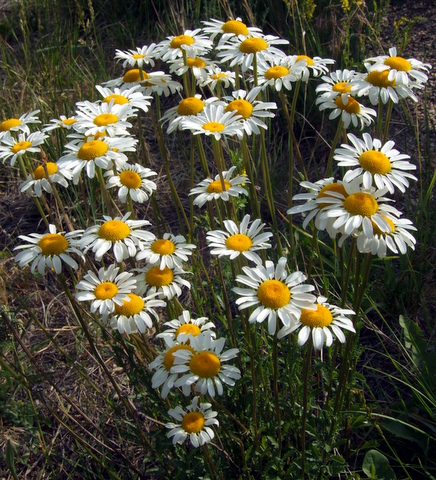
Oxeye_Daisy_TaylorCanyon_2008jul14_LAH_006-001Fresh as a daisy. Daisy chains. “The daisy’s for simplicity and unaffected air.”*

Symbols of simple charm, it’s hard to imagine that daisies could be anything but pure and innocent. Yet, the familiar Oxeye daisy has a dark side. Under that attractive and cheerful guise lurks… a noxious weed!

Take a trip to the mountains to see the wildflowers, and you’re bound to see Oxeye daisies as well. They’re all over the Rockies, preferring the higher elevations. Unfortunately, they don’t belong here. They’re native to Europe, and we heartily wish they had stayed there!

(more…)

A Bucket of (water) Savings

Storm moving in_XG_20090826_LAH_9761Where’s the rain? Colorado, like much of the nation, is experiencing a severe drought. Last year brought us only half our average precipitation, and the preceding years haven’t been much better. Even the April storms we’ve had won’t eliminate the need for the water rationing that started April 1 here in Colorado Springs. Looking ahead to summer, we might be feeling a down. Who likes a brown lawn?

We garden for pleasure, to make our yards look attractive, or to provide fresh, healthy food that supplements what we buy at the grocery store. Farmers and ranchers, on the other hand, raise food for their livelihood—and so we’ll have something to buy at when we go shopping. A lack of water can be catastrophic, not only for their bank accounts, but for all of us who depend on their products.

(more…)

Subscribe to Good Eating

264-wheelbarrow-of-veggies-closeup-nxMy daughter supports it in Idaho. My brother-in-law supports it near Denver. My friend supports it here in Colorado Springs—maybe it’s time I join the Community Supported Agriculture (CSA) movement too.
Let’s say you’re eager to enjoy locally grown, organic produce but you don’t have the time or room for a garden (or you just hate yard work). Your first inclination is to head for the neighborhood farmer’s market. But there’s another option. You can buy a share in a farm.

This is how CSA works: one or more small, family farms grow a variety of produce. How much variety depends largely where they are and what will grow there. The growers estimate how much they’ll harvest over the season, and divide the yield into family-sized portions.

(more…)

Mid-Summer Abundance

american-robin_juv_blkforest-co_lah_4249a

July is not the best time to go birding. The sweat drips from under your floppy hat and smears the view through your binos, and there’s a puddle soaking your shirt under your sling/backpack/fanny pack. It’s a challenge just carrying enough water to stay hydrated.

The birds aren’t cooperating, either. Most of the males have stopped singing now that they have their mates and their territories. Soon they’ll be molting out of their breeding plumage into something much duller and harder to identify. Some are already thinking about heading south, although they won’t actually leave town for a few more weeks.

(more…)

Locoweeds

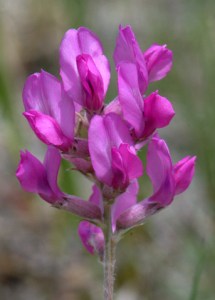
oxytropis-lambertii_locoweed_kcs-co_lah_3438nefI was hiking on a nearby ranch last week when we came across some spectacular wildflowers. As I knelt to grab some photos, my plant expert companion remarked, “You know that’s locoweed. We should pull it out!”

What? Destroy these beauties? Why? I was about to receive an education.

Locoweed (or crazyweed) is the common name for two genera of western plants, Oxytropis (left) and Astragalus (also called milkvetch), both in the pea family, and both including some species that contain the toxin swainsonine. Swainsonine interferes with protein metabolism and causes nerve damage.

(more…)